Start With Kid-Friendly Anchors
When parents search for school lunches kids will eat, the best place to begin is usually with a few familiar foods that already have a track record. Many children do better when lunch feels recognizable, not completely new every day. A simple sandwich, pasta salad, quesadilla wedges, crackers with cheese, or a fruit-and-yogurt combination can all serve as reliable anchors. From there, you can vary the details without making the meal feel strange.
Think of lunch as a mix of one main item, one or two sides, and something small that feels fun. That structure keeps the box from looking overfull or random. It also helps you repeat successful formulas, which is useful on rushed mornings. If your child likes turkey sandwiches, for example, you can rotate the bread, cheese, spread, or cut shape while keeping the basic idea intact.
It is also worth noticing which textures your child seems to prefer. Some kids like soft foods, while others want crisp snacks they can nibble. Some like foods that stay separate, while others enjoy bento-style variety. The goal is not to force an ideal lunch, but to build around what is actually appealing to your child right now. That mindset often leads to better lunch box returns and fewer untouched items coming home.
Keep the Format Simple
One reason packed lunches go uneaten is that they are too complicated. A lunch with too many components can overwhelm kids, especially if they have to open several containers or deal with foods that mix together unexpectedly. Simple formats tend to work better: one sandwich, one fruit, one crunchy side, and one treat or small dessert. That rhythm is easy to remember and easy for a child to manage at school.
Simple also applies to assembly. If breakfast is already chaotic, a lunch that takes a long time to build will feel unsustainable. Choosing a few repeatable lunch templates can make weekdays easier. For example:
- Protein + fruit + crunchy snack + dip
- Wrap + vegetable sticks + cheese + berries
- Leftover pasta + sliced cucumber + fruit cup + crackers
- Quesadilla wedges + salsa + grapes + pretzels
Templates like these reduce decision fatigue. They also help adults pack quickly without relying on expensive specialty foods. If you keep a few core ingredients on hand, lunch becomes a routine instead of a daily puzzle.
Use Tools That Simplify Packing
The right kitchen gear can make school lunches easier to pack and easier for kids to open. This is where thoughtful shopping from an independent Amazon affiliate publisher can be useful. A lunch system does not need to be fancy, but a few practical tools can reduce friction on busy mornings. Look for containers that separate foods cleanly, seal well, and are simple for children to handle.
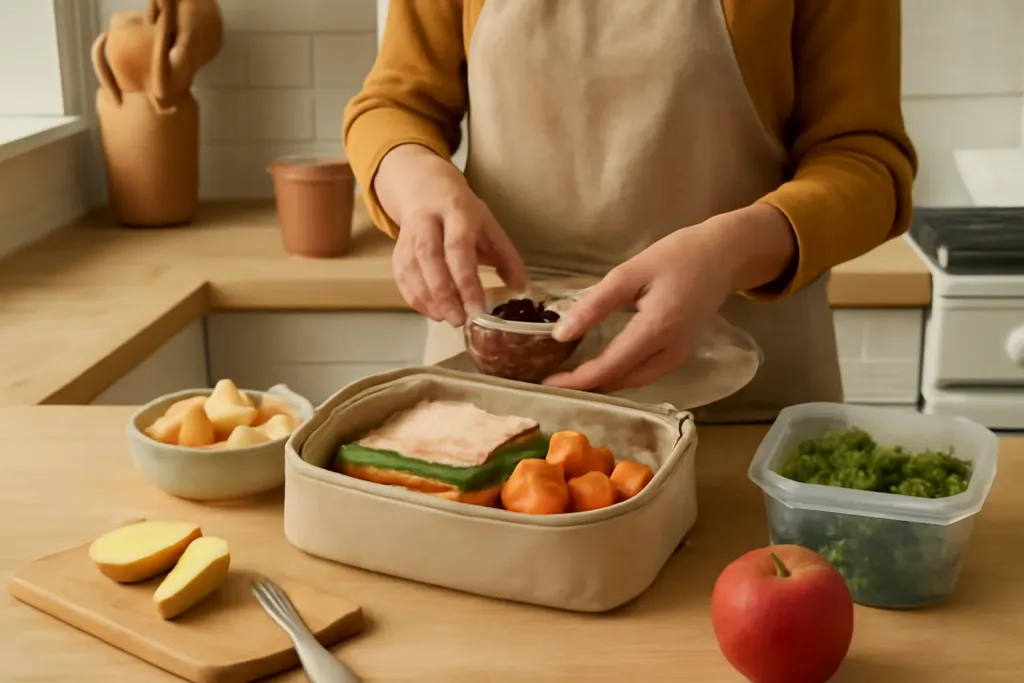
Bento-style lunch boxes are popular for a reason: they help keep foods from touching and make portions easy to see. Reusable silicone cups can create neat divisions inside larger containers. Small leak-resistant jars are helpful for dip, yogurt, applesauce, or dressing. A sturdy insulated bag can also keep everything together and makes it easier to add an ice pack without turning lunch packing into a guessing game.
It can also help to have a dedicated prep setup. A sectioned container for snacks, a drawer for napkins and forks, and a few stackable containers can make lunch assembly much smoother. Many families find that organization matters more than novelty. When the tools are easy to grab, the lunch is more likely to get packed consistently, and consistency is often what makes school lunches kids will eat actually happen.
Build Lunches Around Dip-and-Dunk Foods
Many children are more interested in food they can interact with. Dip-and-dunk lunches feel playful without requiring extra effort from adults. A small container of hummus, ranch-style dip, yogurt-based dip, nut-free spread, or simple sauce can make vegetables, crackers, and chicken strips more appealing. Even a familiar food can feel new when it is paired with a dip they enjoy.
For some kids, the act of dipping is what makes lunch exciting. Apple slices with peanut butter or sunflower seed butter, pita wedges with hummus, carrots with a mild dip, or pretzels with cheese spread can create more interest than the same ingredients packed separately. The key is to keep the portions manageable and the container secure so the lunch still feels neat and easy to open.
Dips also offer flexibility for picky eaters. A child who refuses a plain vegetable may be willing to try it if there is a favorite dip nearby. That does not guarantee they will suddenly love every new food, but it does create a low-pressure way to keep exposure going. When lunch feels interactive rather than forced, children often come back to the foods more willingly.
Browse our recommended picks
Our featured picks refresh periodically. While we update them, our editorial guides can help you find the right one.
See our guidesMake Leftovers Look Like Lunch Food
Leftovers can be one of the easiest ways to pack a satisfying lunch, but only if they still look appealing in the container. Many kids are happy to eat dinner foods at school when they are presented in a lunch-friendly format. Rice, pasta, meatballs, roasted vegetables, chicken bites, and quesadilla wedges can all work well if they are portioned simply and not overloaded with sauce.
The presentation matters. A lunch box filled with a vague pile of food can seem less appealing than the same ingredients arranged in neat compartments. If the leftovers are warm-weather safe only within a certain window, use an insulated container only when appropriate for your routine, or pack them chilled if your child prefers them that way. The point is to make the food feel intentional, not like a random afterthought from last night’s dinner.
Leftovers are especially useful when time is short. Cooking a little extra at dinner can save time the next morning and reduce food waste. To make this easier, consider keeping a few freezer-friendly staples on hand, such as meatballs, mini pancakes, or cooked grains. These can be mixed into lunch boxes without starting from scratch.
Offer Choice Without Making Lunch Complicated
Kids are more likely to eat lunch when they feel some ownership over it, but too many choices can backfire. A simple “choose one from each category” system is often enough. For example, let your child pick one main item, one fruit, and one crunchy snack from a short list you already approve. That approach gives them control without sending the morning into a full negotiation.
Older children can also help with packing, which may increase the chance that they eat what is inside. Even young kids can be given small jobs, such as choosing the fruit, adding napkins, or placing a muffin liner in the lunch box. When children help build the meal, they are often more interested in opening it later.
Another useful tactic is to keep a few lunch “favorites” on rotation while introducing one small new item at a time. That way, the lunch still feels safe. If the new item is ignored, the rest of the meal is still likely to be eaten. This balanced approach is often more effective than packing an entirely new lunch in hopes of instant enthusiasm.
Think About Temperature and Texture
Food that tastes good at home does not always translate well to a lunch box. Temperature and texture matter a lot. Hot foods may need an insulated container, while cold foods can benefit from an ice pack and a lunch bag that holds everything together. Crunchy foods can turn soft if they sit too close to moist ingredients, and soggy sandwiches are a classic lunch box problem.
To avoid texture issues, separate wet and dry ingredients when possible. Pack tomatoes, dressings, and sauces in their own container. Place chips or crackers away from anything soft. If your child likes sandwiches but not soggy bread, consider packing fillings separately or using a sturdier wrap. Small adjustments like these can make the difference between a lunch that gets eaten and one that comes home untouched.
Temperature preferences also vary by child. Some children prefer cold pasta or leftover pizza, while others are more likely to eat food that is still warm. Paying attention to those preferences can help you settle on lunch formats that work consistently. The more closely the lunch matches your child’s actual eating habits, the less likely it is to be rejected halfway through the week.
Use a Repeatable Weekly Rhythm
If you are trying to improve school lunches kids will eat, consistency helps more than constant reinvention. A weekly rhythm makes planning easier and can also help children know what to expect. For example, you might use sandwich day, leftover day, wrap day, snack-box day, and pasta day. The exact schedule does not matter as much as the sense that lunch is predictable and built from familiar categories.
A repeatable rhythm also makes shopping simpler. Instead of buying many one-off ingredients, you can stock a few staples that work in multiple lunches: bread or wraps, fruit, vegetables, cheese, crackers, yogurt, and a few dips or spreads. That kind of pantry and fridge routine supports faster packing and fewer last-minute substitutions.
For families using lunch containers, this rhythm can also guide which equipment gets used most. A sectioned box may be ideal for snack-style days, while a deeper container works better for pasta or leftovers. Having the right tools in place means less time fussing with lunch and more time focusing on whether your child will actually open it, eat it, and feel satisfied afterward.