Bakeware
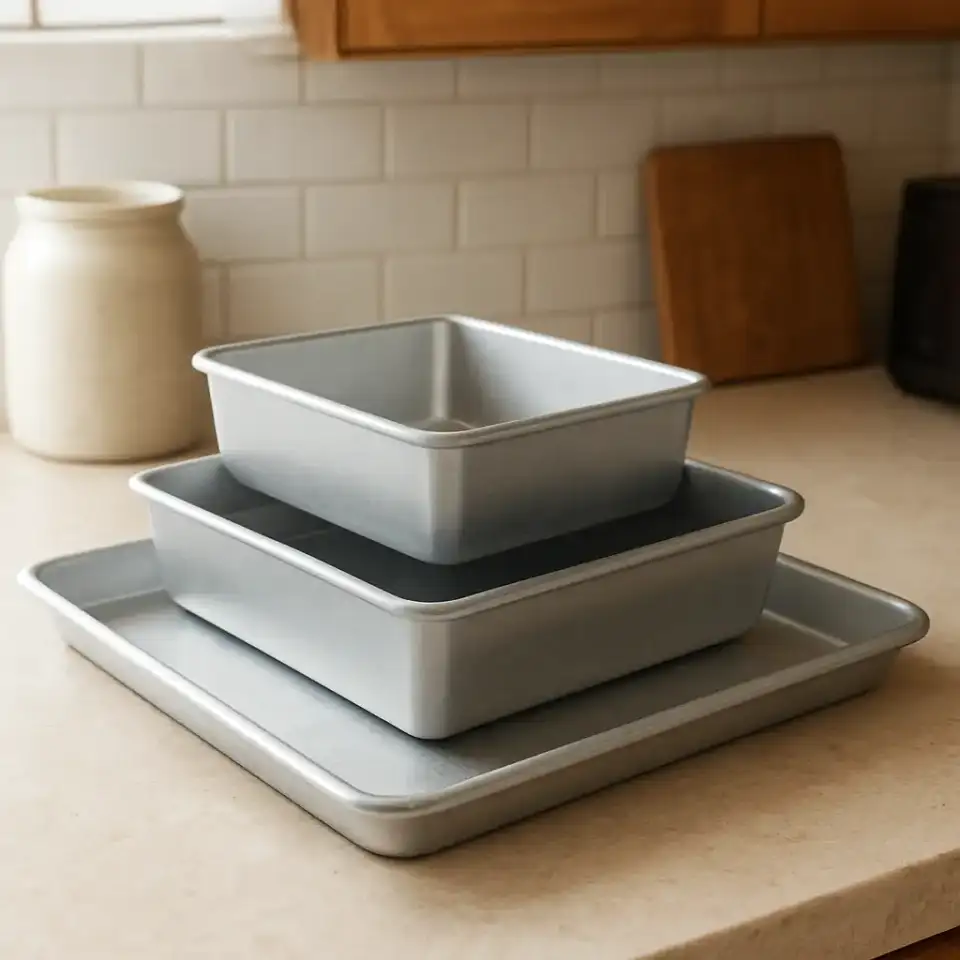
Starter Bakeware Set
A small multi-piece bakeware set covering a sheet pan, loaf pan, and cake or square pan for beginner baking.
Chosen for covering foundational baking needs in one set.
Explore options on AmazonPans, sheets & sets
Bakeware choices affect how evenly food bakes and how easy cleanup is afterward. This hub covers baking sheets, cake pans, and starter bakeware sets, including the practical differences between silicone and metal that trip up a lot of beginner bakers.
Our featured picks refresh periodically. While we update them, our editorial guides can help you find the right one.
See our guidesStarter bakeware picks chosen for even heat distribution and everyday durability.
Bakeware
A small multi-piece bakeware set covering a sheet pan, loaf pan, and cake or square pan for beginner baking.
Chosen for covering foundational baking needs in one set.
Explore options on Amazon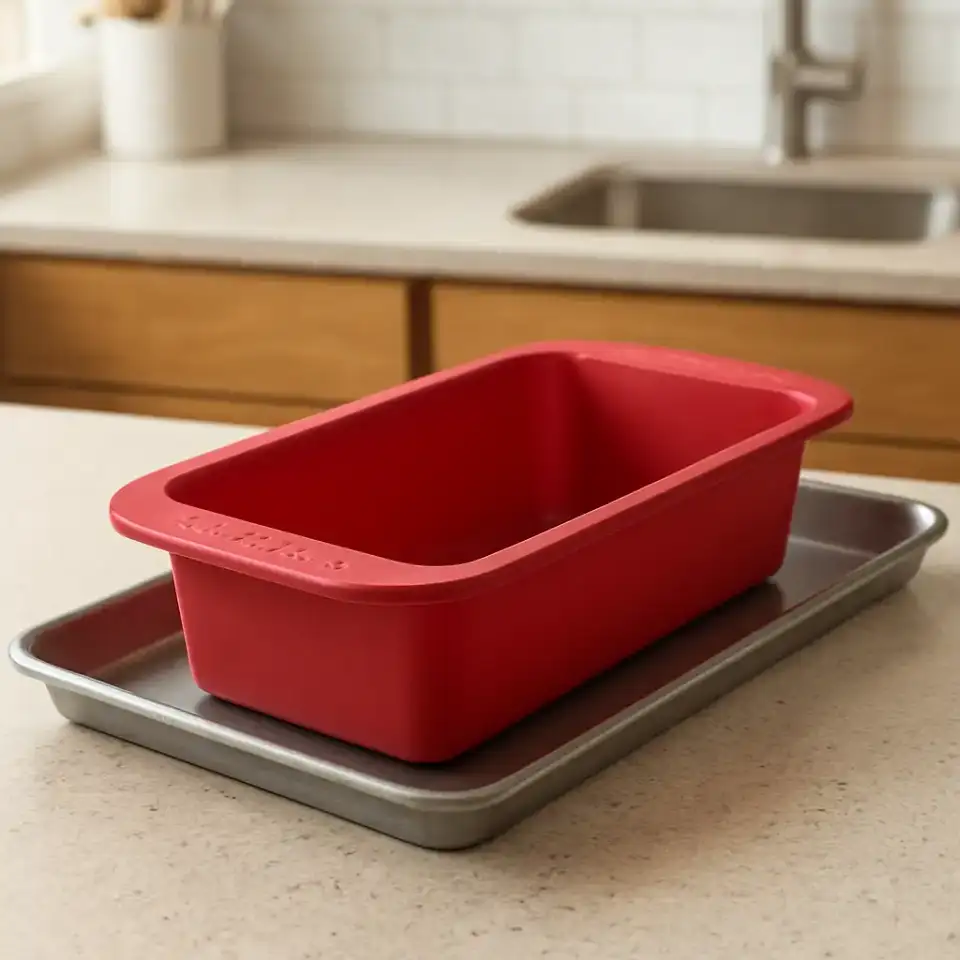
Bakeware
A flexible silicone baking pan for cakes, muffins, or loaves, used with a supporting sheet pan for stability.
Chosen for flexibility and nonstick release, with the trade-offs disclosed in our bakeware hub.
Explore options on Amazon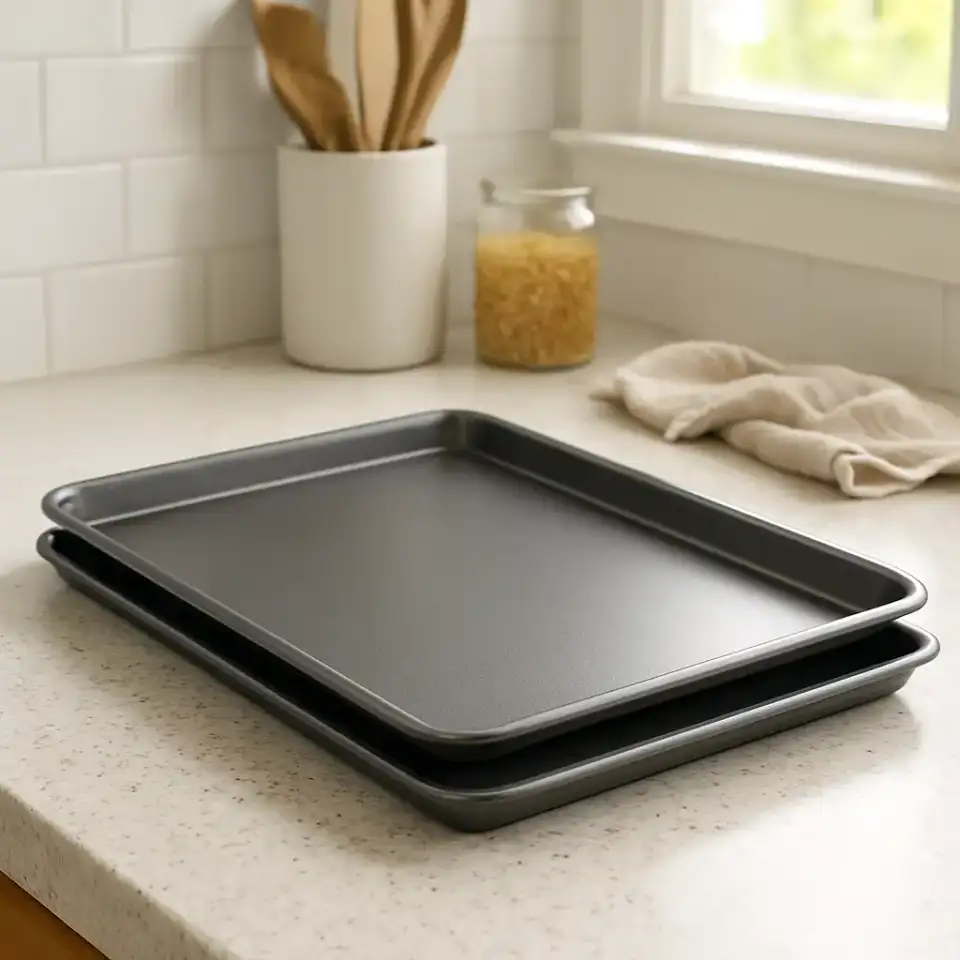
Bakeware
A set of nonstick baking sheets in common sizes for cookies, roasted vegetables, and sheet-pan meals.
Chosen for even browning and everyday nonstick usefulness.
Explore options on Amazon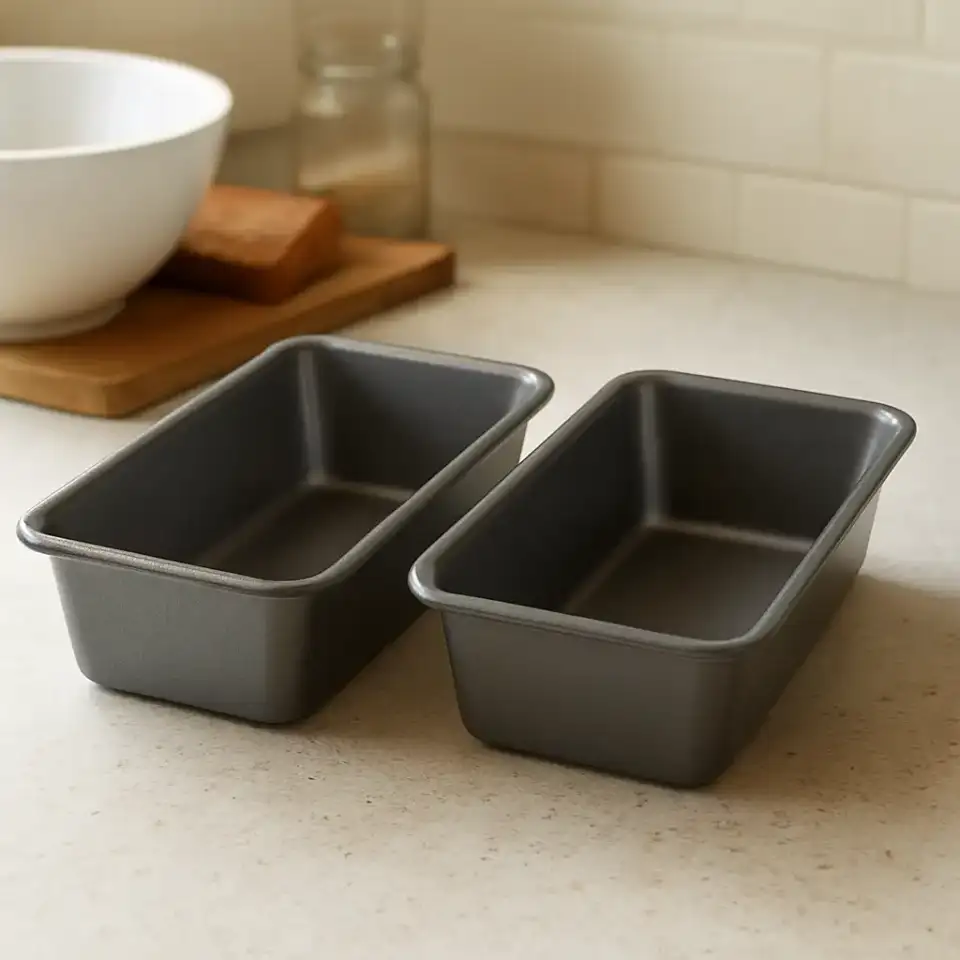
Bakeware
A pair of standard loaf pans for bread, meatloaf, and quick breads.
Chosen for standard sizing and everyday versatility beyond just bread.
Explore options on AmazonWho this fits: Beginner bakers building a first bakeware collection, families baking regularly for school events or weekend treats, and anyone comparing silicone and metal pans.
Metal bakeware generally browns more evenly; silicone is flexible and nonstick but can heat less evenly and needs a supporting sheet pan underneath for stability.
Dark nonstick coatings can cause faster browning at the same oven temperature compared to light-colored metal.
A small starter set covering a sheet pan, a loaf pan, and a round or square cake pan covers most beginner baking needs.
Nesting or stackable bakeware saves cabinet space, which matters in smaller kitchens.
Our featured picks refresh periodically. While we update them, our editorial guides can help you find the right one.
See our guides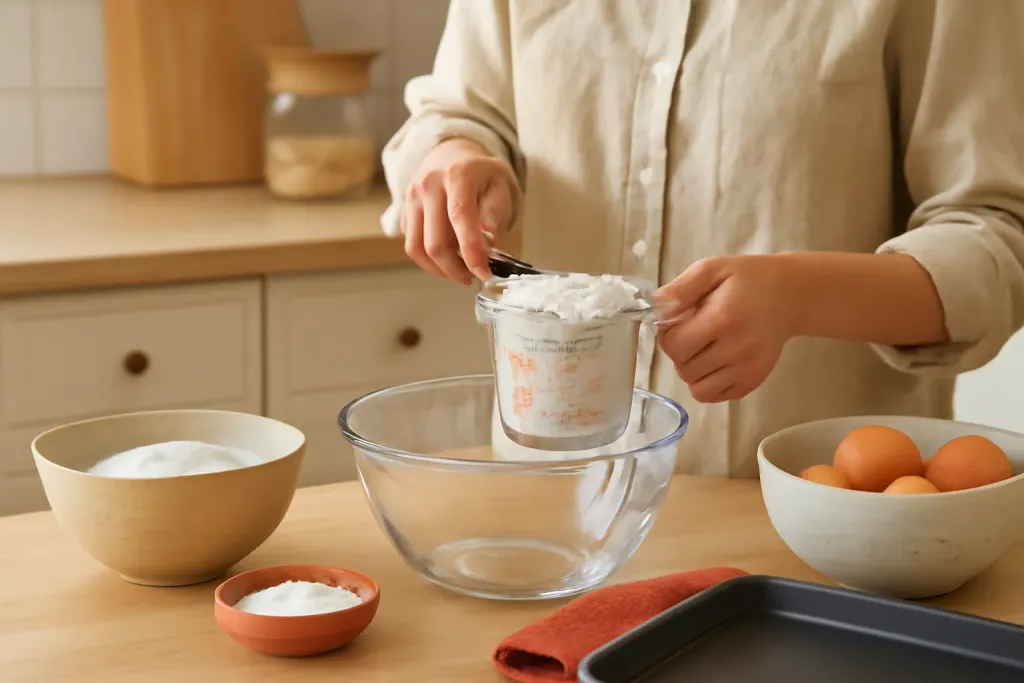
Learn how to measure ingredients for baking with simple tools, proper techniques, and reliable tips for consistent home baking.
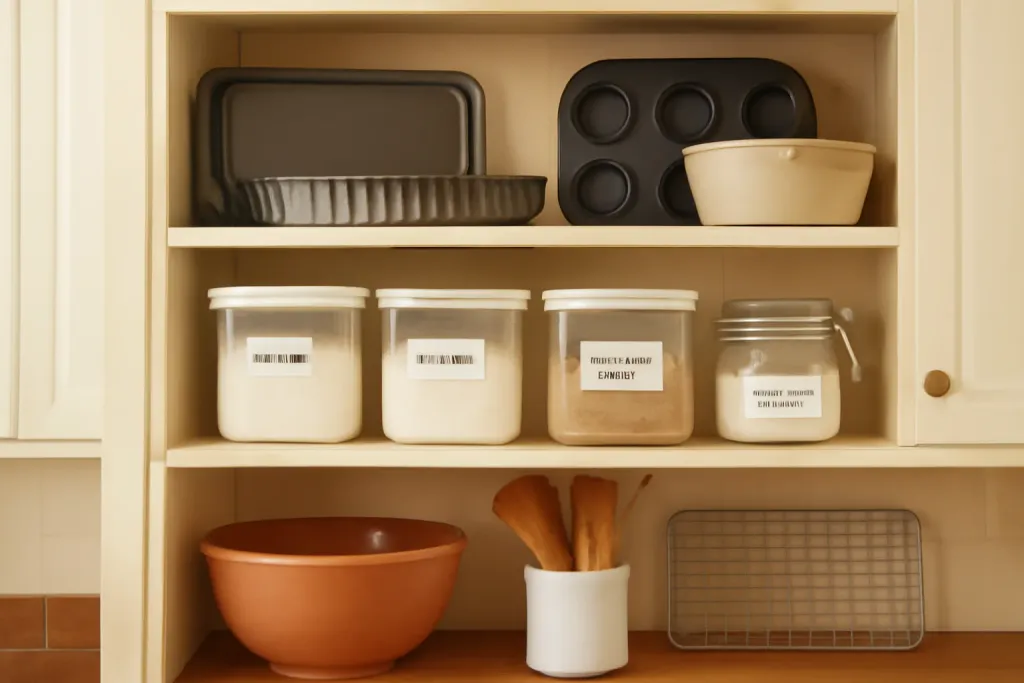
Learn how to organize a baking cabinet with smart zones, containers, labels, and shelf setup for a tidier, faster baking routine.
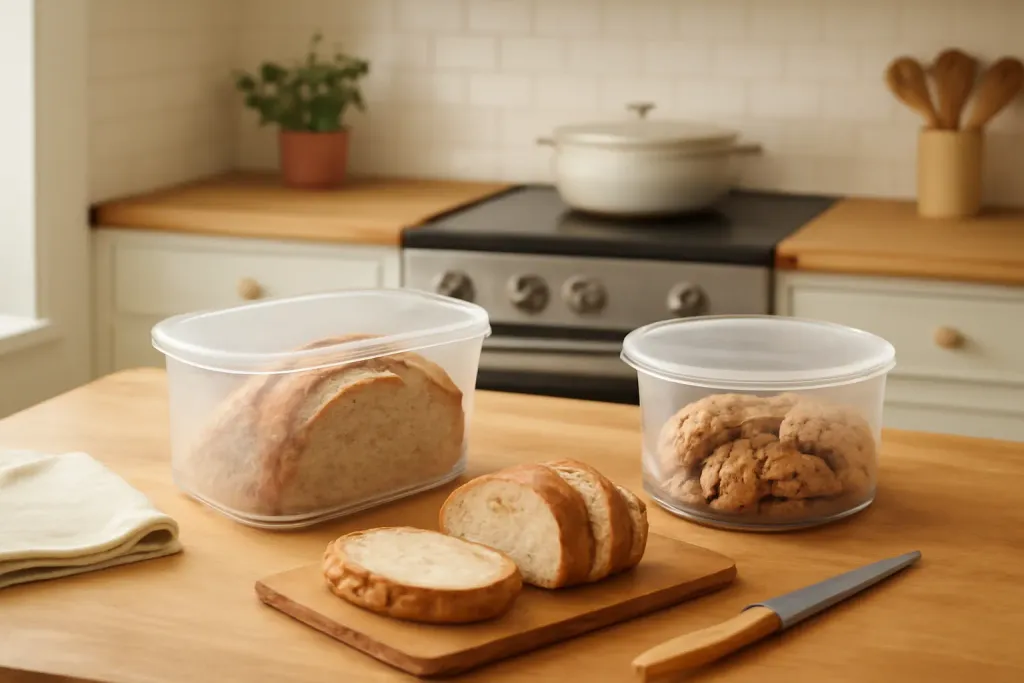
Learn how to store baked goods to keep them fresh longer with simple tips for bread, cookies, cakes, and the right containers.
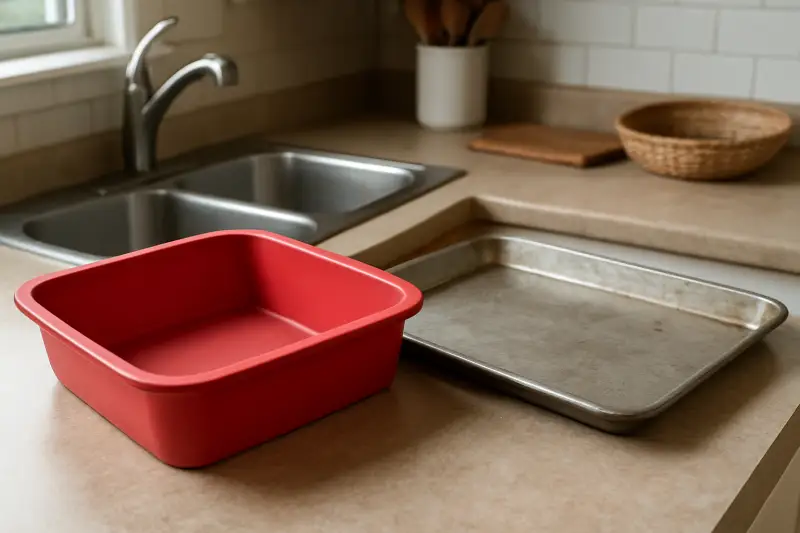
Silicone vs metal bakeware compared: heat distribution, release, durability, and which one fits your baking habits.