Overview
Silicone and metal bakeware bake differently enough that the choice matters, especially for beginner bakers who might otherwise blame a recipe for a result that's really a pan issue. This guide compares the two materials honestly, covering heat distribution, release, durability, and handling, so you can choose based on what you're actually baking.
We haven't run controlled baking tests across specific pan brands. This is a comparison of how each material generally behaves based on its physical properties, meant to help you set realistic expectations and choose the right pan for a given recipe.
Heat distribution
Metal bakeware generally conducts and distributes heat more evenly than silicone, which is one reason many bakers reach for metal pans for recipes where even browning matters most, like cookies or a layer cake. Metal also tends to produce more consistent browning on the exterior of baked goods.
Silicone is a poorer heat conductor by comparison, which can mean slightly less even baking and less browning on the exterior, particularly for larger items like a full cake. Some bakers compensate by adjusting bake time slightly and watching for doneness with a toothpick test rather than relying on visual browning cues alone.
Dark-coated metal pans absorb more heat and can cause faster browning at the same oven temperature compared to light-colored metal, which is worth factoring in regardless of whether you're comparing metal to silicone or comparing two metal pans to each other.
Release and cleanup
Silicone's biggest advantage is release -- baked goods generally pop out of a silicone pan with minimal sticking, even without greasing, which is genuinely convenient for delicate items like muffins or a bundt-style cake. Cleanup is also typically easier, since silicone is naturally nonstick and most silicone bakeware is dishwasher-safe.
Metal bakeware, especially uncoated metal, usually needs greasing or a liner (parchment paper or a nonstick spray) to prevent sticking. Nonstick-coated metal pans narrow this gap but still don't typically match silicone's release for very delicate items.
Durability and storage
Metal bakeware, particularly uncoated or well-constructed nonstick-coated metal, tends to hold up to years of regular use without changing shape. Silicone can degrade or start to feel less rigid over many years of high-heat use, though a well-made silicone pan under normal home use typically lasts a long time as well.
Storage is where silicone has a clear advantage: it can be rolled, folded, or nested in ways rigid metal pans can't, which is genuinely useful in a small kitchen with limited cabinet space.
Over years of regular use, uncoated or well-cared-for stainless steel bakeware tends to hold up the longest of any bakeware material, since there's no coating to wear off and no flexible structure to eventually lose its shape. Nonstick-coated metal falls in between: the metal base itself is durable, but the coating follows a similar wear timeline to nonstick cookware and may need earlier replacement than the pan's structure would otherwise require.
Browse our recommended picks
Our featured picks refresh periodically. While we update them, our editorial guides can help you find the right one.
See our guidesHandling and stability
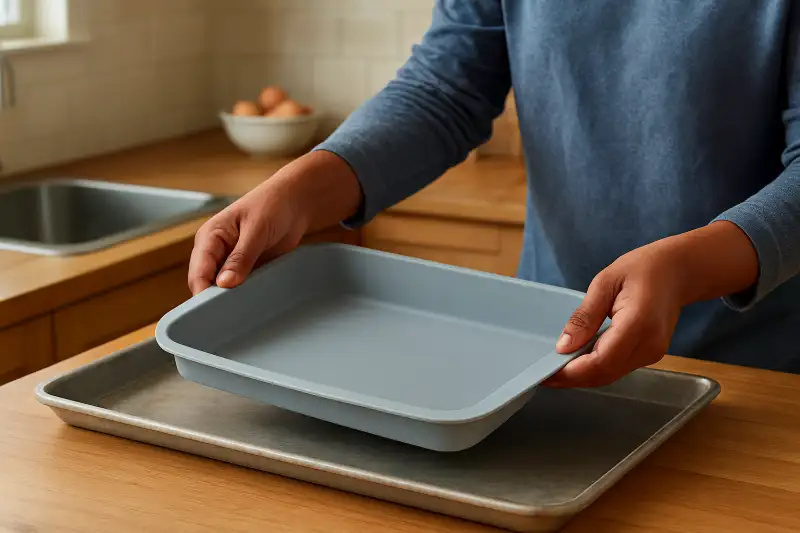
This is the biggest practical difference between the two materials day to day. A metal pan is rigid and can be picked up and moved with one hand, filled or empty, without deforming. A silicone pan is flexible, which is great for release but means a filled silicone pan needs a rigid sheet pan underneath for support -- trying to lift a batter-filled silicone pan on its own risks spilling the contents.
This extra step (placing silicone bakeware on a sheet pan before filling, and keeping it there through the whole baking and cooling process) is easy to forget as a beginner but makes a real difference in avoiding kitchen accidents and lost batter.
Removing baked goods from the oven also differs by material. A metal pan holds its shape and can be gripped firmly with an oven mitt from the side or handles. A silicone pan, still flexible even when hot, needs to be supported from underneath -- lifting it by an edge alone risks the whole pan folding and spilling hot contents, which is a genuine burn risk. Always use the supporting sheet pan as the primary handling surface when moving a silicone pan in and out of the oven.
Cooling also plays out differently. Metal pans generally cool a baked good faster due to better heat conduction, while silicone retains heat a bit longer given its lower thermal conductivity. This is a minor consideration for most recipes but can matter for delicate items meant to be removed from the pan promptly once cooled to avoid sticking or condensation.
Coatings and color
Metal bakeware coatings vary as much as the base metal itself, and the coating often matters more than whether the pan is aluminum or steel underneath. Nonstick-coated metal pans combine metal's even heat conduction with easier release, narrowing much of the gap with silicone, though the coating is still subject to the same wear-over-time considerations as nonstick cookware.
Dark-coated and dark-colored pans absorb more radiant heat than light-colored or uncoated metal, which generally speeds up browning and can mean recipes finish slightly faster or brown more than expected at the same listed oven temperature. Many bakers compensate by lowering the oven temperature by a small amount when using a dark pan, or simply watching for doneness a few minutes earlier than a recipe suggests.
Silicone bakeware doesn't have this same color-driven heat absorption effect in the same way, since it doesn't conduct heat as efficiently to begin with -- but silicone pans do vary by thickness and quality, and thinner, cheaper silicone can be more prone to warping or tipping over when only partially filled.
Which should you buy?
Choose metal for recipes where even browning matters most -- cookies, sheet cakes, and most everyday baking -- and for anyone who prefers a rigid pan that's simple to handle without extra support.
Choose silicone for delicate items where easy release matters most, like intricately shaped muffins, mini cakes, or bundt-style pans, and for anyone prioritizing compact storage in a smaller kitchen.
Many bakers keep both: metal for everyday baking and browning-sensitive recipes, silicone for specific shapes and delicate releases. Our bakeware hub covers starter set sizing if you're building out a collection from scratch.
If you're baking with kids, silicone's flexibility and lighter weight can make it easier and safer for a child to help handle, though an adult should still manage anything going in or out of a hot oven. For solo baking projects where oven handling isn't a shared task, this consideration matters less.
Budget is also worth a brief mention: neither material is consistently cheaper than the other across the market, since price depends heavily on brand, thickness, and coating quality rather than the base material alone. Comparing similar quality tiers within each material is a more useful exercise than assuming one material is inherently the budget option.
Final thoughts
Silicone and metal bakeware aren't strictly better or worse than each other -- they trade even heat distribution and rigid handling against easy release and compact storage. Match the material to the specific recipe and your storage constraints rather than picking one material to use for everything.
See our bakeware hub for starter set guidance, and our beginner kitchen essentials checklist if you're still building out your core kitchen equipment.
Whichever material you start with, always check the manufacturer's manual for a specific pan's maximum safe oven temperature and any first-use care instructions before your first bake, since these details vary by product even within the same material category.