Overview
Nonstick and stainless steel are the two cookware materials most home cooks compare first, and the honest answer is that neither one is universally "better" -- they solve different everyday problems. This guide is the single, consolidated comparison we point to for every version of this question, whether you're asking about nonstick vs stainless steel, stainless vs nonstick, or which one lasts longer.
We haven't run side-by-side lab or durability testing on specific cookware models. What follows is a practical comparison of how each material generally performs based on its properties and how home cooks commonly report using them, so you can match the material to your own cooking habits rather than chasing a universal "best."
How they differ
Nonstick cookware has a coating -- most commonly a PTFE-based or ceramic-based coating -- applied over a metal base, usually aluminum. That coating is what keeps food from sticking without much added fat, and it's what makes cleanup fast and easy.
Stainless steel cookware has no coating at all. It's typically layered with an aluminum or copper core sandwiched between layers of steel to improve heat distribution, since stainless steel alone conducts heat relatively unevenly. Food can stick to stainless steel more easily, especially at incorrect temperatures, but the bare metal surface tolerates higher heat and metal utensils without the coating-wear concerns that come with nonstick.
Both materials come in a wide range of quality tiers, and construction quality (base thickness, core material, handle attachment) tends to matter as much as the surface material itself for how a pan performs and lasts.
Cleanup and daily use
Nonstick's biggest everyday advantage is cleanup. Eggs, delicate fish, and other foods prone to sticking release easily, and most residue wipes away with minimal scrubbing. This is a big part of why nonstick tends to be the more forgiving choice for beginner cooks or anyone cooking with less added fat.
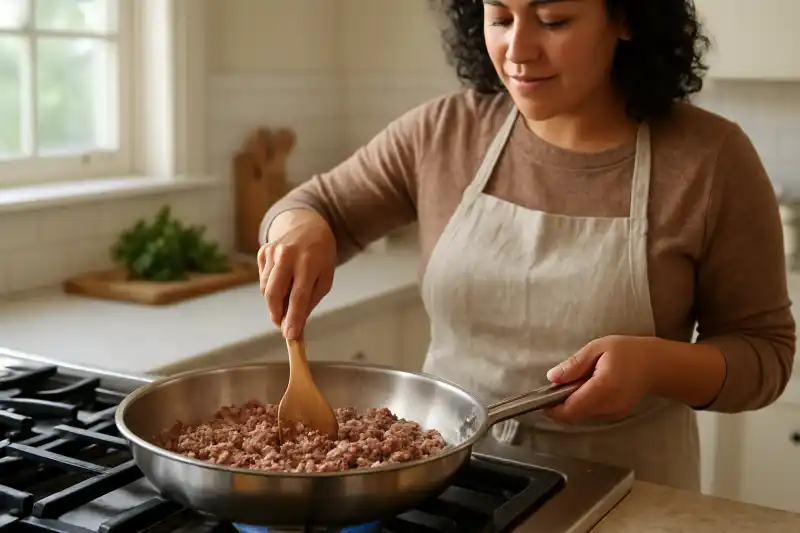
Stainless steel requires a bit more technique to avoid sticking -- generally, preheating the empty pan before adding fat and food, and waiting for food to naturally release before flipping, rather than forcing it early. Once that technique clicks, stainless steel handles searing and browning (which produces flavorful browned bits, sometimes called fond, useful for pan sauces) noticeably better than nonstick, which is designed specifically to prevent that kind of browning and sticking.
For daily convenience with minimal learning curve, nonstick tends to win. For cooks willing to learn a bit of technique in exchange for better searing, stainless steel is the stronger everyday tool.
Durability and lifespan
This is where the two materials diverge most. Nonstick coatings wear down over time regardless of brand or price tier -- how quickly depends on care, heat exposure, and utensil choice, but even well-maintained nonstick cookware is generally expected to need replacement more often than stainless steel.
Stainless steel, by contrast, has no coating to wear off. With reasonable care, a stainless steel pan can last for many years or even decades, which is part of why it's often recommended as a longer-term investment piece, even though it costs more to learn to use well upfront.
Neither of these is a testing claim on our part -- it reflects the basic physical difference between a coated surface that degrades with wear and a bare metal surface that doesn't have a coating to lose.
Construction quality affects lifespan within each material category too. A thicker nonstick coating applied over multiple layers generally resists scratching and wear longer than a thin single-layer coating, even though both will eventually degrade. Similarly, a stainless steel pan with a thicker base and a well-bonded core resists warping from high heat better than a thin, lightweight stainless pan, which can develop hot spots or a slightly uneven cooking surface over years of use.
Heat handling
Most nonstick cookware has a maximum recommended stovetop and oven temperature specified by the manufacturer, and exceeding it can damage the coating or, in some cases, release fumes -- always follow the manufacturer's manual for your specific pan's safe temperature range.
Stainless steel tolerates much higher heat safely, which is part of why it's generally preferred for searing and high-heat techniques. It's also typically safe with metal utensils, unlike most nonstick coatings, which should be paired with silicone, wood, or nylon tools to avoid scratching.
Browse our recommended picks
Our featured picks refresh periodically. While we update them, our editorial guides can help you find the right one.
See our guidesCare basics for each
Nonstick: Use silicone, wood, or nylon utensils. Avoid metal tools and abrasive scrubbers. Hand-washing is often recommended even for "dishwasher-safe" nonstick pans, since repeated dishwasher cycles can accelerate coating wear. Avoid preheating an empty nonstick pan on high heat.
Stainless steel: Preheat before adding fat, and let food release naturally before flipping. Metal utensils are generally fine. Some discoloration or staining is normal and can often be addressed with a stainless-steel-specific cleaner. Always check the manufacturer's manual for dishwasher and oven-safety guidance on your specific set.
A quick way to judge preheat readiness on stainless steel: add a few drops of water to the empty, heating pan. If the drops skitter and roll around the surface rather than evaporating almost immediately, the pan is generally at a good temperature for adding fat and food. This simple check helps beginners avoid the most common stainless steel sticking mistake -- adding food before the pan is properly preheated.
Induction and cooktop compatibility
Induction cooktops heat cookware directly through a magnetic field, which means the pan itself needs a magnetic base to work at all -- a detail that trips up a fair number of first-time induction buyers. Stainless steel cookware is commonly induction-compatible, though not universally, since some higher-end stainless pieces use a fully non-magnetic alloy for the cooking surface layer. Always check for an explicit induction-compatible label rather than assuming "stainless steel" guarantees it.
Nonstick cookware varies more on this point. Many nonstick pans use an aluminum core, which is not magnetic on its own, so induction compatibility depends on whether the manufacturer added a magnetic stainless steel layer to the base specifically for induction use. If you cook on an induction range, check this detail on the specific listing before buying either material, since assuming compatibility is one of the most common cookware buying mistakes.
For gas and traditional electric coil or radiant cooktops, magnetic compatibility isn't a concern, and the choice between nonstick and stainless steel comes down purely to the trade-offs described above.
Which should you buy?
Most family kitchens benefit from having both rather than treating this as an all-or-nothing decision. A nonstick pan for eggs, delicate fish, and quick weeknight cooking, paired with a stainless steel pan or pot for searing, sauces, and dishes that need higher heat, covers the majority of everyday cooking needs without asking either material to do a job it's not suited for.
If you can only choose one to start, consider your priorities: nonstick if easy cleanup and a shorter learning curve matter most right now, or stainless steel if you're willing to learn a bit of technique in exchange for a pan that's built to last much longer. Beginners often start with nonstick and add stainless steel once they're comfortable with basic stovetop technique.
Final thoughts
Nonstick and stainless steel aren't competing for the same job -- they're complementary tools with different strengths. Rather than searching for one universal winner, match the material to the specific cooking task in front of you, and consider building toward having both in your kitchen over time.
See our cookware hub for material and set-size guidance, and our beginner kitchen essentials checklist if you're still deciding what to buy first.