Why Portion Freezing Matters
Freezing meal-prep portions is one of the simplest ways to make weeknight cooking easier, but the process works best when it is done with care. The aim is to keep food cold, protect quality, and make later thawing more predictable. When you freeze meal prep portions safely, you also reduce waste because you are more likely to use only what your household needs rather than defrosting a whole batch at once.
Safe portion freezing begins before the food reaches the freezer. Clean hands, clean containers, and properly cooled food all matter. A little planning at the start makes the freezer easier to manage later, especially in busy family kitchens where meals need to be grabbed quickly and reheated without extra guesswork.
It also helps to think about what you are freezing. Cooked grains, soups, stews, sauces, casseroles, and many proteins tend to hold up well. Delicate ingredients can be trickier, but even sturdy foods benefit from smart portioning. Smaller or flatter portions usually freeze more evenly than large, dense containers, which can help when you are planning lunches, sides, or family dinners for the week ahead.
Cook, Cool, and Portion Food First
Start with freshly cooked food that has been handled carefully. If you are freezing leftovers or batch-cooked meals, let the food cool before packing it away. Putting very hot food straight into the freezer can create condensation, raise the temperature around nearby items, and make the freezer work harder than it should. A better approach is to cool the food at room temperature for a short time, then refrigerate it until it is cold enough to portion.
Portioning is easier when the food is already cool. Divide soups into single servings or family-size amounts, separate cooked rice or pasta into meal-sized scoops, and pack proteins in the portions you actually plan to use. If you often pack lunches, smaller portions can be convenient. If the goal is to prep dinners, larger portions may make more sense, as long as they are still sized to freeze and reheat evenly.
Shallow containers can help food cool and freeze more evenly than deep containers. If a meal is thick, spread it into smaller containers rather than loading everything into one large vessel. This is especially useful for chili, sauce, shredded chicken, beans, and other dense foods that benefit from faster cooling and more even thawing later.
Choose Freezer-Friendly Containers and Wraps
The storage container matters nearly as much as the food. Freezer-safe containers, resealable freezer bags, and tightly sealed glass or plastic options can all work if they are intended for freezer use and leave room for expansion. Food expands as it freezes, so filling a container to the top can cause bulging lids, cracks, or leaks.
Choose containers that match the amount of food you usually portion. Stackable containers can make the freezer easier to organize, while freezer bags are useful for flatter portions that freeze quickly and save space. Pressing a bag flat before freezing can help soups, sauces, and cooked vegetables freeze in a thinner layer, which may also make stacking easier later. If you prefer reusable containers, select sizes that fit your normal meal-prep routine instead of forcing a small serving into a container that is much too large.
Some people add an extra layer of protection, such as a bag inside a rigid container or a wrap around a portion that will stay frozen longer. That can help limit exposure to air and reduce freezer burn, but the most important part is still a tight seal and minimal empty space. Whatever material you use, focus on a container that closes well, stacks neatly, and lets you identify the food without opening every item in the freezer.
Limit Air Exposure and Freezer Burn
Air is one of the biggest reasons frozen food loses quality. When food is exposed to air, freezer burn and dry edges become more likely. That does not usually make the food unsafe by itself, but it can affect texture and flavor. To help freeze meal prep portions safely and with better results, pack the food as tightly as possible without crushing it.
For soups and sauces, leave a little headspace at the top of the container so expansion does not force the lid open. For grains, vegetables, and shredded meats, press the food into an even layer and remove as much trapped air as you can. If you use a freezer bag, squeeze out extra air before sealing it. Laying the bag flat while it freezes can also create a neat, stackable shape that is easier to store.
If food will stay frozen for a while, barrier protection can help. Double-wrapping or using a bag plus container may reduce exposure to air and odors. This is especially useful for foods that dry out more easily, such as cooked pasta, sliced bread, or assembled casseroles. Even so, the main habit to keep is simple: use the right size container, seal it well, and freeze portions promptly once they are properly cooled.
Browse our recommended picks
Our featured picks refresh periodically. While we update them, our editorial guides can help you find the right one.
See our guidesLabel and Date Every Portion
Labeling is one of the easiest habits that makes freezer meal prep work better. Once containers start looking alike, it becomes hard to remember what is inside and how long it has been stored. A clear label should include the name of the dish, the portion size if that helps, and the date it was frozen. This makes it easier to rotate older items forward and use them before newer batches.
Families often benefit from a little extra detail. For example, you might label a container “turkey chili, 2 servings” or “rice and chicken, lunch portion.” If you make different versions of the same recipe, a brief note such as “mild” or “with vegetables” can help later. When meals are stored in similar containers, labels prevent mix-ups and reduce the need to open each one just to identify it.
Use labels that stay readable in cold, damp conditions. Tape, freezer labels, or a marker made for storage containers can work well. The most important part is consistency. If every portion is labeled right away, the freezer stays more organized and you are more likely to use older food while it is still in good condition. That supports less waste and a smoother meal-planning routine.
Freeze and Organize the Freezer Well
Once portions are packed and labeled, place them in the freezer in a way that helps them freeze quickly. Flat bags and shallow containers usually freeze faster than tall, crowded stacks. If you have room, set new portions in a single layer until they are firm, then stack them. That can help food freeze more evenly and keep the freezer easier to manage.
Organization matters after the food is frozen too. Keep similar items together: soups in one area, breakfast portions in another, and family dinners in their own section. Grouping foods by type or meal time makes it faster to find what you need and helps avoid forgotten containers tucked into the back of the freezer. A basic first-in, first-out habit works well in most home kitchens. Move older items forward and use them before newly frozen meals.
It also helps not to overload the freezer with too many unfrozen items at once. A crowded freezer can slow the freezing process because cold air needs room to circulate. If you are freezing a large batch, spread it out across a few shelves or freeze in stages if needed. The goal is to give each portion enough space and cold air so it freezes in a timely way and stores efficiently afterward.
Thaw and Reheat With Care
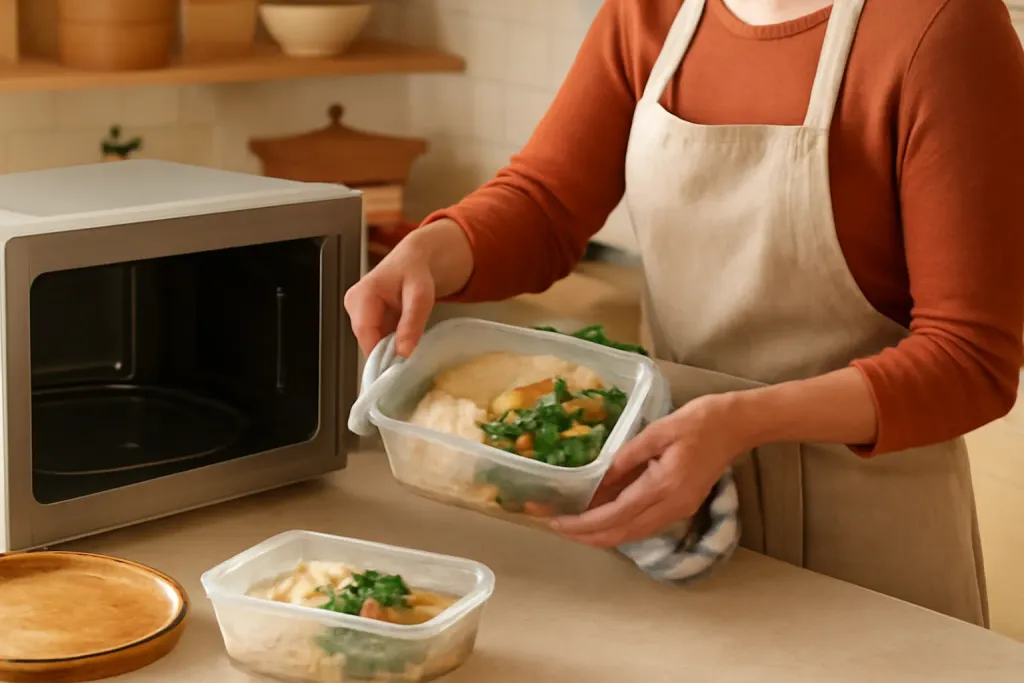
Safe freezing also depends on safe thawing and reheating later. The refrigerator is usually the best place to thaw food because it stays cold while it defrosts slowly. This method takes planning, but it helps preserve texture and keeps the food in a controlled environment. Smaller portions thaw faster than large ones, which is one reason portion size matters from the start.
If you are short on time, some foods can be reheated directly from frozen or thawed more quickly using methods that heat the food evenly. The right method depends on the recipe and the container, so it helps to choose meals that fit your preferred routine. Soups, stews, rice dishes, and cooked casseroles often work well because they can be portioned ahead of time and reheated with less effort.
Once food is thawed, avoid leaving it at room temperature for long periods. If a portion is not going to be used right away, keep it cold until you are ready to reheat it. It is also wise to reheat only the amount you plan to eat. Repeated warming and cooling can reduce quality and make meal planning harder, while smaller portions make it easier to thaw just what you need.
Common Mistakes to Avoid
A few simple mistakes can make freezer meals less useful. One common problem is freezing food while it is still too warm. Another is using containers that are too large, which leaves too much air around the food and raises the chance of freezer burn. Overfilling containers is another issue, especially for foods that expand as they freeze. Taking a moment to leave room at the top can help prevent leaks and cracked lids later.
Skipping labels is another habit that can create waste. Even a well-organized freezer can become confusing if every container looks the same. Unlabeled food often gets pushed aside and forgotten. Likewise, stacking too many items too quickly can keep food from freezing evenly, especially if the freezer is already full. A little spacing goes a long way.
Another mistake is freezing food in portions that do not match how your household eats. If your family usually needs dinner for four, single-serving portions may be less practical than two- or four-serving containers. If lunches are the main goal, large family containers can create extra work. The most useful method is the one that fits your routine, uses freezer-friendly containers, and makes it easy to thaw only what you need.