Plan the Week Before Monday
The best back to school lunch packing tips start before the first hectic morning arrives. A little planning on the weekend can turn weekday lunch prep from a daily scramble into a predictable routine. Instead of deciding what to pack while the coffee is brewing and backpacks are already by the door, map out a few lunch combinations in advance and keep them visible where you prep food.
Start by listing a handful of main items your family already likes: sandwiches, wraps, pasta salads, leftover proteins, cut fruit, vegetables, yogurt, cheese, crackers, or hummus. Then mix and match them into simple lunch templates. For example, one template might be a sandwich, fruit, crunchy side, and a small sweet treat; another might be a grain bowl or pasta salad with vegetables, fruit, and a snack. Repeating a few formats keeps decisions easy without making lunches feel boring.
A weekly plan also helps with grocery shopping. When you know which ingredients will appear in multiple lunches, you can buy with intention and avoid last-minute extras that may go unused. Keep the plan realistic. If Tuesday is a packed after-school day, make that lunch especially easy. If Friday tends to be rushed, set aside a low-effort option that does not require much assembly.
Build a Simple Lunch Assembly Zone
A dedicated lunch assembly zone can save time every morning. This does not need to be a full pantry makeover. It can be as simple as grouping lunch items in one cabinet, one refrigerator bin, or one basket on the counter. The goal is to keep the things you use most often within easy reach so packing lunch takes fewer steps.
Place grab-and-go items together: sandwich bread, tortillas, crackers, fruit cups, nut-free spreads if your household uses them, snack bars, napkins, forks, and reusable utensils. In the refrigerator, create a zone for prepped produce, cheese sticks, yogurt, dips, and leftovers that will work in lunches. When possible, store lunch-specific items in clear containers so you can see what is available at a glance.
Kitchen equipment can also support the routine. Stackable containers, a lunchbox with separate compartments, small reusable cups with lids, and a labeled bin for water bottles or ice packs can reduce morning friction. The idea is not to buy every gadget, but to make the items you already own work harder for you. When lunch components live together, family members can even help assemble their own meals more easily.
Prep Components, Not Entire Lunches
One of the most practical back to school lunch packing tips is to prep ingredients instead of full lunches whenever possible. Fully assembled lunches can lose texture or become less appealing by the next day, while component prep gives you flexibility. Wash grapes, slice cucumbers, portion crackers, cook a batch of pasta, or shred chicken ahead of time, then combine the parts in the morning or the night before.
This method works especially well for families with changing appetites. A child who wants a wrap on Monday may prefer a snack-style lunch on Wednesday. If the ingredients are ready, you can adapt without starting from zero. Component prep also makes it easier to use leftovers creatively. Roasted vegetables can become a side one day and part of a grain bowl the next. Rice, pasta, and cooked proteins can each anchor more than one meal.
Think in terms of balance rather than complexity. A satisfying lunch often includes a main item, a fruit or vegetable, something crunchy, and a small extra. When you prep ingredients in advance, those categories become quick to assemble. A few containers of prepped items can be more valuable than a fully stocked fridge with no plan.
Use Night-Before Habits to Shorten Mornings
Busy mornings are easier when the key decisions happen the night before. Set out lunch containers, pack reusable ice packs back into the freezer, and move the day’s lunch ingredients to the front of the refrigerator. If children pack their own bags, place lunchboxes near their backpacks so the final step is obvious and easy to remember.
A simple evening reset can also prevent small delays. Rinse and restack containers, refill condiment cups, and check whether any lunch items need to be thawed, chilled, or moved from the pantry. If there are leftovers that should be used soon, write them on a small note or set them at eye level so they are not forgotten. These tiny habits reduce the chance of discovering at 7:15 a.m. that the lunchbox lid is missing or the fruit needs washing.
If mornings are especially tight, consider doing the most time-consuming tasks at night. Cut vegetables, portion snacks, and pack sturdy items before bed, then add anything delicate in the morning. That way, lunch gets built in stages, and the earliest part of the day feels more manageable.
Browse our recommended picks
Our featured picks refresh periodically. While we update them, our editorial guides can help you find the right one.
See our guidesChoose Containers That Fit Your Routine
The right containers can make lunch packing feel easier without adding extra work. Look for containers that suit the foods your family packs most often. Divided lunch containers help keep foods separated, small leak-resistant cups are useful for dips or dressings, and sturdy reusable boxes can support sandwiches or wraps without crushing them. When containers fit the food well, packing becomes faster and lunches tend to look neater.
It helps to have a small range of sizes rather than many mismatched pieces. Large containers can hold main dishes, medium ones are useful for fruit and vegetables, and tiny containers can carry add-ons like dressing or trail mix. If your family uses insulated containers, keep their lids, sleeves, and accessories stored together so nothing goes missing during the rush.
Function matters more than matching sets. A practical collection of containers should stack well, open easily, and clean up without much trouble. For many households, the best approach is to choose a few reliable pieces and use them consistently. That keeps the lunch routine predictable and avoids the morning search for the one container that actually fits.
Keep a Repeatable Lunch Menu
Repetition can be a strength in school lunch planning. Rather than inventing five brand-new lunches every week, build a repeatable menu with a few dependable favorites. For example, one day can focus on sandwiches, another on leftovers, another on snack boxes, and another on pasta or grain bowls. A predictable rhythm reduces decision fatigue while still giving enough variety to keep lunch appealing.
When creating a repeatable menu, pay attention to what actually gets eaten. Families often have a short list of foods that disappear quickly and a longer list of foods that come home untouched. Keep the favorites in regular rotation and use the less popular items in small amounts or with a different combination. A lunch that includes one known favorite may be more successful than a box filled with unfamiliar choices.
It can also help to assign themes to specific days. Maybe Monday is sandwich day, Tuesday is leftovers, Wednesday is snack box day, and Thursday is pasta day. Themes are especially useful for busy mornings because they create a default choice. You are not starting from scratch each day; you are simply filling in the template.
Make It Easy for Kids to Help
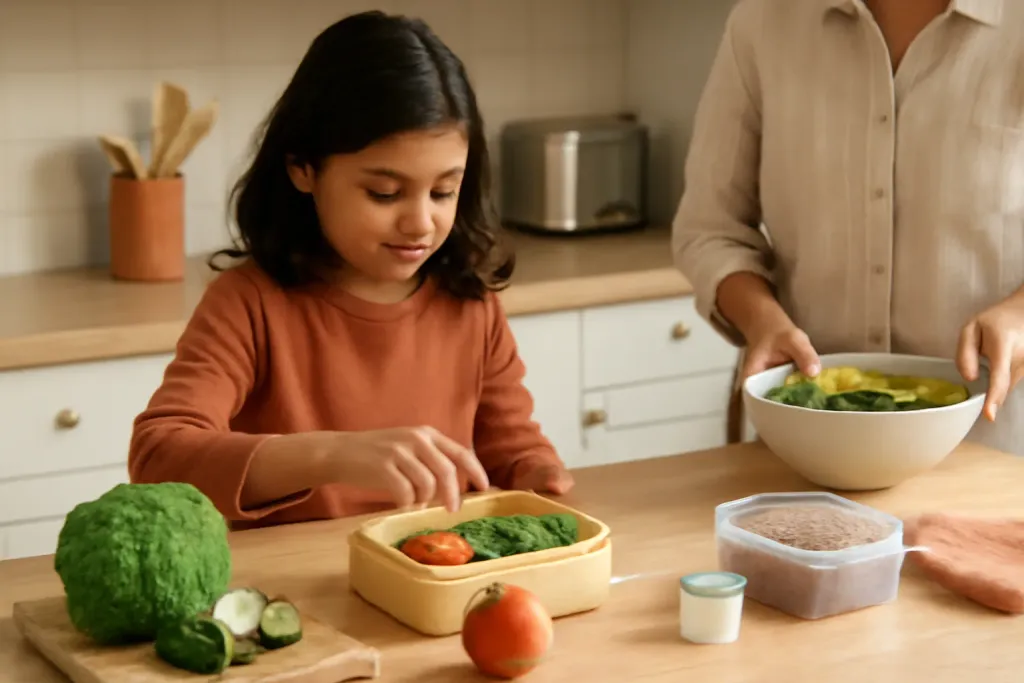
Kids do not need to take over lunch prep to be part of it. Even small tasks can lighten the load on a busy morning. Younger children can choose between two fruit options, place a napkin in the lunchbox, or add a snack from a pre-portioned bin. Older children can pack their own reusable water bottle, assemble a simple sandwich, or check their lunch checklist before heading out the door.
The key is to make the process obvious. Use visual cues, such as labeled bins, a short checklist on the fridge, or a consistent order for packing. If the lunchbox always starts with the main item, then fruit, then a side, kids learn the routine faster. That consistency is useful for adults too, since it reduces the mental effort required each morning.
Shared responsibility works best when the steps are age-appropriate and repeatable. A child who can finish a lunch independently on a calm afternoon may still need help on a rushed school morning, so keep the process simple. The goal is not perfection. It is to make lunch packing feel like a normal family habit instead of a daily negotiation.
Use Sunday as a Soft Start, Not a Marathon
Weekend prep is most effective when it feels sustainable. Instead of spending Sunday on a long, exhausting meal-prep session, use it as a soft start that makes the week easier. Wash produce, cook one or two lunch-friendly items, refill snack containers, and make sure lunch gear is clean and ready. A modest amount of prep can still create a meaningful difference on Monday morning.
Think of Sunday as the day to reduce obstacles. If the refrigerator is tidy and lunch ingredients are visible, the week begins with less friction. If the pantry has a clear snack zone and the lunchbox is easy to reach, the first school morning is calmer. This kind of prep does not need to be complicated to be useful. Even a few carefully chosen tasks can shorten the time spent making lunch each day.
For families who prefer a simpler routine, it is perfectly reasonable to prep just the components that take the most time. That might mean washing fruit, cooking grains, or portioning snack items. The more your weekend routine reflects the real pace of your household, the more likely you are to stick with it. Over time, that consistency matters more than a perfect plan.