Overview
Bento-style lunch packing -- separating foods into distinct compartments rather than mixing everything together -- works well for a lot of kids, especially picky eaters who prefer their foods to stay apart. This guide covers choosing the right box, portioning appropriately for a child's appetite, and a simple repeatable approach that doesn't require reinventing lunch every single day.
This is general packing and food-safety guidance, not a substitute for your child's school's specific allergy policies or a pediatrician's advice on your child's individual dietary needs. Always check your school's guidelines, especially around common allergens.
Choosing the right box
Look for a box with compartments sized for a child's actual appetite rather than an adult-size portion divided into smaller sections -- oversized compartments often come home half full, which can be discouraging for both parent and child. Most kids' bento boxes have 3-5 compartments, which is usually enough to separate a main, a side or two, and a small treat or fruit.
Check that the box fits your child's lunch bag or backpack pocket before committing to a specific size, and confirm whether the lid is genuinely leakproof if you plan to pack anything with sauce or dressing -- see our leakproof container guide for what to look for in a sealed lid.
Portioning for kids
Portion sizes vary a lot by age, activity level, and individual appetite, so there's no single correct amount -- a general approach is to start with what your child has reliably finished in the past and adjust from there, rather than filling every compartment to capacity out of habit.
It can help to include a variety of textures and colors across the compartments (a protein, a starch or grain, a fruit or vegetable, and a small extra), since variety on its own can make a lunch more appealing without needing to be elaborate.
A simple compartment approach
A repeatable structure makes daily packing faster and reduces decision fatigue. One common approach: one compartment for a protein (leftover chicken, a hard-boiled egg, cheese cubes), one for a carbohydrate (crackers, rice, pasta), one for a fruit or vegetable, and a small compartment for something extra (a few nuts if allowed, a small treat, or a dip).
Packing the night before, rather than in the morning rush, generally makes the whole routine easier to sustain. Many prepped components can be portioned into the box and refrigerated overnight, with only anything that needs to stay crisp (like certain fruits) added the next morning.
Rotating a short list of 5-6 combinations week to week, rather than trying to come up with something completely new every day, also reduces the mental load without making lunches repetitive to your child.
Keeping a simple running list of combinations that have worked well -- even a note on the fridge or in your phone -- makes the weekly rotation easier to sustain than trying to remember what worked from memory alone. Over a school term, this list naturally grows and gives you more variety to draw from without having to brainstorm from scratch each week.
Prepping components in bulk on a weekend, when time allows, is another way to make the weekday routine faster. Washing and portioning a week's worth of fruit, or cooking a batch of a protein that can be portioned across several lunches, shifts most of the effort to a day with more available time.
Getting kids involved
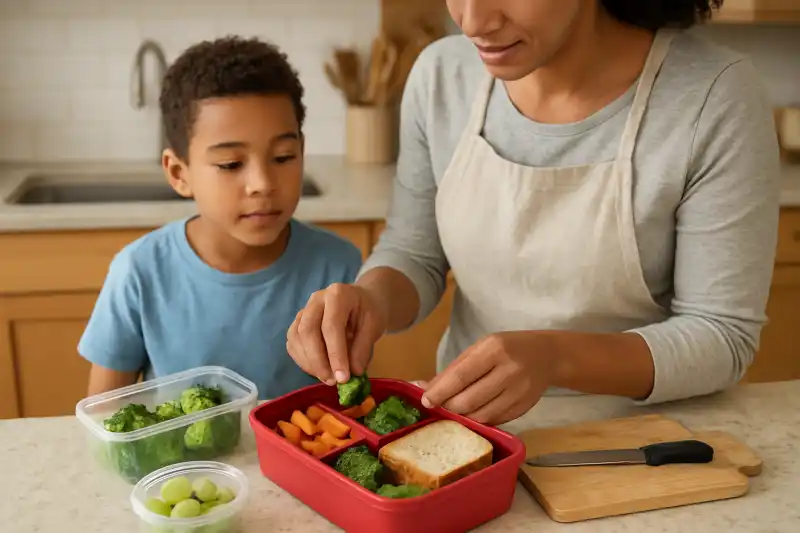
Even young kids can take part in lunch packing in small ways, and doing so tends to increase the odds a lunch actually gets eaten rather than traded away or left untouched. Letting a child pick between two pre-approved fruit options, or choose which compartment gets which food, gives them a sense of ownership without turning lunch packing into a negotiation over the whole menu.
For slightly older kids, involving them in the shopping list -- asking which foods from a reasonable, approved list they'd want to see again next week -- can surface preferences a parent might not have guessed. This doesn't need to be a big production; even a quick weekend conversation about "what did you actually eat this week" can meaningfully improve the next few days of packing.
It's worth setting realistic expectations here too. Kids' preferences shift, sometimes for reasons that aren't obvious to an adult, and a lunch that was a hit last month might come home untouched this month. Treating this as normal rather than a problem to solve permanently tends to keep lunch packing from becoming a source of daily stress.
Browse our recommended picks
Our featured picks refresh periodically. While we update them, our editorial guides can help you find the right one.
See our guidesFood safety basics
Perishable items should stay cold until lunchtime. An insulated lunch bag paired with an ice pack helps maintain a safe temperature for a typical school day, but insulation alone isn't a substitute for proper cooling on unusually warm days -- see our lunch-packing hub for insulated bag guidance.
Always check your child's school for specific allergen policies before packing, since many schools restrict certain allergens like peanuts in shared lunch spaces. If your child has a known allergy or dietary restriction, follow your pediatrician's or allergist's specific guidance rather than general packing tips.
Wash the lunch box and any reusable ice packs after each use, and periodically check silicone dividers or gaskets for wear, since a compromised seal can affect both leak resistance and cleanliness over time.
If your child's lunch has any wait time before eating -- a bus ride, a morning activity before the lunch period -- factor that extra time into how you pack it. Two ice packs, or a frozen water bottle used as an extra cold source, can extend safe holding time on unusually long mornings.
Ideas for picky eaters
Keeping foods physically separated is often the single biggest factor for picky eaters, since it avoids flavors or textures touching in ways that can be off-putting. Beyond that, offering at least one "safe" food your child reliably eats alongside one or two slightly less familiar items can encourage gradual exploration without the pressure of an entirely unfamiliar lunch.
Involving your child in choosing which foods go in which compartment, even loosely, can also increase the odds the lunch actually gets eaten rather than traded or left in the box.
Presentation can matter more than it might seem for picky eaters, even without going to elaborate lengths. Cutting fruit or vegetables into simple, consistent shapes, or using small silicone dividers to keep sauces or dips separate within a single compartment, can make a familiar food feel slightly more appealing without requiring extra prep time on a busy morning.
Mistakes to avoid
Overfilling compartments designed for smaller portions is a common mistake that leads to wasted food and a discouraged sense that "they didn't eat lunch," when really the portion was simply too large. A second mistake is assuming a box is leakproof without checking the specific lid design, especially for anything with sauce or dressing.
Finally, avoid packing based only on nutritional ideals without factoring in what your specific child will actually eat -- a beautifully balanced lunch that comes home untouched isn't accomplishing its goal, and it's reasonable to prioritize gradual, realistic progress over a perfect lunch every day.
Final thoughts
A bento-style lunch works well for a lot of kids because it separates foods and keeps portions visible and manageable. Start with a box sized for your child's actual appetite, build a simple repeatable compartment structure, and always check your school's allergy policies before packing.
See our lunch-packing hub for bag and container guidance, and our leakproof container guide if you're packing anything with sauce or dressing.