Why Storage Habits Matter for Food Waste
When people think about cutting food waste, they often focus on shopping lists or meal planning. Those matter, but storage habits are where a lot of everyday waste quietly begins. A bag of herbs wilts, leftovers get buried, produce dries out, and pantry items sit too long until their quality drops. Better storage does not mean buying every possible container. It means using a few simple systems that keep food visible, protected, and easy to reach before it goes past its best.
For families, that kind of routine can also make weeknight cooking easier. When ingredients are easy to find and simple to identify, they are more likely to be used. That is the basic goal of any reduce food waste storage routine: keep food in a condition where it still looks appealing enough to eat. The best habits are usually the ones you can repeat without much effort, especially when the fridge fills up quickly during busy weeks.
It helps to think in categories. Some foods need airflow, some need airtight sealing, and some do best in clear containers that make leftovers obvious. Once you match the storage method to the food, you are less likely to toss items because they were hidden, dried out, or mixed in with something else. Small changes can add up across a week of cooking.
Keep Food Visible and Easy to Find
One of the simplest ways to reduce waste is to make food easy to see. Items that disappear behind taller containers or get pushed to the back of shelves are the ones most likely to be forgotten. Clear bins, transparent storage boxes, and labeled containers can help create a quick visual inventory. The point is not to make the kitchen look perfect. It is to make it obvious what needs to be used soon.
In the fridge, visibility matters especially for leftovers, chopped produce, and opened packages. A shallow, clear container is often more useful than a deep one because the contents stay visible. In the pantry, grouped bins can help keep similar foods together. Baking items, snacks, and grains are easier to manage when they are separated instead of spread across several cabinets.
Labels can help too, especially when several family members use the kitchen. A simple marker and tape label can be enough if it shows the food name and the date it was stored. You do not need a complicated system. You just need a method that helps everyone recognize what is in the container and when it should be used.
If you shop in larger quantities, try a weekly reset. Move older items to the front and place newer items behind them. This small habit turns your fridge and pantry into a first-in, first-out system that supports reduce food waste storage without adding extra work to mealtime.
Choose Containers That Match the Food
Different foods stay fresh-looking for different reasons, so container choice matters. Airtight containers are helpful for cooked grains, leftovers, cut fruit, and ingredients that can dry out or absorb odors. Loosely covered or vented containers may be better for foods that need a little airflow, such as certain herbs or washed greens, depending on how you plan to use them. The goal is to protect the food without trapping moisture where it can speed up spoilage.
Glass and plastic each have practical uses in a family kitchen. Glass containers can be useful when you want to see leftovers clearly and move them from fridge to table or reheating easily. Lightweight plastic containers can work well for lunches, quick snacks, or items that need to travel with school or work meals. What matters most is choosing containers that are easy to open, close, stack, and clean so they actually get used.
Size is another important detail. Very large containers can leave a small amount of food spread out, which may lead to faster quality loss. Very small containers can squash fragile ingredients. Matching the container size to the portion helps reduce waste and keeps storage neat. If you often have uneven leftovers, keeping a few container sizes on hand may be more useful than relying on one standard box.
Reusable lids, silicone covers, and nesting sets can also help simplify storage. When containers stack well, the fridge and pantry stay organized, and food is less likely to be hidden. That kind of order supports reduce food waste storage because it makes the next step, actually eating the food, much easier.
Use the Fridge More Intentionally
A refrigerator works best when you treat it like a set of zones instead of one open space. The doors, upper shelves, lower shelves, and drawers all tend to serve different purposes in everyday use. Even without getting technical, you can improve storage by placing foods where they are easiest to remember and least likely to be crushed or forgotten.
Leftovers and ready-to-eat foods do well in a front-and-center spot, ideally on a shelf you open often. Raw ingredients that will be cooked later can be grouped in another area so they do not get mixed with prepared food. Produce should be placed where it is easy to check, since forgotten vegetables are a common source of waste. If your fridge includes drawers, use them for the items you reach for most, and avoid stuffing them so full that you cannot see what is inside.
Try not to overload shelves. Crowded storage blocks airflow and makes it harder to spot what you already have. Leave enough room to pull out one item without shifting three others. That small bit of space helps a lot when you are trying to use up ingredients before they are forgotten.
Door storage can be convenient, but it is also the first place to become cluttered. Use it for items you use regularly and recognize easily. If an item in the door stays there for weeks without being touched, it is probably in the wrong place. Moving it to a more visible shelf can make a real difference in how quickly it gets used.
Browse our recommended picks
Our featured picks refresh periodically. While we update them, our editorial guides can help you find the right one.
See our guidesStore Produce So It Stays Usable Longer
Produce is one of the biggest categories where storage habits affect waste. Fruits and vegetables can lose quality for different reasons, so a one-size-fits-all approach does not work well. Some items do better when washed and dried before being stored, while others last longer when kept unwashed until needed. The practical idea is to remove excess moisture where it causes trouble and protect delicate items from being smashed or hidden.
For leafy greens and herbs, a container lined with paper towel can help absorb extra moisture and slow the slimy texture that leads to waste. For berries and other fragile fruit, a shallow container can help prevent squashing. Root vegetables and sturdier produce may last better when stored in a cool, dry, dark place such as a pantry bin or drawer, depending on what you have at home.
One useful habit is to prep produce soon after shopping. If you trim stems, rinse what needs rinsing, and portion items into ready-to-use containers, they are more likely to get added to meals. Prepping does not have to mean full meal prep. Even a few minutes spent sorting, washing, and drying can make the difference between using a vegetable and tossing it after it becomes hard to ignore.
Keep in mind that overpacking produce containers can create more waste, not less. Airflow, space, and visibility matter. A neat, half-full container is often better than a crowded one where the bottom layer gets damaged. Smart produce storage is a core part of reduce food waste storage because it helps the ingredients you already bought stay useful long enough to cook.
Treat Leftovers as Planned Ingredients
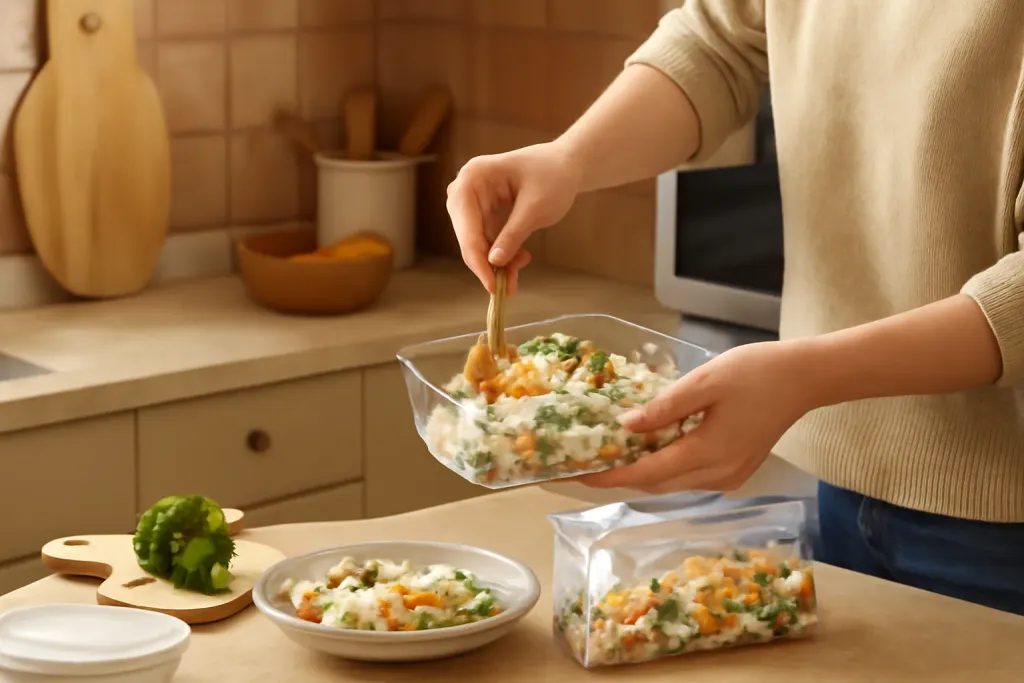
Leftovers are much less likely to go to waste when they are stored with a plan. Instead of placing a pot or tray in the fridge and hoping someone remembers it, portion leftovers into smaller containers as soon as they are cool enough to store. Smaller portions are easier to stack, easier to reheat, and easier to notice. They also make it more likely that someone will take the last serving instead of leaving it behind.
Labeling leftovers with the food name and date can help reduce confusion. This is especially useful when several dishes look similar after a day or two in the fridge. A simple label turns leftovers into something purposeful rather than mysterious. It also helps if your family tends to cook in batches or use shared containers for lunch prep.
It can be helpful to create a dedicated leftover shelf or section in the fridge. When everyone knows where to look, meals are less likely to be forgotten. You may even find that leftovers become the easiest part of dinner planning because they are already organized and visible. That supports a kitchen routine where food gets used, not buried.
Build Storage Habits You Can Keep
The most effective storage system is the one your household can actually maintain. If a setup requires too many steps, it usually falls apart during a busy week. Start with one or two habits that are easy to repeat: label leftovers, keep older food in front, or group similar pantry items together. Once those become routine, add another habit only if it feels manageable.
Family routines help the most when they are simple. A short fridge check before grocery shopping can prevent duplicate purchases. A quick after-dinner sweep can make sure leftovers are stored properly. A weekly pantry reset can keep dry goods from getting lost. These tasks do not need to take long to be effective. They just need to happen often enough to keep food visible and usable.
It can also help to assign storage tasks by age or comfort level. One person can label leftovers, another can group produce, and another can return pantry items to the right bin. Shared responsibility makes the system less likely to break down. The more natural the process feels, the more likely your household will continue using it.
Reducing waste through storage is not about perfection. It is about creating conditions where food stays easy to find, easy to identify, and easy to use. That practical mindset is what makes reduce food waste storage a lasting habit instead of a short-lived kitchen project.