Why a Meal-Prep Labeling System Matters
A good meal prep labeling system does more than make containers look organized. It helps you identify what is in the fridge or freezer at a glance, reduces guesswork on busy nights, and makes it easier to rotate older food ahead of newer food. For families, that can mean fewer forgotten leftovers and a smoother routine when lunches, dinners, and snacks are packed ahead of time.
Labeling also supports consistency. When everyone in the household knows where to look for the date, the meal name, and any serving notes, there is less chance that a container gets opened, sniffed, and put back because no one is sure what it is. A simple system can save time every week without requiring a complicated setup.
The most effective meal prep labeling systems are not the fanciest ones. They are the ones people will actually use every time food gets stored. That means the method should be quick, readable, and easy to repeat. If a label takes too long to make, is hard to remove, or fails in cold storage, it will not last as a household habit.
What Every Label Should Include
At minimum, a practical label should answer three questions: what is it, when was it made, and how should it be used. For most home kitchens, that means writing the meal name, the date prepared, and a helpful note such as “reheat,” “serve cold,” or “contains rice.” Those details make a big difference when several containers look alike.
Many families also benefit from adding portion or destination notes. For example, a label might say “lunches,” “kids’ snacks,” or “dinner side.” That extra line helps sort the food quickly and keeps one container from being mistaken for another. If you pack meals for multiple family members, you may also want initials or a name.
Keep the wording short. Labels work best when they can be read in a glance through a fridge door or while standing over an open freezer drawer. Long sentences are rarely necessary. A clear system with a few standard fields is more useful than a crowded note that no one wants to decipher later.
Label Types That Fit Real Kitchens
There are several common label styles, and each can work well depending on how your household stores food. Removable adhesive labels are popular because they stick securely and can be peeled off when a container is emptied. They are useful for reusable glass or plastic containers, especially if you want a neat, uniform look.
Dry-erase or washable markers are another simple option, especially for containers and lids made for repeated use. These are appealing because they reduce waste and let you rewrite information quickly. The drawback is that not every surface holds marker well, so the writing area should be smooth and easy to clean.
Writable freezer tape and masking-style labels can be useful for short-term storage. They are often chosen because they are easy to write on and remove. For households that batch-cook often, preprinted meal prep labels with blank spaces can also simplify the process. The right choice usually depends on whether you prioritize speed, reusability, or a tidy appearance.
Some families prefer reusable label systems with clip-on tags, chalkboard-style tags, or silicone bands. These can help if you rotate the same containers often and want a method that stays with the container. The tradeoff is that they may add another small step when packing or washing. A good system should feel convenient, not fussy.
How to Build a Meal-Prep Labeling System That Sticks
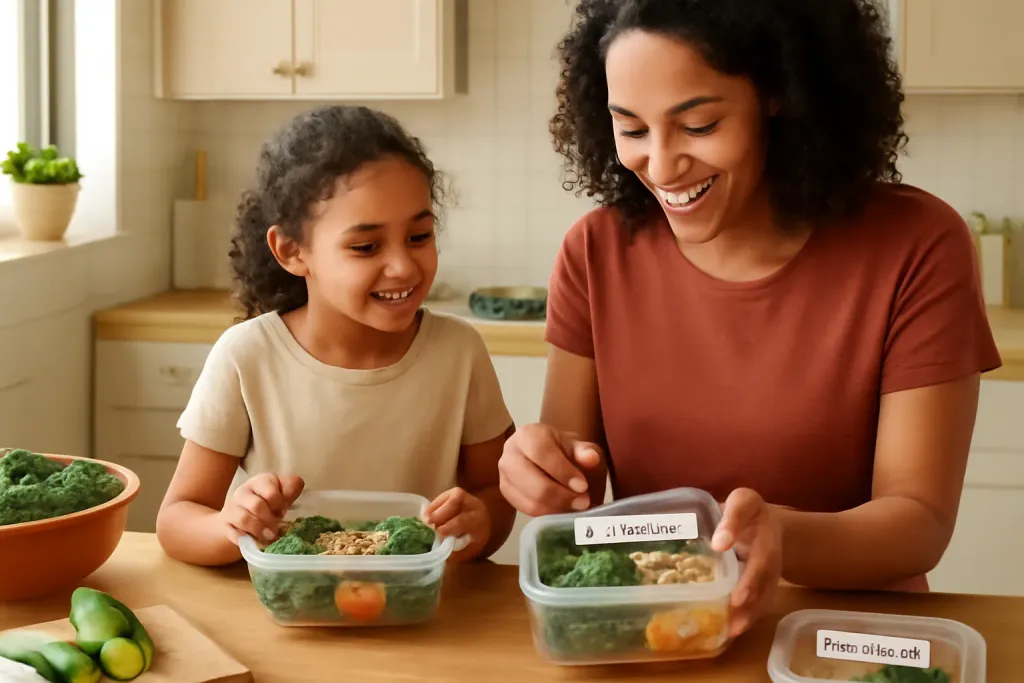
The easiest meal prep labeling system is one built around habits you already have. Start by choosing one label location and using it every time. Many households place labels on the lid, while others prefer the front of the container. Consistency matters because it helps everyone find the information fast, even if the container shape changes.
Next, standardize what you write. If every label includes the same basic fields, it becomes faster to fill out. For example, you might always write meal name first, then date, then a short note. When a system is predictable, it is easier for other family members to use correctly, which matters in shared kitchens.
It also helps to keep supplies in one spot. A small bin with labels, a marker, and a pen near the pantry or prep area removes the barrier of searching for materials. If the tools are easy to reach, you are more likely to label containers before the food goes into the fridge.
Finally, choose a level of detail you can maintain on a busy day. Some families only need a name and date. Others need meal name, date, and reheating note. The best setup is the one that still works when dinner is late, the sink is full, and everyone wants to move on.
Browse our recommended picks
Our featured picks refresh periodically. While we update them, our editorial guides can help you find the right one.
See our guidesMatching Labels to Containers and Storage Habits
Different containers call for different labeling approaches. Glass containers with flat lids often work well with adhesive labels or writable markers because the surface is easy to see and clean. Plastic containers may be better paired with removable labels if you change contents often and want to avoid sticky residue.
Freezer storage is where label choice matters most. Condensation, cold, and stacking can make some labels peel or smear. For that reason, many households favor freezer-safe labels or tape-style labels that stay legible in cold conditions. If you store soups, sauces, or casseroles, choose a method that remains readable after the container has been moved in and out of the freezer.
For lunch bags, snack boxes, and portioned items, smaller labels may be more practical than large ones. A compact label with the meal name and date is often enough. For large family portions, a larger label can help include reheating instructions or serving counts if that is useful in your home.
If you use drawer-style refrigerators or deep freezer bins, think about visibility. Labels on the top may not help if containers are stacked. In that case, side labels or front-facing labels can make a bigger difference. The point is not to label everything the same way, but to label it in the way you will see most easily later.
Common Labeling Mistakes to Avoid
One of the biggest mistakes is making the label too complicated. If it requires too much writing, too many codes, or special knowledge to understand, people stop using it. Simplicity wins. A label should help the next person in the kitchen make a quick decision, not create a puzzle.
Another common problem is inconsistency. If one container has the date on the lid, another has it on the side, and a third has only initials, the system breaks down. Even a good product will not help if the household uses it in different ways. Pick one method and repeat it.
Writing too small is also a frequent issue. Tiny handwriting may look tidy at first, but it is hard to read in a dim fridge or when several containers are stacked together. Use larger letters than you think you need, especially for dates.
It is also easy to forget removal and cleanup. Sticky residue, ink smudges, and worn labels can make containers look messy over time. If you are reusing containers, choose a system that is easy to replace and clean so the setup stays pleasant to use.
A Simple Family Routine for Staying Organized
The most reliable labeling routine is one that takes place during the normal flow of meal prep. When food is portioned, labeled, and stored in the same order each time, the habit becomes automatic. For example, after a container is filled, it can be labeled before the lid goes on and then moved directly to the fridge or freezer.
Families can also benefit from a weekly reset. Once a week, check the containers already in storage, move older items forward, and remove labels from anything that has been used. This keeps the system from becoming cluttered and makes it easier to see what still needs to be eaten.
Another helpful routine is to keep a short list of standard meal names. If your household rotates the same dishes often, using consistent wording saves time and avoids confusion. “Chicken pasta,” “bean chili,” and “veg soup” are easier to track than a new description every time.
For busy parents, the goal is not perfection. It is a repeatable habit that makes weeknights simpler. A meal prep labeling system works best when it fits into real life, not when it adds extra steps that no one wants to maintain.
Choosing the Right Setup for Your Household
There is no single best meal prep labeling system for every kitchen. The right choice depends on how often you batch cook, how many people share the fridge, and whether you reuse containers daily or only occasionally. A household that preps lunches every Sunday may want a different setup than one that stores leftovers a few times a week.
If you want the fastest setup, simple adhesive labels and a permanent marker may be enough. If you want a reusable approach, washable markers, dry-erase labels, or reusable tags may make more sense. If you want the cleanest visual system, preprinted blanks with consistent writing spaces can help keep everything orderly.
When comparing options, think about the parts that matter most to you: ease of use, readability, removal, and how well the system matches your containers. A label does not need to do everything. It just needs to help your household identify food quickly and use it before it is forgotten.
That is the real value of a well-chosen system. It brings order to the fridge, reduces second-guessing, and makes meal prep feel more manageable. For family cooking, that kind of everyday convenience is often the difference between a good plan and one that actually gets used.