Pressure Cooker vs Slow Cooker: The Big Picture
When people compare a pressure cooker vs slow cooker, they are usually trying to solve the same problem in two very different ways: how to get dinner on the table with less effort. Both appliances can help busy households make soups, stews, beans, meats, and one-pot meals, but they do not cook the same way or fit the same routine.
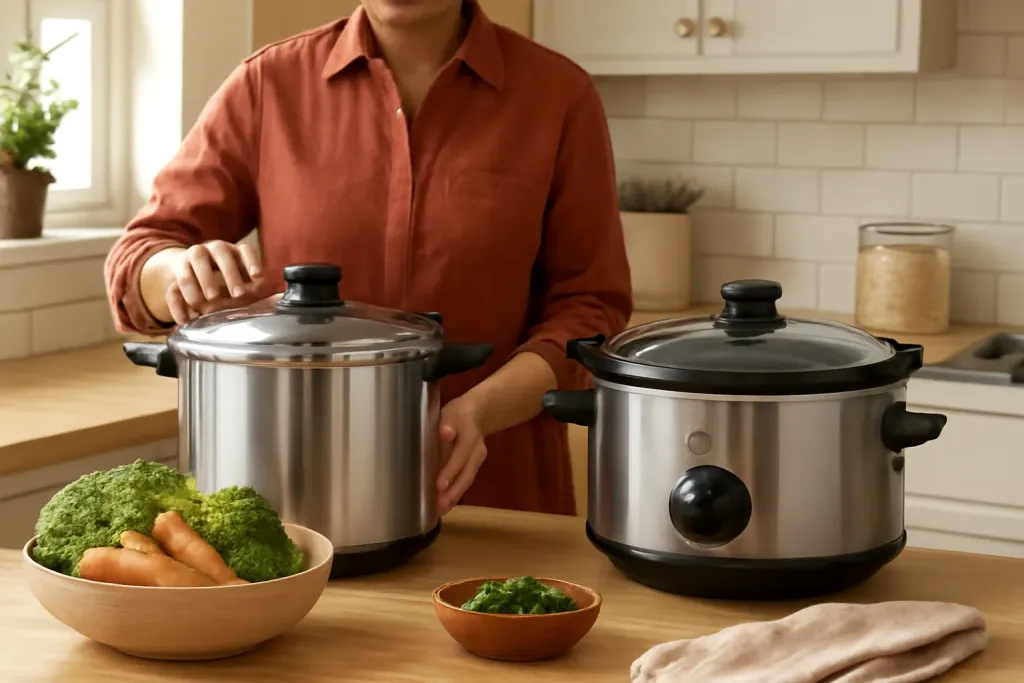
A pressure cooker uses sealed steam and increased pressure to cook food quickly. A slow cooker uses gentle, low heat over several hours. One is designed for speed and concentration of flavor; the other is designed for long, hands-off simmering. That difference affects everything from texture to planning to the type of recipes you are most likely to make.
For families, the right choice often comes down to schedule. If you want dinner in under an hour, a pressure cooker may be the better fit. If you like starting a meal in the morning and returning to it later, a slow cooker can be easier to live with. Many kitchens can benefit from both, but if you are choosing just one, it helps to understand what each appliance does best.
How a Pressure Cooker Works
A pressure cooker traps steam inside a sealed pot, which raises the pressure and allows food to cook at a higher temperature than it would in a normal pot. That is why it can soften beans, tenderize tougher cuts of meat, and cook grains or vegetables much faster than stovetop simmering.
Because the cooking environment is sealed, liquid does not evaporate in the same way it does in an open pot. This can be useful when you want concentrated flavors and shorter cooking times. It also means recipes often use less liquid than people expect, especially if they are used to traditional braises or soups.
Modern electric pressure cookers usually offer preset programs and timer functions, which can make them approachable for home cooks. Still, the basic concept remains the same: use pressure to speed up cooking. That speed is a major advantage, but it also means you need to think more carefully about timing, release methods, and recipe adjustments than you would with a slow cooker.
Pressure cookers are often especially appealing for dry beans, hearty soups, shredded meats, risotto-style dishes, and quick weeknight meals that would normally take much longer on the stove or in the oven.
How a Slow Cooker Works
A slow cooker uses steady, low heat to gently cook food over an extended period of time. Instead of sealing food under pressure, it relies on long, even simmering. This makes it well suited to recipes that benefit from gradual softening, such as braises, chili, casseroles, and many soups.
The appeal of a slow cooker is simplicity. You can often add ingredients in the morning, set the appliance, and let it do the work while you move through the rest of the day. For many families, that kind of set-it-and-forget-it convenience is the main reason to own one.
Slow cookers are also known for producing very tender meats and well-developed flavors, especially in dishes with enough liquid and time to cook slowly. They are not built for speed, but they excel at convenience, predictability, and low-effort meal planning.
Because they cook at a gentle pace, slow cookers are often a natural fit for recipes where timing is flexible. They can be especially useful for weekend meal prep, long workdays, or days when you want dinner waiting without a final rush.
Cooking Time, Texture, and Flavor Differences
The most obvious difference in the pressure cooker vs slow cooker comparison is time. A pressure cooker can turn many slow-cooked recipes into much faster meals, while a slow cooker spreads that cooking over hours. That time difference changes how you plan your day and what you expect from the finished dish.
Texture can also differ. Pressure-cooked foods may be very tender, but they can become overly soft if left too long. Slow-cooked foods also become tender, though the gradual heat can create a different result, especially in recipes where you want ingredients to hold some shape. Vegetables, in particular, may feel more intact in a slow cooker if timed well, while a pressure cooker can make them very soft more quickly.
Flavor development is another practical distinction. Slow cooking gives ingredients a long window to blend together, which is one reason it is popular for stews, sauces, and chili. Pressure cooking concentrates flavor in a shorter time because less moisture escapes. Neither method is inherently better; they simply create different results.
For home cooks, the best choice often depends on what matters more: speed or slow, steady simmering. If you want the meal ready sooner, pressure cooking is hard to beat. If you want a low-effort, all-day approach, a slow cooker may feel easier and more forgiving.
Browse our recommended picks
Our featured picks refresh periodically. While we update them, our editorial guides can help you find the right one.
See our guidesWhich Recipes Work Best in Each Appliance
Some recipes are flexible enough to work in both appliances, but each tool has clear strengths. A pressure cooker is often a strong choice for recipes that normally rely on long simmering but need to be finished quickly. Think beans, lentils, soups, shredded chicken, pot roast-style dishes, and grains that can handle a short, intense cook.
A slow cooker shines when the goal is simplicity and long, gentle cooking. It is often a good fit for chuck roast, pulled meats, chili, broths, baked-style casseroles, and family meals that can stay on the warm side for a while after cooking is done. Dishes with layered flavor and sturdy ingredients often do well here.
Not every recipe transfers perfectly between the two. Foods that can break down easily may need more attention in a pressure cooker. Meanwhile, recipes with delicate ingredients or very little liquid may not be as forgiving in a slow cooker. This is why it helps to choose the appliance based on the recipe, not just the ingredient list.
If you cook a lot of bean-based meals, soups, and quick braises, a pressure cooker may save the most time. If you like roasts, chili, and meals that can hold on low heat while you handle the rest of the day, a slow cooker may be the more natural option.
Ease of Use, Planning, and Everyday Kitchen Fit
Ease of use means different things to different families. A pressure cooker can be very convenient once you understand the settings, but it usually asks for more attention up front. You may need to plan for pressurizing, timed cooking, and release methods. That is manageable, but it is a more active style of cooking than simply switching on a slow cooker in the morning.
A slow cooker is often the simplest option for people who want minimal decision-making during the day. Once the ingredients are in, it typically stays on the same path until dinner. That can be especially appealing for parents juggling school pickups, remote work, errands, and evening activities.
Counter space and storage can also matter. Some households prefer a single appliance that handles one main role well, while others want a device with multiple cooking functions. In an independent kitchen, the best fit is usually the one that aligns with the way your family actually eats. If your schedule is unpredictable, speed may matter most. If your schedule is fixed but full, long unattended cooking may be the winner.
It is also worth thinking about the final step of the meal. Pressure cookers often require more immediate attention once the cooking cycle ends, especially if you are planning to finish the dish or release pressure carefully. Slow cookers are usually more forgiving if dinner time shifts slightly.
Safety, Care, and Practical Considerations
Any discussion of pressure cooker vs slow cooker should include practical care and safe use. A pressure cooker works under seal, so it depends on functioning parts, proper locking, and correct release practices. That makes reading the manual and following the manufacturer’s directions especially important. The appliance is designed to be convenient, but it is not meant to be improvised.
Slow cookers are simpler in operation, but they still benefit from thoughtful use. Ingredient amounts, lid placement, and cooking time can influence the outcome. Because the appliance runs for hours, it is helpful to use recipes that are intended for slow cooking rather than assuming any stovetop recipe will translate directly.
Cleaning is another everyday factor. Both appliances usually involve a removable cooking vessel or insert, though exact design varies by model. If easy cleanup matters to your household, look for features that make washing and handling more convenient, such as removable inserts and straightforward controls. Those details can affect how often you actually use the appliance.
It is also smart to consider what kind of leftovers your family tends to make. Both appliances can support batch cooking, but the cooking method may affect how well certain dishes hold up in storage and reheating. In general, choosing an appliance that matches the way you cook most often will make it more useful over time.
How to Choose Between a Pressure Cooker and a Slow Cooker
If you are deciding between these two appliances, start with your schedule. If your main challenge is getting dinner done quickly after work, a pressure cooker may offer the most value. If your main challenge is having dinner ready with almost no effort during the day, a slow cooker may be the better fit.
Next, think about the meals your family actually enjoys. If you make beans, grains, soups, and fast braises often, pressure cooking can save a lot of time. If you lean toward roasts, chili, and comfort foods that benefit from long, gentle heat, slow cooking may feel more natural.
It also helps to consider how comfortable you are with kitchen timing. Pressure cookers reward attention to timing and procedure. Slow cookers reward planning ahead. Neither approach is better for everyone. The right appliance is the one that makes it easier to cook at home more often.
For many households, the question is not really which one is best overall. It is which one best fits your routine right now. If you only have room for one appliance, choose the one that solves the bigger problem in your kitchen. If you have room for both, they can complement each other rather than compete.