What a Paring Knife Is For
A paring knife is one of the smallest knives in a home kitchen, but it can be one of the most useful. It is made for close, controlled work rather than force. Common jobs include peeling fruit, trimming vegetables, removing stems, coring tomatoes, segmenting citrus, and making small decorative cuts. If a chef’s knife feels too large for delicate prep, a paring knife fills that gap.
For family cooking, the appeal is simple: a good paring knife can handle many quick tasks without forcing you to switch tools. It is especially helpful with uneven or small foods such as apples, potatoes, peppers, garlic cloves, and herbs. Still, it is not meant to replace a larger prep knife. Think of it as a detail tool that belongs alongside the rest of your cutlery.
When shoppers look for a paring knife buying guide, they are usually trying to separate useful features from marketing language. The most important question is not which knife sounds the most impressive, but which one feels natural in your hand and suits the prep you actually do at home.
Choose the Right Blade Shape
Paring knives usually come in a few blade styles, and each has its own strengths. The straight or spear-point paring knife is the most versatile. It gives you a fine tip for detail work and a narrow blade for controlled slicing, which makes it a practical starting point for many households.
Bird’s beak, or tourné, paring knives have a curved blade. That shape can be useful for peeling round produce and making curved cuts because it follows the contour of the food. If you peel a lot of fruit or want a more specialized trimming tool, this style may be worth considering.
Some paring knives have a slightly wider blade or a more pronounced drop point. Those designs can feel comfortable for users who want a little more knuckle clearance or a sturdier look in the hand. The tradeoff is that they may feel less nimble for very tiny work. For most home cooks, the best blade shape is the one that matches the tasks you do most often, not the one that looks most dramatic online.
Grip style matters too. Some cooks hold a paring knife close to the blade for peeling and trimming, while others use a more relaxed hold. A shape that feels predictable in both grips is usually easier to live with day after day.
Look Closely at Blade Material and Edge Retention
Blade material affects how a paring knife behaves over time. Most home cooks will see stainless steel, high-carbon stainless steel, and sometimes ceramic. Stainless steel is popular because it is generally easy to care for and resists corrosion well in normal kitchen use. High-carbon stainless steel is often chosen by people who want a sharper-feeling edge with good durability while still keeping some of the convenience of stainless steel.
Edge retention means how long the blade stays useful between sharpenings. In practical terms, it is not only about whether a knife can get sharp, but whether it stays sharp through regular prep. That matters with a paring knife because detail work becomes frustrating when the edge starts to drag. No knife stays sharp forever, so the best choice is the one that fits your maintenance habits.
Ceramic paring knives can stay sharp for a long time in some uses, but they are more brittle than metal blades and can chip if dropped or used carelessly. For many family kitchens, stainless or high-carbon stainless offers a better balance of strength, care, and everyday flexibility.
When comparing products, do not focus only on claims of extreme sharpness. A better question is whether the blade material fits the kind of upkeep you are willing to do. If you are comfortable with occasional honing and sharpening, a metal blade is usually the more practical long-term choice.
Get the Size and Control Right
Paring knives are short, but they are not all equally easy to control. A smaller blade can feel precise for delicate peeling and trimming, while a slightly longer blade may be more comfortable if you want a bit more reach. The key is to match the knife to your hand size and the jobs you actually do.
Control depends on more than length. Blade thickness, tip shape, handle shape, and overall balance all affect how the knife moves. A blade that feels too thick may be harder to guide around curved produce. A tip that feels overly delicate may make you cautious in a way that slows you down. A well-sized paring knife should feel like an extension of your fingers rather than a miniature chef’s knife.
If several people in the household will use the knife, look for a shape that feels intuitive to more than one person. Very small handles or unusual grips may work well for one user but feel awkward for another. A good choice is often the one that makes routine kitchen work easiest.
It can help to picture the motions you use most often: pinching, turning, peeling, and tiny slicing movements. The right size should support those motions without forcing you to adjust your grip constantly. Because paring knives are used close to the food and your fingers, small differences in size can matter more than they seem in a listing.
Browse our recommended picks
Our featured picks refresh periodically. While we update them, our editorial guides can help you find the right one.
See our guidesPay Attention to Handle Comfort and Grip
The handle matters as much as the blade, especially for a knife used in close, repetitive motions. A comfortable handle can reduce hand fatigue and help you stay confident while trimming small items. Look for a shape that fits your grip without requiring you to squeeze tightly.
Handle materials vary. Wood can feel warm and classic, but it may need more care than synthetic options. Plastic and composite handles are often easy to clean and can offer a secure, practical feel for everyday kitchens. Metal handles may look sleek, but depending on the finish and hand moisture, they can feel slippery to some users.
Texture is important. A handle that is too slick can become annoying when your hands are damp from washing produce. Very aggressive texture, though, may feel uncomfortable during longer prep sessions. The best choice is usually somewhere in the middle: secure, easy to hold, and smooth enough for repeated use.
It is also smart to think about how the handle will feel during real tasks such as peeling apples at the sink or trimming herbs near a cutting board. A paring knife does not need a large handle, but it does need to feel stable and predictable. If the handle suits your grip style, daily prep usually feels smoother.
Consider Balance, Weight, and Tang
Balance describes how the knife feels when you hold it. A well-balanced paring knife should feel steady without tipping awkwardly toward the blade or the handle. In a small knife, balance helps with control more than power. You want the tip to move accurately without the knife feeling fussy or front-heavy.
Weight is partly personal preference. Some cooks like a light knife because it feels agile and easy to maneuver. Others prefer a bit more weight because it gives a sense of stability. There is no single correct answer, but a paring knife should not feel so heavy that it tires your hand during fine work.
The tang is the part of the blade that extends into the handle. A full tang is often associated with a sturdier feel, though overall construction matters just as much as the term itself. For a paring knife, the main benefit of a well-made tang is the sense of solidity and control it can provide. A knife that feels loosely assembled or unsteady is rarely a good fit for careful prep.
When reading product descriptions, balance and construction details are often more useful than decorative design language. A compact knife should still feel composed, not flimsy. The best sign is that it is easy to direct in short, repeated motions.
Think About Maintenance and Long-Term Value
A paring knife should fit into your routine, not complicate it. Before buying, consider how much care you want to give the knife. Many blades are best kept in good condition with hand washing and prompt drying. Even if a product seems sturdy, hand washing is usually the safer long-term habit for keeping a knife in shape.
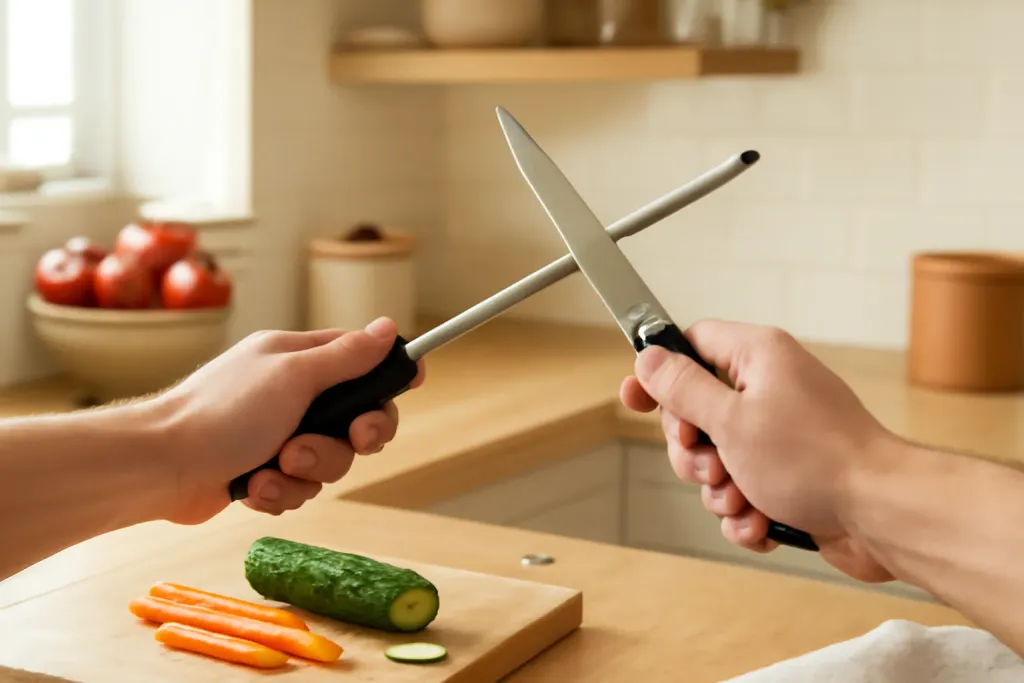
Sharpening is part of ownership. A good paring knife should be able to return to service with normal sharpening tools or professional sharpening help, depending on your preference. If the blade has an unusual shape or a very delicate edge, it may be harder to maintain consistently. That can work for some people, but many home cooks are better served by a simple, maintainable design.
Long-term value is not just about how a knife looks when new. It is about whether it continues to feel useful after repeated prep sessions. A modestly priced, easy-to-care-for knife that stays comfortable in the hand may be a better fit than a more ornate knife that does not suit your kitchen habits. In a family setting, practical durability usually matters more than novelty.
Before you choose, ask whether you want a low-fuss tool for everyday trimming or a more specialized knife for occasional detail work. That question often leads to a better purchase than chasing features you will not use. The best paring knife is usually the one that stays easy to reach for, easy to clean, and easy to keep sharp enough for the next task.
How to Shop With Confidence
When comparing paring knives online, focus on the details that affect daily use: blade shape, handle comfort, blade material, balance, and care requirements. Product photos can help, but written descriptions often reveal more about how the knife is built and intended to work. Look for clear information rather than exaggerated claims.
It also helps to think about your own kitchen routine. Do you mainly peel fruit, trim vegetables, or handle precise garnish work? Do you want one dependable small knife for everyone in the home, or a more specialized option for one primary cook? The answers can point you toward a sensible choice.
If you remember only one thing from this paring knife buying guide, make it this: prioritize comfort and control over flashy features. Those two qualities matter most in a knife this size. Once you know what blade shape you prefer and what handle feels comfortable, comparison shopping gets much simpler.
The right paring knife should support everyday cooking without demanding much thought once it is in your hand. That is what makes it a worthwhile kitchen buy.