Start With the Right Expectations
If you want to know how to prevent nonstick pans from wearing out, the first step is understanding what nonstick cookware is meant to do. These pans are convenient because they reduce sticking and make cleanup easier, but they are not designed to last forever. The coating can slowly lose performance over time, especially when it is exposed to heat, abrasion, and rough cleaning habits.
That does not mean a nonstick pan is fragile in everyday use. It means longevity depends heavily on how it is handled. A pan used for gentle weekday cooking can stay useful much longer than one exposed to high heat, metal tools, stacking without protection, and aggressive scrubbing. In other words, the way you cook and clean matters just as much as the brand name or the price tag.
For family kitchens, nonstick pans often become the go-to tool for eggs, pancakes, reheating, and quick sautés. Because they are used so often, small habits add up. The good news is that many of the most effective ways to extend a pan’s life are simple, low-effort changes that fit into normal cooking routines.
Use Heat More Carefully
Heat is one of the biggest factors in premature wear. A common mistake is assuming nonstick pans need high heat to perform well. In most everyday cooking, that is not true. Medium or medium-low heat is usually enough for eggs, vegetables, and many delicate foods. Using gentler heat helps protect the coating and also reduces the chance of food sticking or scorching.
It is also wise to avoid heating an empty nonstick pan for long periods. An empty pan can heat unevenly and more quickly than expected, which stresses the surface. If a recipe requires preheating, keep it brief and add oil, butter, or food as soon as appropriate. This is especially important on stronger burners, where temperature can rise fast.
Flames that extend beyond the base of the pan are another issue to watch for on gas stoves. Excess heat traveling up the sides can age the coating faster. Matching the pan size to the burner and keeping the flame under control can help the cookware wear more evenly. On any cooktop, patience tends to be better for nonstick than high-intensity heat.
Choose Utensils That Protect the Surface
Utensils are a major part of day-to-day wear. Metal forks, knives, whisks, and spatulas can scratch the coating or leave marks that gradually reduce nonstick performance. To help prevent that, it is best to use silicone, wood, bamboo, or heat-safe plastic tools that are made for coated cookware.
This is not only about avoiding dramatic scratches. Even small, repeated nicks can shorten the useful life of a pan. Stirring, flipping, and scraping with the right utensils helps keep the coating smoother for longer. If a recipe calls for mixing thick ingredients, use gentle motions rather than digging into the surface.
It is also smart to be careful with appliances and accessories that come into contact with the pan. For example, use non-abrasive tools when removing food and avoid cutting directly inside the pan. The more the coating is treated like a delicate surface rather than a cutting board, the longer it is likely to remain effective.
Wash Gently and at the Right Time
Cleaning habits can make the difference between a pan that stays usable for years and one that loses its slick surface early. After cooking, let the pan cool before washing it. Running a hot pan under cold water can create unnecessary thermal stress, and it is simply harder on the cookware overall. A brief cooling period is usually enough.
When it is time to wash, use warm water, a mild dish soap, and a soft sponge or cloth. Avoid steel wool, abrasive powders, and rough scrub pads. These can dull the coating even if they do not leave obvious damage right away. If food has stuck on, soak the pan in warm soapy water instead of scrubbing harder.
It can also help to resist putting a nonstick pan in the dishwasher unless the manufacturer specifically says it is dishwasher-safe. Even then, handwashing is often the gentler option. Dishwasher detergents, repeated high heat, and contact with other items can all contribute to wear over time. A quick hand wash is usually the more protective habit.
Browse our recommended picks
Our featured picks refresh periodically. While we update them, our editorial guides can help you find the right one.
See our guidesCook With the Pan, Not Against It
Many people accidentally shorten a nonstick pan’s life by using it for jobs it is not meant to do. A nonstick skillet is ideal for low-to-moderate heat cooking, but it is not the best choice for every technique. If you routinely use it for browning at very high heat, reducing sauces aggressively, or searing foods that need a harder surface, the coating may wear faster.
Using a little oil or butter can help food release more easily and reduce friction on the coating. That does not mean the pan must be heavily greased every time, but a light layer often supports both cooking performance and surface protection. Preheating followed by a small amount of fat is usually a better approach than relying on a dry, overheated pan.
It is also helpful to avoid aerosol cooking sprays that can leave residue on some nonstick surfaces. Over time, that residue may build up and make the surface seem less slick. If you prefer spray, check whether your pan maker gives specific care guidance. Otherwise, a brush or measured pour of oil is a safer default for routine use.
Store and Stack Them Properly
Storage may not seem important, but it is a frequent source of wear. When pans are stacked directly inside one another, the cooking surface can rub against other cookware, lids, or utensils. That friction may not cause immediate damage, but it can slowly affect the coating. If you stack your cookware, place a soft pan protector, paper towel, or clean cloth between pieces.
Hanging a nonstick pan can be a good option if you have the space and a secure rack. If that is not practical, store it so the surface is not constantly in contact with heavy items. Be especially careful with how lids are placed on top of pans, since repeated pressure and movement can leave marks over time.
For households with crowded cabinets, this step is often overlooked. Yet a pan that is treated gently between uses can maintain its performance much longer than one that gets scraped around every day. Good storage is one of the easiest ways to prevent avoidable wear.
Watch for Early Warning Signs
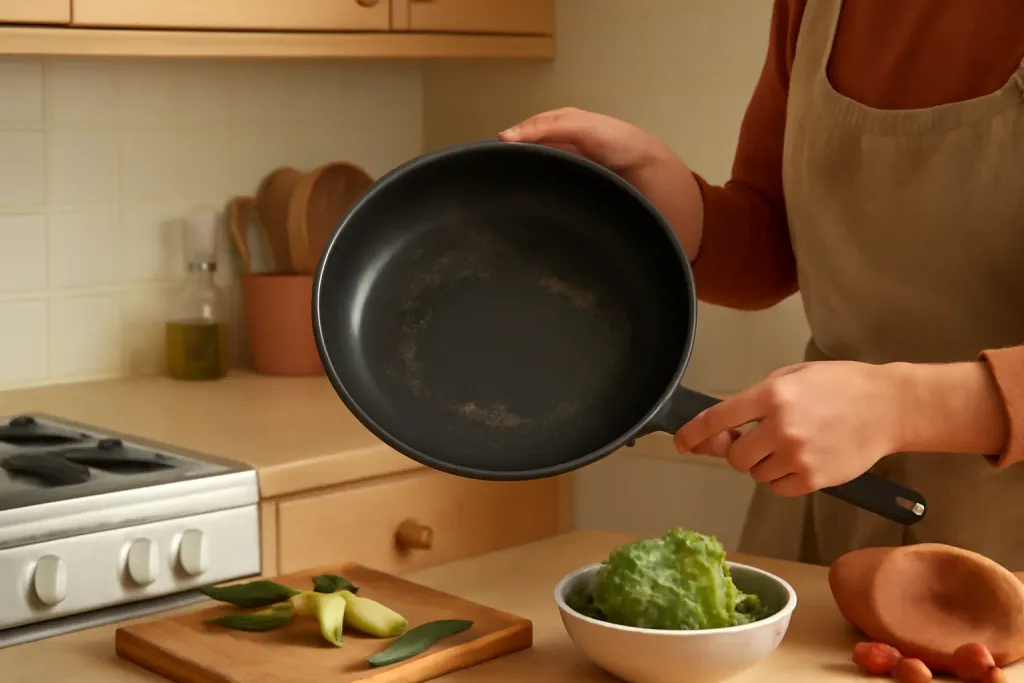
Even with careful use, every nonstick pan eventually changes. The key is noticing early signs before the cookware becomes frustrating to use. If eggs start to cling more than they used to, if the surface looks dull in high-contact areas, or if small scratches are appearing, those are signs the coating is beginning to age.
At that point, adjusting your habits may help slow further wear. For example, you might reduce heat a little more, switch to gentler utensils, or reserve that pan for lighter tasks. A pan that is no longer ideal for delicate foods may still work well for reheating or low-stress cooking, depending on its condition.
If the coating is flaking, peeling, or heavily damaged, replacement is usually the practical choice. No amount of careful use can restore a worn coating. The best approach is to extend the useful life of the pan while it is still in good shape, then retire it once performance drops too far for your needs.
Build Simple Habits That Add Up
The most effective answer to how to prevent nonstick pans from wearing out is consistency. No single habit matters as much as the combination of several small ones practiced over time. Moderate heat, soft utensils, gentle washing, sensible storage, and careful cooking all work together to protect the coating.
It can help to think of nonstick cookware as a convenience tool that rewards respectful handling. You do not need a complicated routine or special equipment to keep it in better condition. You just need to avoid the practices that create unnecessary friction, heat stress, and surface damage.
For busy family kitchens, that usually means assigning the nonstick pan to the jobs it handles best and leaving harder tasks to other cookware. When you match the pan to the right cooking style and clean it with care, you are more likely to enjoy the ease that made you buy it in the first place.
Used well, a nonstick pan can remain a dependable everyday helper instead of becoming a short-lived purchase. The goal is not perfection; it is reducing avoidable wear so the pan performs smoothly for as long as possible.