Why Regular Cleaning Matters
Learning how to clean a slow cooker is one of the simplest ways to keep a busy kitchen routine running smoothly. Slow cookers often handle soups, stews, chilis, sauces, and braises, which means they can collect dried-on residue, grease, and lingering odors over time. A clean appliance is easier to use, easier to store, and less likely to develop stubborn buildup that makes future cleanup harder.
Regular maintenance also helps you notice small issues early. You may spot a nick in the glaze of a ceramic insert, a loose handle, or food trapped around the lid edge before it becomes a bigger nuisance. For families who rely on slow cooking for weeknight meals, keeping the appliance in good shape can make prep and cleanup feel much more manageable.
The best approach is usually simple: clean the insert, lid, and exterior after each use, then do a deeper refresh when you see stains, cloudy residue, or odors that do not go away with routine washing. A few gentle habits go a long way.
Before You Start Cleaning
Before you clean a slow cooker, make sure it is turned off, unplugged, and fully cooled. Warm surfaces can be uncomfortable to handle, and a sudden temperature change may stress some inserts or lids. Let the cooker sit long enough to cool naturally rather than trying to speed up the process with cold water.
Check the care instructions for your specific model if they are available. Some slow cooker parts are dishwasher safe, while others are meant to be washed by hand. The insert may be ceramic, stoneware, or another material, and the lid may be glass or another heat-resistant surface. Cleaning methods can vary a little depending on those details.
Gather a soft sponge, dish soap, a nonabrasive cloth, and a flexible plastic or silicone scraper if needed. Avoid metal tools that can scratch the surface. If there is burnt-on food, resist the urge to scour aggressively right away; a soak is usually a better first step.
How to Clean the Insert
The insert does most of the heavy lifting, so it usually needs the most attention. For everyday cleaning, wash it with warm water and a small amount of dish soap using a soft sponge or cloth. If food residue is still stuck on, let the insert soak for a while before wiping again. Soaking loosens dried edges and reduces the need for scrubbing.
For stubborn spots, fill the insert with warm soapy water and let it rest for 15 to 30 minutes. Then use a nonabrasive sponge or soft brush to lift the residue. A plastic or silicone scraper can help with thick buildup, but use it gently. The goal is to remove food without damaging the surface finish.
Some inserts are dishwasher safe, which can simplify cleanup on busy days. Even then, hand washing may be a good option for preserving the finish and avoiding chips from crowded racks. If the insert is heavy, hold it securely when lifting it in and out of the sink so you do not knock it against the basin.
If you notice a dull film after washing, rinse thoroughly and dry completely. Leftover soap can create a cloudy appearance. Drying also helps reduce water spots and keeps the insert ready for the next use.
Clean the Lid, Rim, and Seals
The lid often collects condensation, splatters, and tiny bits of food around the rim. Wash it with warm, soapy water and a soft sponge, then rinse and dry it well. If the lid has a vent or a sealing edge, pay close attention to crevices where residue can hide. A soft cloth wrapped around a fingertip can help reach narrow areas without scratching them.
If your slow cooker has a removable gasket or seal, check the manufacturer’s instructions before taking it off. Some seals can be removed for cleaning, while others should stay in place. Clean removable parts separately and let them dry fully before reassembling the cooker. Moisture trapped in the seal area can lead to an unpleasant smell over time.
For glass lids, avoid sudden temperature changes and harsh abrasives. A gentle wash is usually enough, even when the lid looks cloudy from steam. If you see sticky buildup near the handle or edges, a little soak in warm water may loosen it more effectively than scrubbing.
Remove Stains and Odors Carefully
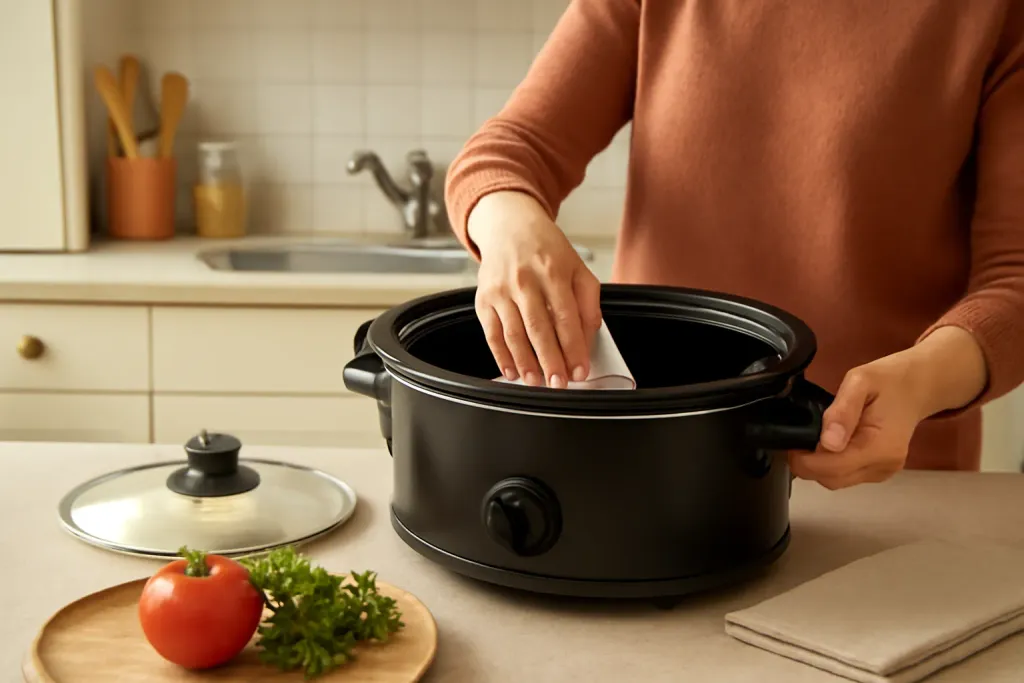
One of the most common reasons people look up how to clean a slow cooker is to deal with staining or lingering smells. Tomato sauces, curries, chili, and long-simmered recipes can leave behind discoloration or a faint odor even after washing. The good news is that many of these issues can be handled with patient soaking and gentle household cleaning methods.
For stains, start with hot water and dish soap. If that is not enough, make a paste with baking soda and water and apply it to the stained area. Let it sit for a short period, then wipe with a soft sponge and rinse well. Baking soda can help lift marks without being overly abrasive, but avoid using it like a scrub powder on delicate surfaces.
For lingering odors, wash the insert and lid thoroughly, then let them air dry completely. Sometimes leaving the lid off and allowing fresh air to circulate is enough to reduce smells. If an odor remains, a warm water soak can help. Be sure to rinse fully afterward so no residue is left behind.
Avoid using harsh cleaners that are not meant for cookware, and do not mix cleaning products. A mild approach is usually the most practical for everyday kitchen equipment.
Browse our recommended picks
Our featured picks refresh periodically. While we update them, our editorial guides can help you find the right one.
See our guidesWipe the Exterior and Control Panel
The outside of the slow cooker needs attention too. Dust, oil, drips, and fingerprints can build up around the base and controls, especially if the appliance sits on the counter between uses. Unplug the unit before cleaning the exterior, and use a damp cloth with a small amount of dish soap if needed. Follow with a clean, damp cloth to remove any soap residue, then dry the surface.
Be careful around the control panel, dial, cord, and heating base. These areas should not be soaked or sprayed directly unless the manufacturer specifically says that is acceptable. Instead, put the cleaner on the cloth first and wipe the surface gently. Keep moisture away from electrical components.
Also check the bottom edge and the area where the insert sits in the base. Small food spills can drip down and dry there, making the cooker harder to lift or store neatly. A quick wipe after each use helps prevent that buildup from becoming a recurring issue.
Prevent Buildup and Protect the Finish
The easiest way to maintain a slow cooker is to prevent heavy buildup in the first place. If possible, clean soon after cooking once the appliance has cooled. Dried food is much harder to remove than fresh residue. Even a brief rinse and soak can make the next wash faster.
You can also reduce cleanup by lightly coating the insert with a suitable cooking spray or by using a slow cooker liner if that matches your household preferences and the manufacturer’s guidance. Liners can make cleanup easier for some recipes, though they are not necessary for every meal. When used, they should still be handled carefully and discarded properly.
Do not use steel wool, abrasive pads, or sharp utensils on the insert or lid. Scratches can make surfaces harder to clean later and may shorten the useful life of the appliance. Likewise, avoid stacking heavy cookware on top of the lid during storage, since pressure can chip or crack it.
Storing the cooker with the lid slightly ajar, when practical and safe, can help reduce trapped moisture and odors. If your space requires the lid to sit on top of the base, make sure both parts are completely dry first.
Simple Maintenance Habits That Help It Last
Good maintenance is about more than washing the parts. A slow cooker works best when handled with a few careful habits. Always place the base on a stable, heat-safe surface during use. When moving the insert, use both hands if it is heavy, and avoid sudden bumps that could chip the edges. Small precautions like these help protect the cooker from accidental damage.
Inspect the insert, lid, handles, and cord from time to time. If you notice cracks, chips, fraying, or loose parts, stop using the appliance until you know whether it is still functional. Cosmetic wear may be only a nuisance, but damage to electrical parts or structural pieces should not be ignored.
Keep the cord loosely coiled when storing the unit, and avoid wrapping it tightly around the base. Tight bends can strain the cord over time. Before the next use, make sure the insert is dry, the lid is clean, and no old residue has settled around the rim. Those small checks are part of keeping a slow cooker reliable for regular family meals.
],Frequently Asked Questions
These quick answers cover common cleanup questions for busy households.
- Clean the insert and lid after each use. Wipe the exterior as needed, and do a deeper clean whenever you notice stains, odors, or residue that regular washing does not remove.
- Some inserts are dishwasher safe, but others are meant to be washed by hand. Check the manufacturer’s instructions before using a dishwasher.
- Soak the insert in warm, soapy water first. If needed, use a soft sponge or a plastic scraper, then rinse and dry completely.
- Wash all removable parts thoroughly, let them air dry, and allow fresh air to circulate. A warm soak can also help reduce lingering smells.
- It is better to avoid them. Abrasive pads and metal tools can scratch the insert or lid and make future cleaning more difficult.