Why Cleaning a Cutting Board Matters
Learning how to clean a cutting board properly is one of the simplest ways to keep everyday cooking organized and pleasant. Cutting boards come into contact with produce, bread, herbs, cooked foods, and often raw meat or poultry, so they need regular washing between tasks and a more thorough clean at the end of the day. A clean board also tends to last longer, looks better on the counter, and is less likely to hold onto odors or bits of food.
The right cleaning approach depends on the board material. Wood, bamboo, plastic, and composite boards all have slightly different needs, but the goal is always the same: remove food particles, wash with a suitable cleaner, rinse well, and dry completely. A few extra minutes of care can help reduce staining, warping, and a sticky surface that makes prep work less enjoyable.
It also helps to separate quick cleaning from deep cleaning. During meal prep, a board may only need a fast wash or wipe before switching ingredients. After cooking, it deserves a more complete cleaning routine. If you make that distinction part of your kitchen habits, the process becomes easier and much more consistent.
Basic Step-by-Step Cleaning
The easiest way to start when thinking about how to clean a cutting board is to use the same simple sequence every time. First, scrape off food scraps with a bench scraper or the back of a knife. Removing loose bits before washing keeps them from spreading around the sink and makes the rest of the process more effective.
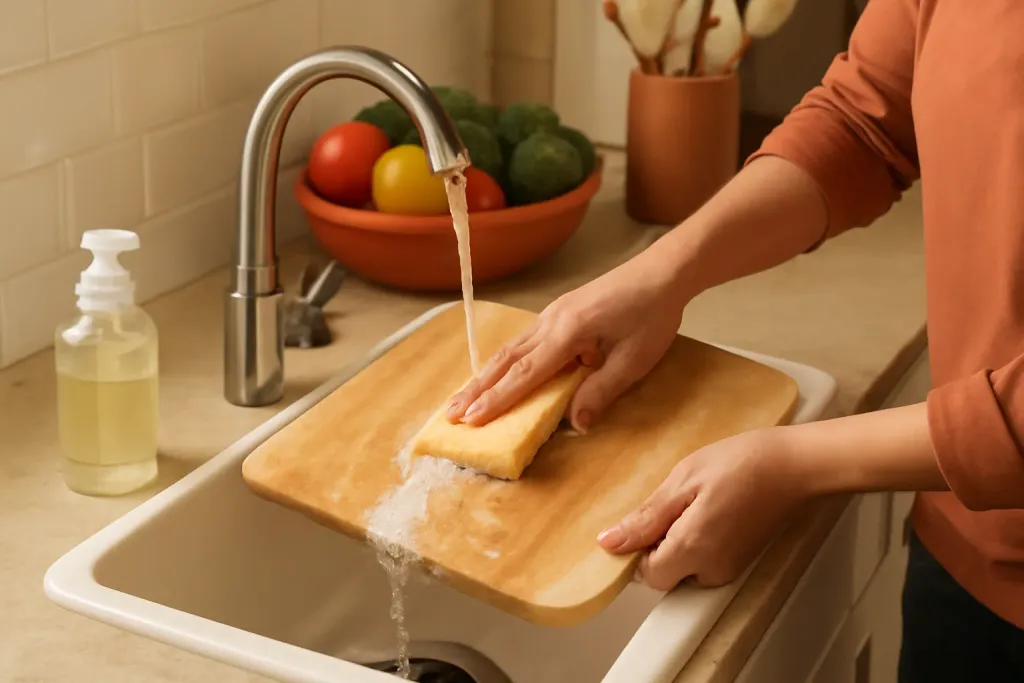
Next, wash the board with warm water and a small amount of dish soap. Use a sponge, soft brush, or non-abrasive pad to clean both sides and the edges. Paying attention to the edges matters because crumbs and juices often collect there, even if the top surface looks clean.
After washing, rinse the board thoroughly so no soap remains on the surface. Then dry it right away with a clean towel. For boards that can be stored upright, letting them air-dry in a well-ventilated spot helps prevent trapped moisture. A board should be fully dry before being put away, especially if it is made of wood or bamboo.
If the board was used for strongly colored foods such as berries, beets, turmeric, or tomato sauce, an extra rinse or a gentle scrub may help. The key is to clean promptly so stains have less time to settle in. Consistent care is usually easier than trying to correct heavy buildup later.
How to Clean Wood and Bamboo Boards
Wood and bamboo boards need a slightly gentler approach than many plastic boards. They should not be soaked in water, left in the sink for long periods, or sent through a dishwasher unless the manufacturer specifically says that is acceptable. Excess water can cause swelling, cracking, or warping over time.
For routine cleaning, use warm water, mild dish soap, and a soft brush or sponge. Clean the surface quickly, rinse it, and dry it immediately. If food has dried on the board, place a warm, damp cloth over the area for a short time to loosen the residue before washing. This is usually easier on the surface than aggressive scrubbing.
Wood and bamboo boards can also benefit from occasional conditioning with food-safe mineral oil or a board conditioner, if recommended by the maker. Conditioning is not a replacement for washing, but it can help keep the board from looking dry and may support the surface finish. If the board begins to feel rough, cleaning and conditioning may help restore a smoother working surface.
Never use harsh scouring powders or metal scrubbers on these materials, since they can damage the grain. A careful routine works better than forcing stubborn spots. If a wood board has deep grooves or cracks that trap food, it may need closer inspection and possible replacement rather than more vigorous cleaning.
How to Clean Plastic and Composite Boards
Plastic and many composite cutting boards are usually more forgiving than wood when it comes to washing. In many cases, they can handle a fuller wash with hot water and dish soap, and some are dishwasher-safe. Still, it is best to check the care instructions for the specific board before assuming high heat is fine.
To clean a plastic board by hand, use hot soapy water and scrub both sides, even if only one side was used. The underside can pick up splashes and residue during prep. Rinse thoroughly and let the board dry completely before stacking or storing it.
Plastic boards can show knife marks more quickly than wood, and those grooves may hold on to food residue. When that happens, more frequent cleaning becomes important. A brush can help lift debris from shallow cuts, but if the surface becomes deeply scarred, the board may be harder to keep clean no matter how careful the washing routine is.
Composite boards often fall somewhere between wood and plastic in care requirements. Some can tolerate more moisture than natural wood, but they may still benefit from hand washing rather than repeated dishwasher cycles. The best habit is to treat each board according to the maker’s care guidance and use gentle cleaning methods whenever possible.
Browse our recommended picks
Our featured picks refresh periodically. While we update them, our editorial guides can help you find the right one.
See our guidesRemoving Odors and Stains
Even when a cutting board is washed properly, it can still pick up odors from garlic, onion, fish, or strongly colored ingredients. For many home cooks, this is the point where knowing how to clean a cutting board beyond the basics becomes useful. Odor and stain removal is usually about time, gentle abrasives, and rinsing well.
For odor control, sprinkle coarse salt or baking soda over the board, then scrub lightly with a damp sponge. A cut lemon may also be used on some surfaces, but it should be used carefully on wood, since repeated exposure to acidic ingredients can be hard on the finish. Let the board sit briefly, then rinse and dry. That may help reduce lingering smells without relying on harsh cleaners.
For stains, make a paste with baking soda and a little water, then rub it onto the affected area with a soft cloth or sponge. Avoid aggressive scrubbing that could roughen the board. On plastic boards, brief sunlight exposure is sometimes suggested for discoloration, but this is not a substitute for proper washing and should be used sparingly to avoid unnecessary wear.
If a board still looks heavily stained after several normal cleaning attempts, that does not mean it cannot be used for everyday prep, but it may be time to decide whether the appearance bothers you enough to replace it. For many families, a board that is clean but visibly worn simply becomes the dedicated board for lower-mess tasks.
Dishwasher vs. Hand Washing
One of the most common questions about how to clean a cutting board is whether the dishwasher is a good idea. The answer depends on the material and the manufacturer’s instructions. Some plastic and composite boards are dishwasher-safe, while most wood and bamboo boards are better cleaned by hand. Heat and moisture can be hard on natural materials and may shorten the life of the board.
Hand washing gives you more control. You can scrub the entire surface, rinse thoroughly, and dry it right away. That control is especially useful for boards with carved handles, juice grooves, or textured finishes where debris may collect. Hand washing also reduces the chance of warping on boards that should stay flat.
Dishwashers can be convenient for boards that are clearly labeled as dishwasher-safe, but they are not automatically the best choice for every situation. High heat and long wash cycles may make some boards age faster. If you are unsure, the better move is to wash by hand and follow the care instructions that came with the board.
For busy family kitchens, a practical approach is to reserve dishwasher use for eligible boards that get heavy daily use, while giving wooden boards a quick but careful hand wash after each session. That combination keeps cleanup manageable without ignoring the needs of different materials.
What Not to Do
There are a few common mistakes that can make a cutting board harder to clean or shorten its useful life. Do not leave it soaking in a sink full of water, especially if it is made of wood or bamboo. Prolonged soaking can lead to swelling and splitting. Do not put a wet board away in a closed cabinet or stack it before it is fully dry, since trapped moisture can cause odors or damage.
It is also a mistake to use very abrasive tools on delicate surfaces. Steel wool, harsh scrub pads, and aggressive cleaning powders can scratch the board and create more places for food to collect. Even if the board looks cleaner immediately, a damaged surface may be harder to maintain later.
Another thing to avoid is mixing up cleaning and sanitizing language. A household cutting board does not need complicated treatment to be useful day to day; what it needs is proper washing, rinsing, and drying after use. If you rely on strong chemicals too often or use them incorrectly, you may create more problems than you solve. Following manufacturer guidance is always the best starting point.
Finally, do not keep using a board that has deep cracks, loose pieces, or surfaces that no longer clean well. When a board becomes difficult to maintain, replacing it can be the more practical option for a home kitchen.
Simple Routine and Storage Tips
The easiest way to keep up with how to clean a cutting board is to build a routine that fits normal cooking habits. Wipe or scrape the board between tasks, wash it promptly after use, and dry it right away. If you use several boards in a week, store them so air can circulate around them rather than nesting them tightly while still slightly damp.
In a family kitchen, it helps to keep separate boards for different jobs when possible. One board might be used for bread or produce, while another is reserved for raw proteins. This does not replace cleaning, but it can make daily prep more organized and reduce cross-contact between ingredients. Simple labeling or color coding can make it easier for everyone in the house to follow the same system.
It is also useful to inspect boards regularly. Look for deep knife grooves, rough patches, stains that keep returning, or areas that feel sticky after washing. Those signs can tell you whether the board needs a deeper clean, conditioning, or retirement. The goal is not perfection; it is a board that is clean, functional, and easy to use for everyday cooking.
With a consistent routine, cutting board care becomes less of a chore and more of a quick closing step after meal prep. That is usually the most realistic way to keep kitchen cleanup under control.