Why knife storage matters in small kitchens
In a small kitchen, every inch of counter, drawer, and wall space has to work harder. Knife storage for small kitchens is not only about putting blades out of the way; it is about making a compact kitchen feel more organized, easier to navigate, and more efficient for everyday cooking. A thoughtful storage choice can reduce clutter, protect knife edges from avoidable contact, and make it quicker to reach the right tool when prep time starts.
For family kitchens, the best solution is usually the one that balances access, protection, and space use. That often means looking beyond the classic countertop block. Some homes do better with a slim drawer insert, while others benefit from a wall-mounted strip or a compact in-drawer tray. The right answer depends on how often you cook, how many knives you own, how much storage you already have, and whether you need to keep blades away from children or crowded work areas.
It also helps to be realistic about daily habits. A storage system that looks tidy but makes it awkward to put knives away will not stay useful for long. The goal is a setup that fits the way your kitchen actually works, not just the way it looks in a product photo.
Start with your space and routine
The first step in choosing knife storage for small kitchens is to look carefully at where you have room and how you cook. Measure the available space before shopping. That includes drawer depth, drawer width, counter length, cabinet interiors, and any free wall area near your prep zone. A storage option can seem compact online and still feel awkward if it does not fit the way your kitchen is laid out.
Think about your cooking routine too. If you chop vegetables daily, a storage method close to the prep surface may be more practical than one tucked in a distant drawer. If you use only a few knives, a smaller holder may be enough. If your collection includes several specialty blades, you may need a more flexible system that keeps them organized without taking over the counter.
It is also worth considering who uses the kitchen. Families with children often prefer storage that keeps blades enclosed or elevated. If several people cook at different times, visibility and ease of return matter more, because a system only works when everyone can follow it. In a small kitchen, the best choice is usually the one that fits both the room and the habits of the people using it.
Compare the main storage types
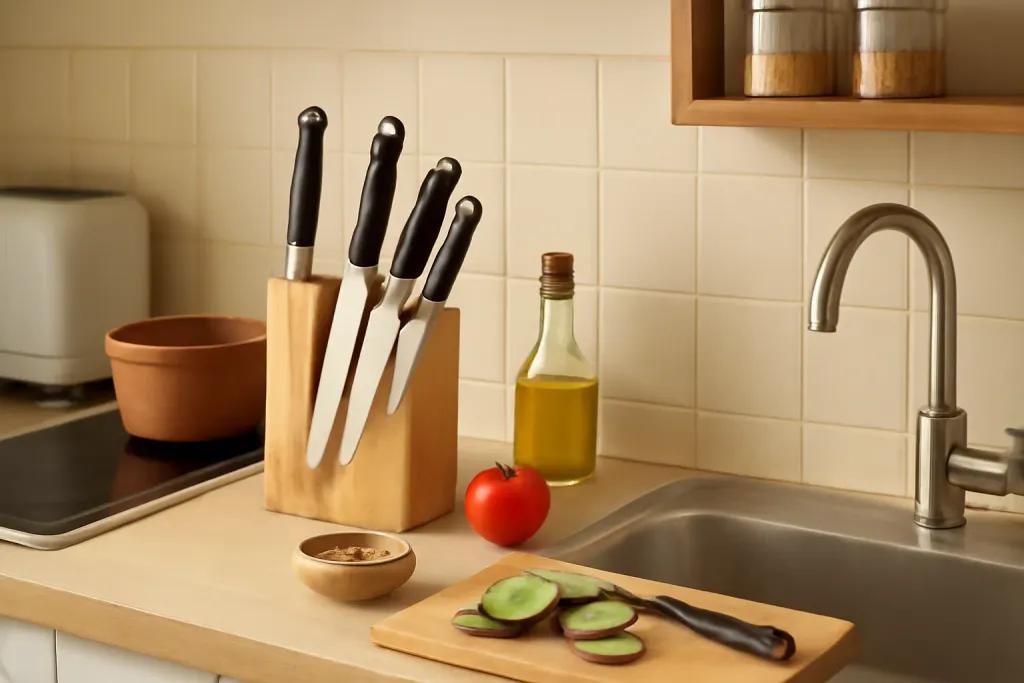
There are several common ways to store knives, and each one has strengths in a small space. Countertop blocks are familiar and simple, but they can occupy valuable work surface. Slim vertical blocks use less footprint than traditional wide blocks, which can make them a better fit for compact kitchens. Still, any countertop option should earn its place by making daily prep easier or by fitting neatly into the space you actually have.
In-drawer storage is often one of the most space-conscious choices. A tray or insert can keep knives flat and separated, which helps reduce drawer clutter and leaves the counter clear for cooking. The tradeoff is that you need a drawer with enough depth and width, and you need to keep the drawer free of bulky utensils that can crowd the knives.
Wall-mounted magnetic strips are another popular option for small kitchens because they free up both counter and drawer space. They can be especially useful near a prep station, but they are not ideal for every household. Some people prefer blades hidden away, and some kitchens do not have a wall location that feels convenient. There are also under-cabinet mounts and hanging systems that save surface space, though they depend on cabinet layout and installation preferences.
Sheaths and blade guards can also help with individual knives, especially if you store them in a drawer or move them between places. They are not a full storage solution on their own, but they can support a mixed setup when space is tight.
Prioritize safety and access
When kitchen space is limited, it can be tempting to focus only on size. But practical storage should also help reduce accidental contact and make the knives easy to return after use. Knife storage for small kitchens should keep blades stable, limit loose movement, and allow you to put knives away without juggling other objects. A system that is hard to use may end up leaving knives on the counter, which creates more risk than it solves.
Think about how the knives are retrieved and returned. Magnetic strips make knives easy to grab, but they also leave blades visible and accessible. That may be a drawback if small children can reach the area. Drawer inserts hide the knives, but they should hold each blade securely so the drawer can open and close without shifting. Counter blocks keep blades covered, though the openings should fit the knives well enough to avoid forcing a blade into a slot that is too tight or too loose.
Placement matters as much as product type. Store knives away from sink splash zones and away from crowded landing spots where hands and dishes pass through frequently. If you choose wall storage, put it in a location that feels natural during prep but not directly in the path of traffic. If you choose a drawer system, select a drawer that does not get overfilled with other tools. Good storage is easier to maintain when it is convenient to use.
Browse our recommended picks
Our featured picks refresh periodically. While we update them, our editorial guides can help you find the right one.
See our guidesChoose materials that fit small-space use
Materials affect both durability and how well knife storage works in a compact kitchen. Wooden blocks are common and can look warm and tidy, but they take up counter space and need regular cleaning around the slots. Plastic or metal systems may be easier to wipe down, and some are designed in slimmer shapes that suit tighter layouts. The best choice depends on how you balance appearance, maintenance, and available room.
For drawer storage, look for inserts that keep knives from rubbing together. A good insert should separate blades enough to reduce clutter and simplify access. If the insert is designed to fit a standard drawer, confirm the measurements so it does not waste space or slide around. In small kitchens, a poorly fitted organizer can create more mess than it removes.
For wall systems, strength and stability matter. A strip or rack should be mounted securely and placed where it will not be bumped constantly. It should also be easy to clean around, since compact kitchens tend to collect cooking splashes and crumbs faster than larger ones. Whatever material you choose, focus on a finish and shape that are easy to maintain in daily life.
Make the most of limited storage
Small kitchens often need a storage solution that does more than hold knives. It should also help streamline the whole prep area. One useful approach is to keep only the knives you use regularly in the most accessible storage, then place less-used tools in a different location. That reduces crowding and keeps the main setup easy to maintain.
If you are short on counter space, consider whether the knife storage can share a zone with other prep tools without becoming cluttered. A drawer insert may work best if it sits alongside other organizers that do not interfere with the blade slots. A wall strip may work well above a narrow prep counter if there is still room for cutting and mixing below it. The aim is to preserve the clear space that makes a small kitchen usable.
It can also help to reassess the number of knives you keep. Many home cooks do not need a large collection within arm’s reach. Choosing a smaller, well-curated set can make storage decisions easier and reduce the need for bulky systems. In a compact kitchen, less often means more manageable. The fewer items you need to store, the more flexible your layout becomes.
Match storage to cleaning and maintenance
In a small kitchen, cleaning convenience is part of the buying decision. Knife storage that is hard to wipe, difficult to remove, or prone to trapping crumbs may become frustrating quickly. A good setup should fit into your cleaning routine without adding much work. That is especially important in busy family kitchens where counters and drawers are already doing double duty.
Countertop blocks can collect debris around the base and inside slots, so they need attention if you want them to stay tidy. Drawer inserts should be simple to lift out or clean around, depending on the design. Wall-mounted options often keep surfaces clearer, but the wall itself may need occasional wiping, especially near cooking areas. The less complicated the maintenance, the more likely the storage will remain practical over time.
Before choosing, ask yourself how often you want to clean the system and whether that fits your schedule. A highly compact option is not always the most convenient if it is awkward to maintain. In a small kitchen, a storage choice that is easy to keep clean can be just as valuable as one that saves space.
How to narrow down your choice
If you are comparing options for knife storage for small kitchens, it helps to narrow the decision with a few practical questions. First, where is the most usable space: counter, drawer, wall, or cabinet interior? Second, how many knives do you need to store daily? Third, do you want the blades visible for quick access or hidden for a cleaner look? Fourth, who uses the kitchen, and does anyone need blades kept out of easy reach?
Once you answer those questions, the right category usually becomes clearer. A tiny counter area may point you toward an in-drawer insert. A busy prep zone with available wall space may favor a strip. A kitchen with limited drawers but a little counter room may work with a compact block. The best solution is the one that reduces friction instead of creating it.
It also helps to think in terms of long-term fit rather than impulse. Choose a storage method that suits the knives you own now and the kitchen layout you plan to keep. If you expect your collection to change, look for a system that can adapt without wasting space. In a small kitchen, adaptability is often just as important as footprint.