What an Enameled Dutch Oven Is
An enameled Dutch oven is a heavy cooking pot, usually made from cast iron, with a smooth enamel coating on the inside, outside, or both. For home cooks, that combination is appealing because it brings together heat retention, even cooking, and a finish that is easier to care for than bare cast iron. It is one of the most versatile pieces in a family kitchen, capable of moving from stovetop to oven for everyday meals.
When people search for an enameled dutch oven buying guide, they are usually looking for a pot that can handle soups, stews, braises, bread, beans, sauces, and one-pot dinners without constant attention. The enamel surface helps prevent the seasoning upkeep that plain cast iron requires, while still giving you the heft and steady heat that make Dutch ovens so useful. That balance is what makes them popular for both new cooks and experienced home cooks.
It also helps to think of a Dutch oven as a long-term kitchen tool rather than a novelty item. Because it is sturdy and multipurpose, the right one can support weeknight meals, weekend projects, and holiday cooking alike. The main challenge is choosing the version that fits your household, your cooktop, and the kinds of dishes you actually make.
Why Families Buy One
Families often choose an enameled Dutch oven because it can replace several less versatile pans. A single pot can start on the stove to brown meat or soften onions, then finish in the oven for slow cooking. It can also go straight to the table for serving, which is helpful when you want fewer dishes and a more contained cooking process.
The enamel finish adds convenience for everyday use. Unlike raw cast iron, it does not need seasoning after each cleaning. That matters in busy homes where people want practical cookware that fits into normal routines. It is also easier to keep an eye on sauces and braises because the bright interior on many models makes it simpler to see browning and color changes, though not all Dutch ovens use a light interior.
Another reason families value this cookware is its ability to handle batch cooking. If you make chili, soup, pasta sauce, pulled meat, or large vegetable dishes, the oven’s deep shape can be a real advantage. Leftovers reheat well in the same vessel, and the tight-fitting lid helps support moist cooking methods. For many households, that mix of durability and flexibility is what makes the purchase worthwhile.
Choosing the Right Size and Capacity
Size is one of the most important decisions in an enameled Dutch oven buying guide. Too small, and it will feel cramped for family meals; too large, and it may be awkward to lift, store, and heat efficiently. Common household sizes usually fall into the range of about 4 to 7 quarts, though smaller and larger options exist.
A 4-quart model can suit side dishes, smaller households, and recipes like soups or braises that do not need a huge volume. A 5-quart pot is often a practical middle ground for everyday use, especially if you cook for two to four people. A 6- or 7-quart Dutch oven gives more room for bigger batches, whole chickens, bread dough, or meals that need extra stirring space. If you regularly cook for a crowd or like freezing leftovers, a larger size may make sense.
It is worth thinking beyond recipe yield and considering storage and weight. Enamel-coated cast iron is heavy even before food is added, so the larger the pot, the more important handle shape and comfort become. Also consider whether your oven space can accommodate the lid and the full height of the vessel. The best size is the one you will actually reach for often, not the one that looks most impressive on a shelf.
Shape, Lid, and Design Details
Most shoppers picture the classic round Dutch oven, and for good reason. Round shapes work well for soups, stews, sauces, and braises because heat can circulate evenly and stirring is easy. Oval versions can be useful for longer cuts of meat, whole poultry, or roasts that benefit from extra length. If you cook a wide range of family meals, the shape you choose should reflect your most common recipes.
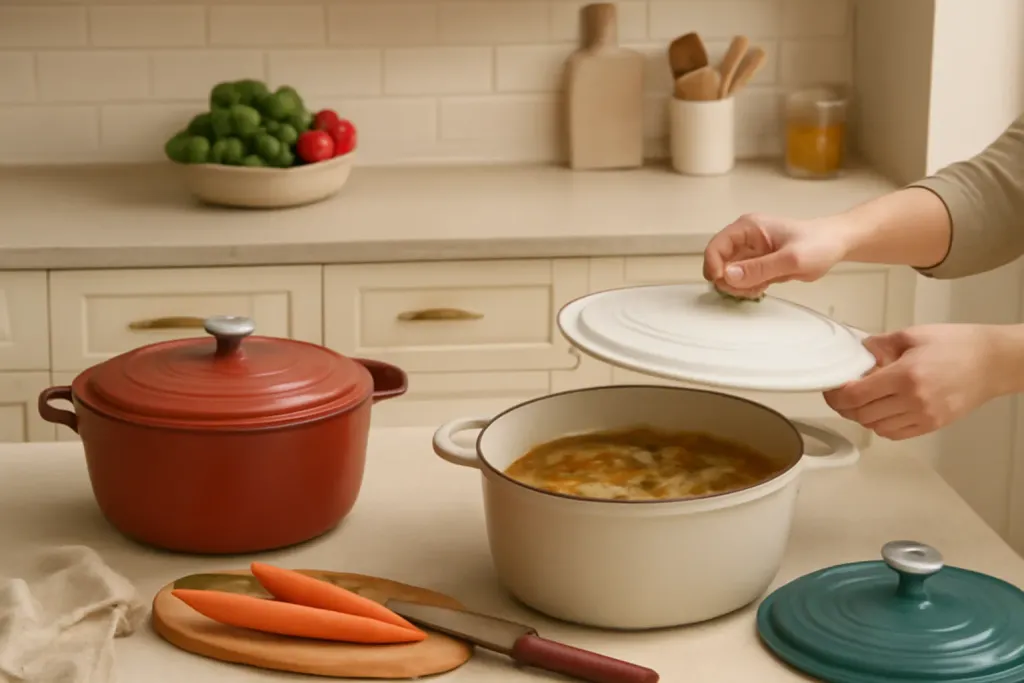
The lid matters more than many buyers expect. A well-fitting lid helps trap moisture, which supports gentle braising and slow cooking. Some lids are plain, while others include raised patterns or self-basting elements that direct condensation back onto the food. Those details can be nice, but they should not outweigh fit, weight, and comfort. The lid should feel secure without being hard to remove when hot.
Handle design is another practical point. Wide side handles are easier to grip with oven mitts, especially if you move the pot when it is full. Knob material also deserves attention. Metal knobs are often made to tolerate higher oven temperatures than some plastic or composite knobs, which can matter if you bake bread or use very hot oven settings. Finally, look at the enamel interior and exterior finish. A lighter interior can make browning easier to monitor, while darker interiors may show wear differently. Either can work well if the overall build is sound.
Materials and Construction That Matter
Most enameled Dutch ovens are made from cast iron, and that is a major part of their appeal. Cast iron is dense and retains heat well, which helps the pot stay steady once it is hot. That stability is useful for slow simmering, oven braising, and dishes that should not lose heat too quickly after ingredients are added.
The enamel coating is a glass-like surface fused to the iron. It provides a non-reactive cooking surface compared with bare metal, which is one reason many cooks like it for tomato-based sauces and other acidic dishes. Still, the quality of the enamel and the underlying cast iron both matter. A smoother coating, solid construction, and balanced weight can contribute to easier use over time. Very thin or unevenly finished pieces may feel less durable or less pleasant to handle.
Weight is part of construction, too. A heavy lid and thick walls help with heat retention, but they also affect everyday usability. Consider who will lift the pot, where it will be stored, and how often it will be transferred from stove to oven. In practice, the best construction is not just about durability; it is about how comfortably the pot fits your routine. A good enameled Dutch oven should feel substantial without becoming a burden.
Browse our recommended picks
Our featured picks refresh periodically. While we update them, our editorial guides can help you find the right one.
See our guidesCooktop and Oven Compatibility
Before buying, check whether the Dutch oven will work well with your cooking setup. Most enameled cast iron works on gas, electric, ceramic, and induction cooktops, but you should still confirm the manufacturer’s guidance for the specific model. If you have induction, the pot needs a magnetic base, which many enameled cast iron pieces already provide.
Oven compatibility is equally important. Many Dutch ovens are designed for oven use, but temperature limits can vary based on the lid knob, handles, or exterior details. If you plan to bake artisan-style bread or roast at high heat, make sure the whole unit is suitable for those temperatures. A pot that handles stovetop searing well may still have lid hardware with lower heat tolerance.
It also helps to think about your everyday cooking habits. If you often move from stovetop to oven, select a pot with comfortable side handles and a lid you can lift safely. If you mostly use it for long simmers on the stove, you may prioritize capacity and a stable base. Compatibility is not just a technical detail; it is about matching the cookware to the way your kitchen actually works.
Care and Maintenance Basics
One of the biggest advantages of an enameled Dutch oven is that it is generally easier to care for than bare cast iron. Even so, it still benefits from gentle handling. Let the pot cool before washing it, unless the manufacturer says otherwise. Moving from very hot cookware to cold water can stress the enamel, so a little patience goes a long way.
Most models can be cleaned with warm water, mild dish soap, and a soft sponge or nylon pad. For stuck-on food, soaking may help more than scrubbing aggressively. It is wise to avoid metal tools or harsh abrasives that can scratch the surface. Some stains and discoloration may appear over time, especially on light interiors, but normal cosmetic changes do not always affect cooking performance.
Storage matters too. Because the enamel can chip if struck hard, avoid stacking heavy cookware directly inside the pot unless you protect the surface. Lifting the Dutch oven with both hands and setting it down carefully can help preserve the finish. If you treat it as sturdy but not indestructible, it will likely serve you well for a long time. Careful use is a major part of getting value from this kind of cookware.
How to Compare Options Before Buying
When comparing enameled Dutch ovens, start with the basics: size, shape, weight, and lid fit. From there, look at the enamel finish, handle comfort, and whether the interior color suits how you cook. If you make a lot of browned sauces or want to watch fond build-up more easily, a lighter interior may be appealing. If you value a certain exterior color or style for serving, that can matter too, as long as it does not distract from practicality.
You should also consider how often you will use the pot. For occasional holiday baking or weekend roasts, you may want a different balance than for near-daily meal prep. A family kitchen often benefits from a medium-to-large size that can handle leftovers and batch cooking without feeling oversized. If space is limited, a more compact model may be easier to store and use regularly.
Finally, read product details carefully rather than relying on broad assumptions. Look for mentions of oven-safe temperatures, lid materials, and whether the pot is designed for induction. Since this is a cookware purchase you may keep for years, small design choices can affect satisfaction more than flashy extras. The best option is the one that matches your cooking habits, your storage space, and your comfort level with heavy cookware.
Bottom Line for Home Cooks
A thoughtful enameled dutch oven buying guide should focus on usefulness first. For most families, the right pot is one that fits the meals they cook most often, feels manageable when full, and moves easily between stovetop and oven. The enamel coating adds convenience, while the cast iron base provides the dependable heat retention that makes these pots so useful.
If you want one cookware piece that can support soups, braises, sauces, baked dishes, and slow-cooked dinners, an enameled Dutch oven is a strong candidate. The smartest purchase is usually not the fanciest or largest option, but the one with the right balance of size, weight, durability, and ease of care. If you choose carefully, it can become one of the most relied-on pieces in your kitchen.