Chefs Knife vs Santoku Knife: The Basics
If you are comparing chefs knife vs santoku knife for a first kitchen purchase, the good news is that both are practical, versatile tools. Each can handle common family cooking jobs like chopping vegetables, slicing fruit, mincing herbs, and cutting proteins. The best choice often comes down to how the knife feels in your hand and the kind of cutting motion you prefer.
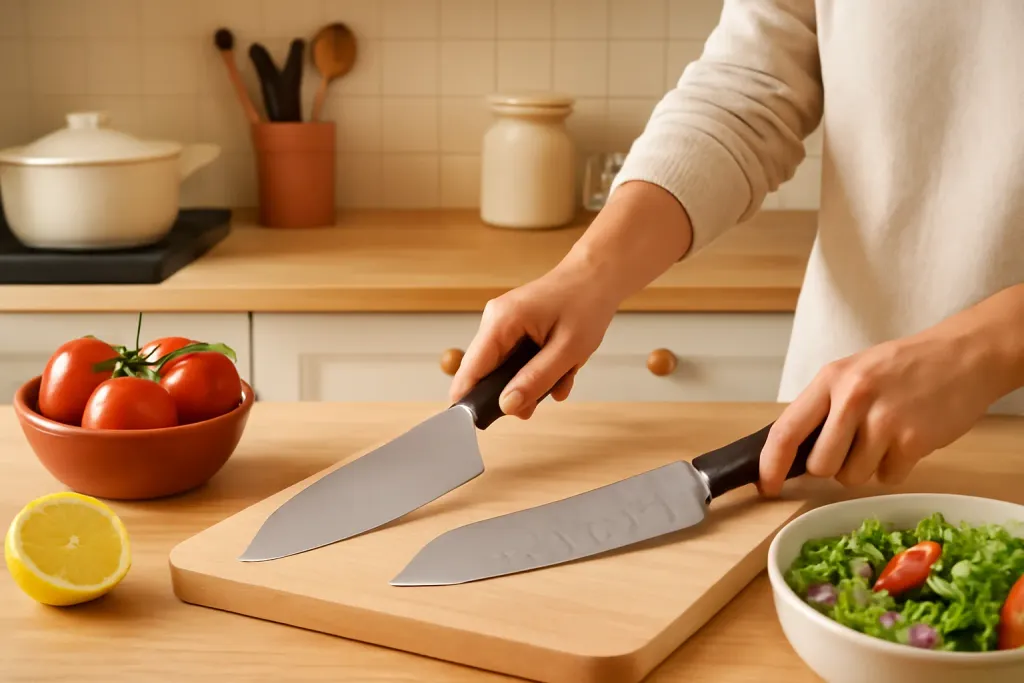
A chef's knife usually has a curved blade and a pointed tip. That shape supports a rocking motion, which many cooks use for chopping and mincing. A santoku knife is typically shorter, flatter, and wider with a more modest curve. It often feels approachable for beginners because the cutting action is more direct and less dependent on a strong rocking technique.
For many home cooks, the decision is not about one knife being universally better. It is about fit, confidence, and comfort. If you want a classic all-purpose knife that is widely familiar, a chef's knife is a strong starting point. If you want a lighter-feeling knife with a flatter profile, a santoku may be easier to control at first.
Blade Shape and Cutting Motion
The most noticeable difference between these two knives is blade geometry. A chef's knife usually has a pronounced curve from heel to tip, allowing the blade to rock forward and back on the board. That can be useful for fast chopping and repeated mincing tasks. Many cooks like the rhythm of this motion because it feels efficient once learned.
A santoku knife generally has a flatter edge with less curve. Instead of rocking, many users favor a straight down-and-forward cut. This can make the knife feel stable on the cutting board, especially for beginners who are still building knife confidence. The flatter edge can also be convenient when making even slices of vegetables.
Neither motion is mandatory. You can chop with a chef's knife using a more vertical approach, and you can rock a santoku to some degree. Still, the blade shape influences what feels natural. If you like a smooth rocking rhythm, a chef's knife may suit you. If you prefer a more controlled push-cut, a santoku may feel easier from the start.
Size, Weight, and Hand Feel
Beginners often focus on length and weight because those details affect confidence more than they may expect. Chef's knives commonly come in larger sizes, while santoku knives are often a bit shorter. A shorter blade can feel less intimidating in smaller kitchens or for users with smaller hands, though many cooks of any size can adapt to either style.
Weight distribution also matters. Some chef's knives feel blade-forward, which can help with chopping but may require more guidance from the hand and wrist. Santoku knives often feel balanced and easy to maneuver, especially for quick prep tasks. That lighter, nimble feel is one reason many home cooks consider santoku knives beginner-friendly.
The right knife should feel secure, not awkward. If a knife is too long for your cutting board or too heavy for comfortable control, it can make routine prep less enjoyable. Holding the knife in a store, if possible, can be helpful. If you are shopping online, review the listed dimensions carefully and think about your own hand size, kitchen space, and usual cooking tasks.
Best Everyday Tasks for Each Knife
Both knives are versatile, but each has strengths that may matter in a home kitchen. A chef's knife is a classic all-purpose choice for chopping onions, slicing carrots, mincing garlic, and breaking down larger ingredients into manageable pieces. Its pointed tip can also help with trimming and detail work when needed.
A santoku knife is especially appealing for slicing vegetables, cutting boneless proteins, and portioning ingredients for stir-fries, salads, and weeknight meals. The broad blade can make it easy to transfer chopped ingredients from the board to a pan or bowl. Many cooks appreciate that wide blade because it acts as a built-in scoop.
For beginners, the most useful knife is often the one that handles the most common tasks without feeling demanding. If your family meals involve frequent vegetable prep, either knife can work well. If your cooking style includes a lot of rocking and mincing, a chef's knife may feel more natural. If you like straightforward slicing and tidy transfers, a santoku may be the better fit.
Browse our recommended picks
Our featured picks refresh periodically. While we update them, our editorial guides can help you find the right one.
See our guidesWhich One Feels Easier for Beginners?
When people search for chefs knife vs santoku knife, they often want a simple answer about which knife is easier to learn. The honest answer is that ease depends on comfort and technique, not just the blade label. That said, many beginners find the santoku reassuring because its flatter edge can encourage controlled, stable cuts.
A chef's knife can also be beginner-friendly, especially if the user is willing to learn basic knife skills and maintain a curved cutting rhythm. It is a familiar style in many home kitchens and is often described as a do-it-all knife. For someone who wants a single knife to grow with over time, a chef's knife may be a practical long-term pick.
The main comfort question is whether you want a knife that guides you toward a rocking motion or one that supports a flatter, more direct cut. If you feel uncertain on the board, the santoku may reduce hesitation. If you want a traditional all-purpose format that many recipe videos and kitchen guides assume, the chef's knife may be easier to understand in context.
Materials, Edge Style, and Maintenance
Beyond shape, beginners should think about how the knife will be maintained. Both chef's knives and santoku knives can be found in stainless steel and other common kitchen materials. The most important point for a home cook is choosing a knife that feels manageable to care for in everyday use. A well-maintained knife is easier and safer to use than one that is dull or neglected.
Edge geometry may differ from one knife to another, and that can affect the cutting feel. Some santoku knives are associated with thin, refined edges, while chef's knives may vary widely by brand and style. Instead of focusing only on the knife name, it helps to look at general construction, handle comfort, and whether the knife seems intended for basic home prep.
Routine care matters for both. Hand washing is commonly recommended for many kitchen knives, and proper storage helps protect the edge and your fingers. Regular sharpening or honing, depending on the knife and your maintenance routine, keeps cutting tasks easier. For beginners, a knife that fits into a simple care routine is often the better buy than one that looks impressive but feels fussy.
How to Choose One Knife for a Starter Kitchen
If you are building a starter kitchen and only want one main knife, choose based on your actual habits. Think about what you cook most often, how much board space you have, and whether you prefer a rocking cut or a straight push cut. That practical approach usually leads to a better choice than buying whichever knife sounds more technical.
A chef's knife is a solid default if you want broad familiarity and a classic all-purpose profile. It is often a comfortable fit for cooks who prep a wide range of ingredients and want a knife they can continue using as skills improve. A santoku knife is a smart option if you want something a little shorter, flatter, and easy to control for everyday slicing and chopping.
For many families, the best answer is not necessarily to pick one forever, but to start with the knife that feels easiest and most useful now. As your confidence grows, you can add the other style later if it fills a gap in your prep routine. That way, your first knife supports real meals instead of sitting unused in the drawer.
Bottom Line for Beginner Home Cooks
The chefs knife vs santoku knife choice is less about a winner and more about comfort, motion, and everyday usefulness. A chef's knife offers a traditional all-purpose shape with a curved blade that suits rocking cuts. A santoku knife offers a flatter, more compact feel that many beginners find approachable for slicing and chopping.
If you want one knife that feels classic and highly versatile, start with a chef's knife. If you want a knife that feels balanced, controlled, and a little easier to handle at first, consider a santoku. Either can serve a family kitchen well when matched to the cook who uses it.
The smartest purchase is the knife you will actually reach for. Focus on grip, comfort, and how the blade matches your prep style, and you will be much more likely to enjoy cooking with it every day.