What Good Searing Requires
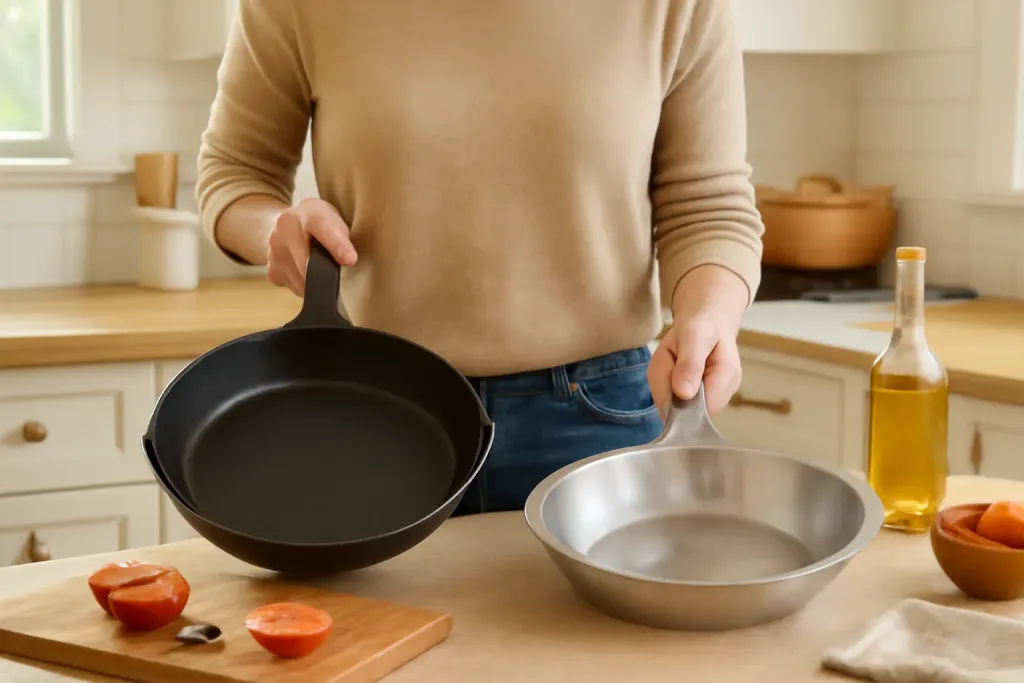
When comparing cast iron vs stainless steel searing, it helps to start with the goal: a deep brown crust without overcooking the interior. Searing depends on a few basics—steady high heat, enough contact between food and pan, and a surface that lets moisture evaporate so browning can begin. The best pan is not always the one that looks most rugged. It is the one that matches the cook’s habits, the food being prepared, and how much control they want at the stove.
For family cooking, searing often happens in a busy kitchen where timing matters. A pan that heats predictably, responds well when the burner changes, and cleans up without too much fuss can make weeknight cooking easier. At the same time, some cooks want a pan that stays hot once preheated, especially for thicker cuts or larger batches. Those are the traits most worth comparing.
Cast iron and stainless steel both have strong reputations for high-heat cooking, but they behave differently. One holds heat more strongly. The other tends to react more quickly. Those differences shape not only browning, but also how forgiving each pan feels when dinner gets interrupted.
Where Cast Iron Shines
Cast iron is often favored for searing because it stores heat well. Once fully preheated, it can deliver consistent surface heat when a cooler steak, chop, or piece of chicken goes into the pan. That matters because food releases moisture at first, and a pan with enough stored heat is better able to keep browning instead of stalling out.
Another strength is the way cast iron handles heavier, less delicate jobs. It is commonly chosen for thicker proteins, skin-on pieces, or meals where the pan will stay on the heat long enough for a strong crust to form. Its weight can feel reassuring in the kitchen, especially when making one-pan meals that move from stovetop to oven.
Cast iron also offers a naturally flat, solid cooking surface that many home cooks like for even contact. That can be useful when searing a few pieces at once. If the pan is well cared for, food release can improve over time, which some cooks appreciate. Still, the learning curve is real. Cast iron usually rewards patience, careful preheating, and attention to moisture. If the pan is not hot enough, searing can suffer. If it is overheated or poorly maintained, sticking and cleanup can become frustrating.
Where Stainless Steel Stands Out
Stainless steel is often valued for responsiveness. When comparing cast iron vs stainless steel searing, this is one of the biggest practical differences. Stainless steel can heat up more quickly and adjust faster when the burner is changed. That can be helpful for cooks who want a little more control, especially if the pan is used for sauces, pan drippings, or quick deglazing after the main sear.
For everyday family kitchens, stainless steel can be appealing because it is versatile. The same pan that sears chicken or pork can also be used for vegetables, finishing a sauce, or cooking foods that benefit from a more active cooking style. Many stainless pans are lighter than cast iron, which makes them easier to lift, tilt, and wash. That matters when dinner cleanup needs to be efficient.
Stainless steel can also be a strong option for cooks who dislike maintaining seasoning. Unlike cast iron, it does not rely on a protective layer built up through repeated use. That makes it simpler in some respects, though it can also mean the cook must pay attention to preheating and oiling to avoid sticking. With proper technique, stainless steel can produce a good sear and leave flavorful browned bits that are useful for pan sauces and gravies.
Heat Retention vs Heat Control
Heat retention is where cast iron usually has the edge, while heat control is where stainless steel often feels easier. This is a major reason the cast iron vs stainless steel searing debate continues among home cooks. A pan that retains heat well is useful when cold food is added, because the pan is less likely to lose its momentum. That can help create a more even crust, especially when cooking thicker portions or searing multiple items close together.
Stainless steel, on the other hand, can be more responsive when the cook wants to avoid overshooting the target temperature. If a sauce needs to be reduced after searing or the heat needs to come down quickly, stainless often adapts more readily. That responsiveness is valuable in kitchens where a single pan may need to do several jobs in sequence.
Neither characteristic is automatically better. A cast iron pan can be ideal when the goal is to hold steady heat for a strong, long sear. A stainless pan can be ideal when the cook wants more finesse and less thermal lag. For families, the choice often comes down to whether the cooking style leans toward patient, heavy-duty searing or flexible, fast-moving stovetop use.
Browse our recommended picks
Our featured picks refresh periodically. While we update them, our editorial guides can help you find the right one.
See our guidesWhich Pan Fits Which Foods
Different foods respond differently to the two materials. For thicker steaks, pork chops, burgers, or skin-on chicken, cast iron often feels like a natural fit because it can maintain a hot surface longer after the food is added. That steadiness can support a more even crust, especially when the goal is a pronounced sear before finishing the food another way.
Stainless steel can be especially useful for foods that benefit from browning plus sauce-making in the same pan. Chicken cutlets, fish with careful handling, ground meat, and vegetable-forward dinners often pair well with stainless because the browned bits can be deglazed into a pan sauce. For cooks who like to build dinner in stages, that flexibility can be a major advantage.
Technique matters with both pans. Drying the food well, preheating properly, and not moving the food too soon all influence the result. A great pan cannot fully compensate for rushed timing. In cast iron, patience with preheating often pays off. In stainless steel, a proper preheat and enough oil are key to helping food release when the crust develops.
Cleanup, Care, and Everyday Convenience
Cleanup is often where home cooks feel the difference most. Cast iron usually asks for more care. It should be dried well after washing, and many cooks prefer to keep it lightly oiled to support the cooking surface over time. That maintenance is not difficult, but it does add a step. For some families, that is worth it. For others, it is one more thing to remember after dinner.
Stainless steel is typically simpler to manage day to day. It does not require seasoning in the same way, and it generally fits well into a busy routine. That does not mean cleanup is always effortless—fond and stuck-on bits can still happen—but the material itself is often seen as more straightforward for frequent use. For households that cook several times a week, that ease can be appealing.
Storage and handling also matter. Cast iron’s weight can be a drawback for some users, especially when lifting a full pan or washing it in a crowded sink. Stainless steel is often lighter and easier to maneuver. For older adults, younger cooks learning kitchen basics, or anyone who values convenience, those small differences can shape the daily experience as much as searing performance does.
How to Choose Between Them
If the main goal is maximum heat retention for robust searing, cast iron is a strong contender. It suits cooks who are comfortable preheating carefully, managing a heavier pan, and maintaining the surface over time. It can feel especially satisfying for steak night, Sunday dinners, or recipes that move from stovetop to oven.
If the goal is a more versatile pan with quicker response and easier handling, stainless steel may be the better fit. It works well for cooks who want one pan to handle searing, sauce making, and general stove-top tasks without extra upkeep. For many family kitchens, that flexibility can matter more than raw heat storage.
Budget is not the point here, and it is not necessary to overcomplicate the decision. The better question is what kind of cooking happens most often. A cook who frequently sears thick proteins may lean toward cast iron. A cook who often builds pan sauces or wants a lighter, lower-maintenance pan may lean toward stainless steel. Some kitchens benefit from owning both, using each one where it performs best.
The Bottom Line
In the cast iron vs stainless steel searing comparison, both materials can produce excellent results, but they reward different habits. Cast iron brings strong heat retention and a sturdy feel that many cooks associate with classic searing. Stainless steel brings faster response, easier handling, and a smooth transition from searing to sauce work.
For family cooking, there is no single winner. The best choice depends on how often the pan will be used, what types of meals are most common, and how much maintenance feels manageable in a busy kitchen. If a cook wants old-school thermal mass and does not mind extra care, cast iron is compelling. If they want flexibility, lighter weight, and simpler day-to-day use, stainless steel is a practical alternative.
For many home cooks, the smartest answer is not to pick a universal champion, but to choose the pan that fits the way dinner is actually made. That is what makes the comparison useful: it turns a broad debate into a kitchen decision that works in real life.