Blender vs Food Processor: The Short Answer
If you are deciding between a blender vs food processor, the first question is not which tool is better overall, but which one fits the food you make most often. For many family kitchens, the right first purchase depends on whether you make more drinks, soups, and smooth purees or more chopped vegetables, shredded ingredients, and doughs.
A blender is built to turn ingredients into a smooth liquid or semi-liquid texture. It is the more natural choice for smoothies, milkshakes, blended soups, sauces, and frozen drinks. A food processor is designed for faster prep work on firmer ingredients. It usually handles chopping, slicing, shredding, mixing, and some dough making more efficiently than a blender.
If your cooking is mostly centered on dinners, meal prep, and making ingredients from scratch, a food processor often earns a place sooner. If your routine includes breakfast smoothies, creamy soups, or blended sauces most days, a blender may be the better first buy. For many households, one tool does not fully replace the other, but one may clearly solve more of your current bottlenecks.
The best first choice is the one that will get used weekly, not occasionally. That is the simplest way to narrow the blender vs food processor decision.
What a Blender Does Best
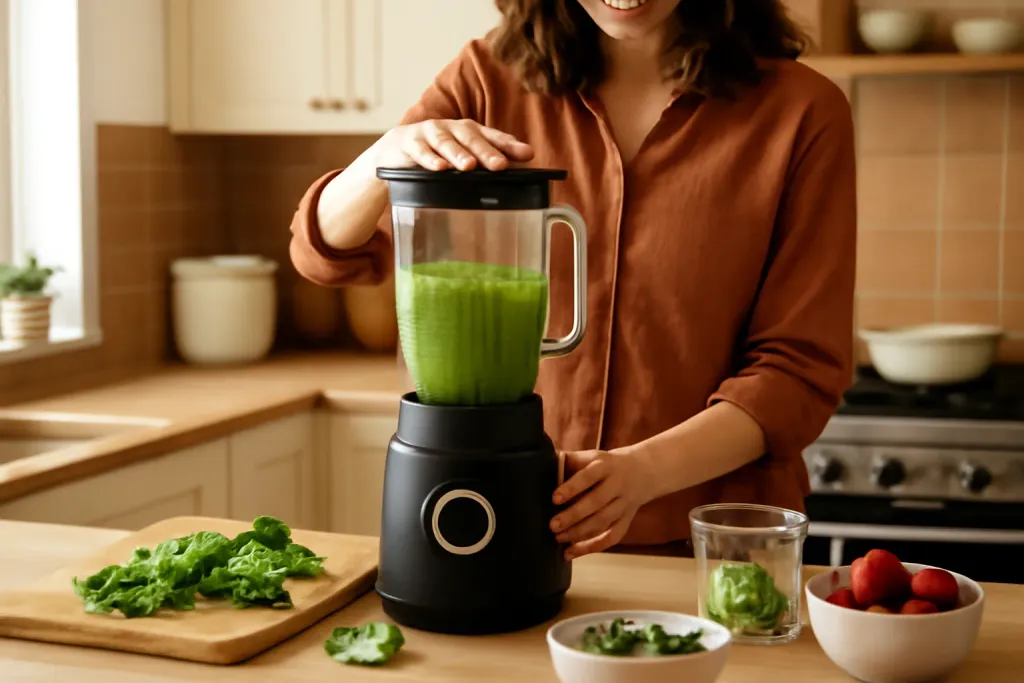
A blender is best when you want a smooth finish. It combines liquid and soft or frozen ingredients into a uniform texture, which makes it ideal for drinks and pourable recipes. Families often reach for a blender when they want a quick breakfast or an easy way to use fruit, yogurt, greens, or ice.
Common blender tasks include:
- Smoothies and protein-style shakes
- Milkshakes and frozen drinks
- Pureed soups and creamy sauces
- Pantry-based dressings and dips
- Crushed-ice drinks and blended desserts
Another advantage is simplicity. For recipes that need liquid anyway, a blender can reduce the number of steps. You can combine ingredients, blend, and pour, often without separate chopping beyond a rough pre-cut. That makes it appealing for busy mornings or quick cleanup after a simple meal.
Blenders are not equally strong at dry chopping or creating evenly cut vegetable pieces. If you try to use one for tasks it was not designed for, you may end up with uneven results. So if you imagine a lot of snack prep, salsa, or grated ingredients, a blender may not be the first tool to prioritize.
What a Food Processor Does Best
A food processor shines when the job is prep work rather than blending. It is made to speed up the repetitive parts of cooking, especially when you are working with firmer ingredients and want a consistent cut or a mixed dough.
Typical food processor jobs include:
- Chopping onions, herbs, nuts, and vegetables
- Slicing or shredding ingredients for salads and slaws
- Making pie crusts, pastry mixtures, and some doughs
- Combining dips, spreads, and thicker mixtures
- Processing larger batches of chopped ingredients for meal prep
For family cooking, this can be a big time-saver. A food processor can take over the repetitive prep that often slows down weeknight cooking, such as grating cheese, shredding carrots, or breaking down vegetables for soups, casseroles, and grain bowls.
It is also useful when you cook in batches. If you like to prep ingredients for a few days at once, a food processor can make that workflow easier. It is not the best tool for making a drinkable smoothie, but it often handles solid ingredients more effectively than a blender when texture matters.
How to Choose Which One to Buy First
The easiest way to choose between a blender vs food processor is to think about your most frequent kitchen frustrations. The tool that solves the problem you face most often should usually come first.
Buy a blender first if you:
- Make smoothies, shakes, or blended drinks regularly
- Like creamy soups and smooth sauces
- Want a simple tool for breakfast and drink prep
- Often use frozen fruit or ice in recipes
Buy a food processor first if you:
- Cook a lot of vegetables from scratch
- Do frequent chopping, shredding, or slicing
- Make dips, spreads, or doughs at home
- Prepare meals for several people and want faster prep
If your family cooking is more meal-prep heavy than beverage heavy, the food processor often gives broader value across everyday recipes. If your household is more focused on blended breakfasts and quick drinks, the blender may be the more practical first appliance.
It also helps to consider how you actually cook on busy days. A tool can be technically useful yet still sit unused if it does not match your routine. Choosing the first purchase based on habit is more helpful than choosing based on hypothetical recipes you may never make.
Browse our recommended picks
Our featured picks refresh periodically. While we update them, our editorial guides can help you find the right one.
See our guidesCan One Replace the Other?
Sometimes people hope one appliance can fully stand in for the other, but in most kitchens that is only partly true. A blender and a food processor overlap a little, but they are optimized for different textures and tasks.
A blender can sometimes handle softer dips, simple purees, and liquid-based mixtures. Some food processors can roughly puree or mix ingredients, especially thicker ones. But each tool has limits. A blender is usually not the best option for even chopping or shredding. A food processor is usually not the best option for a silky smoothie or a smooth drink.
If space and budget are tight, it is reasonable to start with one and add the other later. The right first purchase is the one that covers the most important jobs while leaving the fewest everyday tasks awkward or time-consuming.
For many families, the overlap is enough that either choice can be a sensible first step. The difference is where the value shows up: smoother textures with a blender, or faster prep with a food processor.
Size, Capacity, and Storage Matter
Practical kitchen details can matter as much as function. A tool that matches your cooking style but does not fit your counter, cabinet, or cleanup routine may be less useful than a smaller appliance that gets used often.
When comparing blender vs food processor, think about these factors:
- Batch size: If you cook for a family or prep in advance, a food processor can be attractive because it helps with larger amounts of chopped ingredients. A blender is often better when the final result is a drink or puree rather than a pile of prepared ingredients.
- Counter and cabinet space: Some kitchens cannot comfortably store both, so the first purchase should reflect the tool you expect to use regularly.
- Cleaning routine: If a recipe leads to a lot of separate parts and extra steps, it may be less appealing on a weeknight. The easier a tool is to fit into your routine, the more likely it is to earn a permanent spot.
- Attachment complexity: Food processors may come with slicing or shredding parts, while blenders often keep things simpler. More parts can mean more flexibility, but also more to manage.
These are not glamorous details, but they shape whether the appliance becomes a staple or an afterthought. The best buy first is often the one that aligns with your storage and cleanup habits as much as your recipe list.
Which Is Better for Common Family Cooking Scenarios?
Looking at real-life cooking scenarios can make the choice easier. If you are buying for a household rather than for one specific recipe, think in terms of weekly patterns.
If breakfast is the priority, a blender is often the better first purchase. It is especially useful if someone in the house likes smoothies, fruit-and-yogurt blends, or quick breakfast drinks. It can also help with morning sauces and simple batter-style mixtures.
If dinners and lunch prep are the priority, a food processor often offers more value. It can speed up the chopping and shredding that many family meals require, especially when you are making salads, vegetable sides, grain bowls, casseroles, or homemade dips.
If you cook a lot from scratch, the food processor may save more time across a wide range of recipes. If your family relies on blended textures or drinks, the blender may feel more useful day to day. And if you are building a compact kitchen setup, the first appliance should support the meals you already make instead of the ones you only plan to make someday.
Final Recommendation
For most households choosing a blender vs food processor, the right first buy comes down to use frequency. If you make smooth drinks or pureed foods several times a week, buy a blender first. If you prep a lot of vegetables, make dips, or want to reduce hands-on chopping time, buy a food processor first.
If you are still undecided, use this simple rule: choose the appliance that solves the task you dislike most. A blender is usually the better answer for liquid-heavy recipes and smooth textures. A food processor is usually the better answer for prep-heavy cooking and mixed ingredients that benefit from chopping, slicing, or shredding.
For many family kitchens, the food processor has a slight edge as a first utility purchase because it can support a wider range of everyday cooking tasks. But if smoothies and blended breakfasts are part of your routine, a blender can be the smarter first step. Either way, the best purchase is the one that matches how you really cook at home.
Once that first appliance proves useful, the other can become a strong second addition rather than an urgent replacement.