Why Pantry Organization Systems Matter
For busy households, pantry organization systems do more than make shelves look tidy. They help you see what you have, reduce duplicate purchases, and make weekday meals easier to pull together. A well-planned pantry can also save time during grocery runs because you are less likely to forget what needs restocking.
The best systems are not always the most elaborate. Some families do well with simple clear bins and labels, while others need a more structured setup with adjustable shelving, stackable containers, and dedicated zones for baking, snacks, breakfast, and dinner staples. The right choice depends on pantry size, shopping habits, and how many people use the space.
It also helps to think about maintenance. A system that looks great on day one but takes too much effort to keep up is usually not the best long-term fit. The most effective pantry organization systems are the ones your household can use consistently, even on hectic weeknights.
Open Bins and Clear Containers
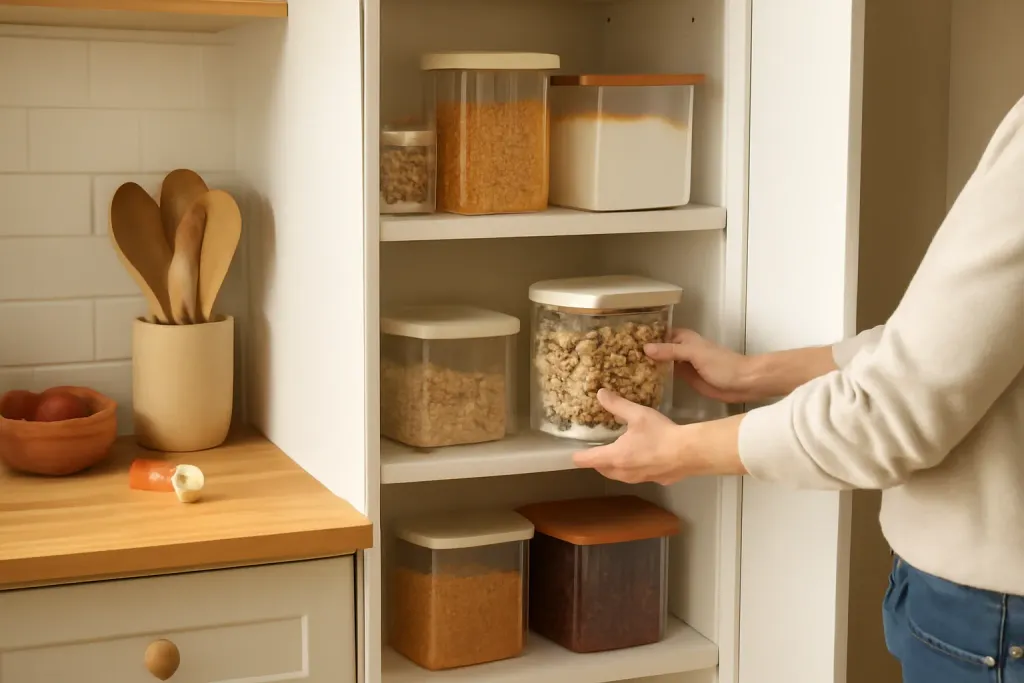
Open bins and clear containers are among the most common pantry organization systems because they offer instant visibility. You can see when pasta is running low, spot a forgotten bag of rice, and group like items together without much effort. This approach works especially well for dry goods, snack foods, and baking ingredients.
Clear containers can create a cleaner look and help standardize oddly shaped packaging. Square or rectangular containers often use shelf space more efficiently than crinkled bags and boxes. Bins with handles are also convenient for keeping categories together, such as breakfast foods or school snacks, especially if more than one person needs to grab items quickly.
The tradeoff is that open systems require regular attention. If items are not returned to the right bin, the setup can become messy fast. Clear containers also work best when you are willing to transfer food from original packaging, which adds a step after shopping. For families who want a polished look and easy visibility, this can be a strong option, but it is not always the lowest-maintenance one.
Lazy Susans and Turntables
Lazy Susans, also called turntables, are a practical choice for deep pantry shelves or corner spaces. Instead of reaching to the back and shifting several items around, you can spin the tray to bring bottles, jars, or small containers within reach. This makes them especially useful for condiments, jars of sauce, snacks, and baking extracts.
One of the biggest strengths of turntables is accessibility. In tall or deep cabinets, items can disappear behind others and get forgotten. A rotating tray reduces that problem by keeping contents easy to see and retrieve. For households that store many small jars or bottles, this can make a noticeable difference in day-to-day convenience.
Lazy Susans are not ideal for every item. They are less effective for tall stacks, heavy bulk packaging, or loose items that can tip when the tray spins. They also work best when grouped by category rather than overloaded with too many different products. As part of broader pantry organization systems, turntables are often most useful for the awkward spaces that regular bins do not solve well.
Shelving and Risers
Extra shelving and risers can transform a pantry by creating more usable vertical space. Instead of piling cans or jars into one row, risers create stepped levels that make items easier to see. This can be especially helpful for short containers, canned goods, spice jars, and anything that tends to vanish behind taller packages.
Adjustable shelving is one of the more flexible pantry organization systems because it can adapt as your storage needs change. A growing family may need more snack space now and more baking storage later. If shelves can be repositioned, the pantry can keep pace with those changes without requiring a full redesign.
Risers and shelf inserts work well with other organizing tools, too. They can be paired with bins, baskets, or labeled zones to make categories easier to separate. The main limitation is that shelving changes often involve more planning than simply buying a few containers. Still, for families trying to make the most of tight space, better vertical use can be one of the biggest improvements available.
Labels and Zone Planning
Labels and zone planning are less about the container itself and more about how the pantry functions. This approach assigns a clear home to each category, such as grains, breakfast items, snacks, baking supplies, canned goods, or lunchbox ingredients. Labels make it easier for everyone in the household to put things back where they belong.
Zone planning works well because it reflects real routines. If your family reaches for school snacks every morning, placing those items together at eye level can simplify the process. If you bake often, keeping flour, sugar, measuring tools, and baking powder in one dedicated section can save time. Pantry organization systems built around zones can be customized for small and large spaces alike.
Labels can be as simple or as polished as you want, but their main purpose is consistency. A neat pantry only stays neat when everyone can identify where items belong. For shared households, this is often one of the most useful parts of a system, because it reduces guesswork and helps children or guests participate without needing a detailed explanation.
Browse our recommended picks
Our featured picks refresh periodically. While we update them, our editorial guides can help you find the right one.
See our guidesBasket-Based Systems
Basket-based systems are a good middle ground between open shelving and fully decanted storage. Baskets can corral loose packages, snack bars, instant sides, potatoes, onions, and other items that do not stack neatly. They also make it easier to pull out one grouped category instead of moving several separate items.
This style is especially helpful for families who buy a mix of packaged and unpackaged goods. A basket can hold items that are awkward to store in containers but still need a designated place. It also creates a softer visual look than rows of rigid bins, which some households prefer for a more relaxed pantry setup.
The main drawback is that baskets can hide items if they are too deep or overloaded. Without labels, they may become catchalls. Still, when used thoughtfully, basket-based pantry organization systems can balance convenience and flexibility. They are often a strong choice for people who want order without transferring every item into matching containers.
Specialty Solutions for Small Spaces
Small pantries and awkward cabinets often need specialty solutions rather than one large uniform system. Door-mounted racks, stackable shelf inserts, narrow bins, and slim can organizers can all help maximize limited space. These solutions are most useful when the pantry has deep corners, narrow shelves, or an unusually shaped footprint.
For compact kitchens, the best approach is usually to focus on access first. A small pantry becomes much more functional when frequently used items are easy to reach and rarely used items are moved to higher or lower spots. In that sense, the goal is not only more storage, but better storage.
Specialty pieces can also be combined with broader pantry organization systems. For example, a door rack may hold spices, while the main shelves use bins or risers for larger categories. That layered approach can make small spaces feel much less cramped, provided the pantry does not become overfilled. Choosing tools that fit the actual dimensions of the space matters more than choosing the most feature-rich option.
How to Choose the Right System
When comparing pantry organization systems, start with your household habits rather than the aesthetic. Ask what creates the most frustration now: forgotten items, cluttered shelves, hard-to-reach corners, or too many different package sizes. The answer often points toward the right mix of bins, labels, risers, baskets, or turntables.
It is also wise to consider who uses the pantry. A family with young children may need simple, obvious categories and durable containers. A household that cooks often may prefer more precise zone planning and clear visibility. If several people shop and unload groceries, a system with easy labels and simple rules is usually easier to maintain.
Budget and flexibility matter as well. Some systems require only a few inexpensive accessories, while others involve replacing several storage pieces at once. If you are starting from scratch, a gradual approach can be easier: organize by category first, then add containers or specialty tools where the pantry still feels crowded. The best pantry organization systems usually grow with the household instead of demanding a total overhaul on day one.
,Practical Buying Checklist
Before buying pantry organizers, measure shelves carefully and note the items you use most often. Depth, height, and door clearance can determine whether a bin fits comfortably or becomes a source of frustration. A beautiful container is not useful if it blocks the shelf above it or makes items harder to reach.
It can also help to group your pantry contents into broad categories before you shop. If you mostly need storage for snacks and boxed goods, simple bins may be enough. If the pantry holds many jars, sauces, and small packages, turntables and risers may solve more problems. For households with limited space, a combination of smaller tools often works better than one oversized solution.
Maintenance should be part of the decision too. Some pantry organization systems require regular decanting, relabeling, or rearranging. Others are easier to reset after grocery day. Choosing a system that matches your routine is usually the smartest way to keep the pantry functional over time.