What Mason Jar Meal Prep Is and Why It Works
Mason jar meal prep is a simple way to portion ingredients into lidded glass jars so meals are ready to store, carry, and serve. For busy families, it can make weekday eating feel more organized because each jar keeps ingredients visible, grouped together, and easier to use on a schedule. Instead of leaving produce, grains, and leftovers in separate containers, you can build one jar for one meal or one serving and line up several at once for the week.
This mason jar meal prep guide is focused on practical use, not trends. The appeal is straightforward: jars come in familiar sizes, close securely, and help you plan ahead without turning the kitchen into a project. The method works well for breakfasts, lunches, snacks, and some make-ahead dinners because it supports portioning and reduces last-minute scrambling.
It is also useful for people who like visual order. Clear jars show what has been prepared and what still needs to be used, which can make meal planning feel less overwhelming. If your goal is to build a routine that saves time and uses everyday ingredients well, mason jar meal prep is a flexible place to start.
Choose the Right Jars and Lids
Choosing the right jar makes the method much easier to use. Wide-mouth mason jars are often the most practical because they are easier to fill, layer, and eat from. They tend to work especially well for salads, overnight oats, yogurt parfaits, soups, and grain-based meals. Regular-mouth jars can still be useful, but they are a little less convenient when you are adding larger ingredients or stirring before serving.
Size matters as well. Smaller jars are useful for snacks, sauces, and breakfast add-ins, while larger jars fit fuller lunches or layered meals. A mix of sizes gives you more flexibility across the week, especially if different family members need different portions. An adult lunch jar may not be the right fit for a child’s snack or side dish, so thinking in terms of portions can be more helpful than choosing by volume alone.
Lids should close securely and be easy to open and reclose. That matters when jars are moved between shelves, packed into bags, or stacked with other containers. It also helps if the jars are easy to wash and fit your dishwasher or drying rack without fuss. For most home kitchens, simple glass jars and well-fitting lids are enough; the best setup is the one that matches your routine and storage space.
Best Foods for Mason Jar Meal Prep
The best foods for mason jar meal prep are ingredients that hold their texture well and can be layered without becoming soggy too quickly. Salads are the most common example, but they are only one option. Overnight oats, yogurt layers, chopped fruit, cold noodle dishes, rice bowls, and snack mixes can also work well when packed thoughtfully.
For lunch jars, sturdy vegetables are a strong foundation. Cucumbers, carrots, bell peppers, shredded cabbage, cherry tomatoes, and leafy greens can all fit into a layered jar. Protein options such as beans, chickpeas, cooked chicken, tuna, tofu, egg, or cheese can be added based on your family’s preferences. Grains like rice, quinoa, barley, or pasta also work well when cooled and portioned in advance.
Breakfast jars are another useful category. Oats can be combined with milk or a milk alternative, fruit, seeds, and spices for an easy overnight breakfast. Yogurt jars can be layered with fruit and granola, with crunchy toppings added just before serving if you want more texture. These options are convenient because they can be made in batches and reduce morning prep.
Soups and stews can also be portioned into jars for refrigeration if the jar size is appropriate and the contents are cooled before storing. For families, it can be useful to reserve a few jars for ready-to-use ingredients rather than full meals. Pre-chopped toppings, salad components, or snack portions can save time even when the main meal is still cooked from scratch.
Layering Strategy for Better Results
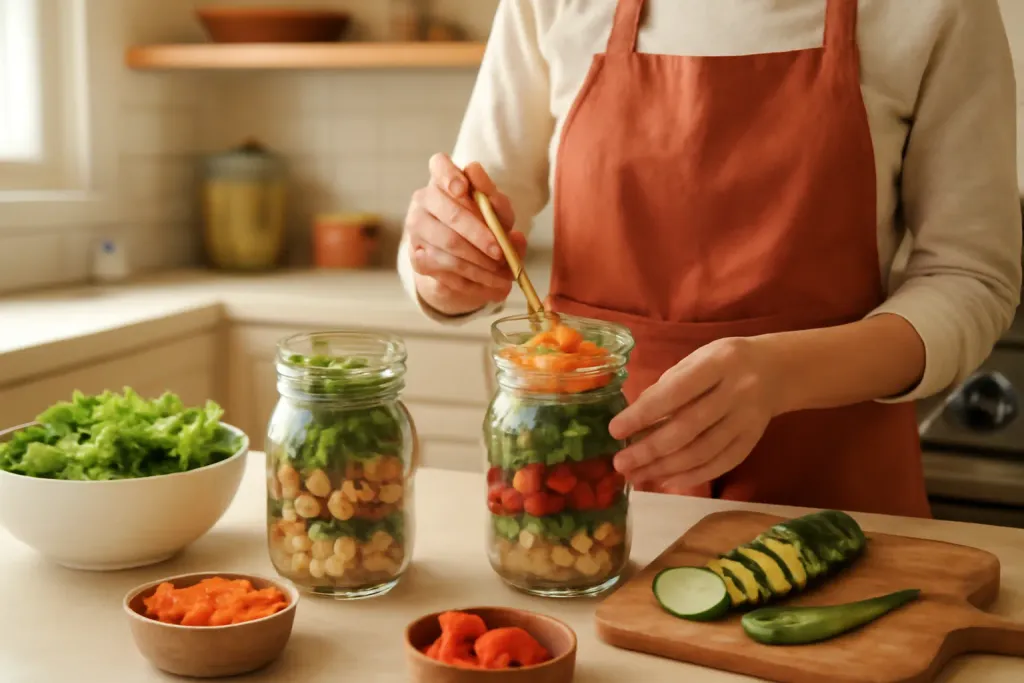
Layering is what helps mason jar meals hold up well. The basic idea is to keep wet ingredients away from delicate ones until you are ready to eat. That usually means placing dressing, sauces, or other moist ingredients at the bottom, followed by sturdier items, then grains or proteins, and finally greens, herbs, or crunchy toppings near the top.
For salads, a common structure is dressing first, then firm vegetables, then beans or grains, and greens last. This helps the leaves stay fresher and reduces the chance that the whole jar turns limp. For breakfast jars, the order may be different. Oats and liquid often go together, while fruit, nuts, and toppings can be layered above or mixed in later depending on the texture you want.
It also helps to think about density. Heavier ingredients belong lower in the jar, while lighter ingredients can sit above them. That supports stability and makes serving easier. If you are building jars for several days, a simple template can save time: one moisture layer, one base layer, one protein or grain layer, and one finishing layer.
The most useful system is the one your household can repeat. You do not need a complicated formula. Start with the foods you already buy, then arrange them in a way that protects texture and makes serving quick. Once you have a pattern that works, the prep becomes much easier to repeat week after week.
Browse our recommended picks
Our featured picks refresh periodically. While we update them, our editorial guides can help you find the right one.
See our guidesPlanning a Week of Jars for Families
A weekly plan makes mason jar meal prep much more manageable. Instead of filling jars randomly, choose a few categories for the week and build from there. Many households do best when they prep a mix of breakfasts, lunches, and snack jars rather than trying to make every meal in advance. That balance keeps the routine practical and helps reduce waste.
Start by looking at what your family already eats. If lunch is the hardest meal to manage, make that the focus. If mornings are rushed, prep breakfast jars first. Then choose ingredients that overlap across meals so shopping stays efficient. One batch of chopped vegetables may work for salads, wraps, and snack jars, while a container of cooked grains can support bowls, side dishes, and add-ins.
It can also help to assign roles to each jar. One might be for grab-and-go breakfasts, another for packed school lunches, and another for afternoon snacks. This makes the fridge easier to navigate and reduces confusion. Labeling lids with the meal type or day of the week can be useful when several jars look similar.
Families often appreciate variety without needing a completely different plan every day. You might alternate between two salad combinations, two breakfast styles, and a couple of snack choices. That keeps prep realistic while still giving the week some range. The goal is not perfection; it is a repeatable system that saves time and reduces decision fatigue.
Storage, Handling, and Kitchen Organization
Good storage habits are just as important as the recipe itself. Mason jar meal prep works best when the jars are cooled, sealed, and placed in a part of the fridge where they will not get crushed or forgotten. A dedicated shelf or bin can help keep prepared jars grouped together, especially in a busy household where multiple people are opening the refrigerator throughout the day.
It is smart to store jars where they are easy to see. If the contents are hidden behind larger items, they are more likely to be overlooked. Clear rows of jars can turn the refrigerator into a simple visual menu, which can be especially helpful when planning around school schedules, after-school activities, or work lunches.
Handling matters too. Glass jars are sturdy enough for everyday kitchen use, but they still need care when carried outside the home. If you are sending a jar in a lunch bag, make sure it is positioned so it will not tip or knock into other items. Some families pair jars with sleeves or lunch containers for extra protection, but the basic idea is the same: keep the jar upright and secure.
Cleaning is part of the system as well. Jars are easiest to reuse when they are rinsed soon after use and washed according to the manufacturer’s guidance. If you prep frequently, it can help to keep the jars and lids together in one cabinet so the next round starts smoothly. Organization is what turns a one-time effort into a routine.
Simple Recipe and Combination Ideas
One of the strengths of mason jar meal prep is that you can build meals from ordinary ingredients. You do not need specialty items to make it useful. A few dependable combinations can carry you through the week and make shopping easier.
- Layered salad: dressing, cucumbers, tomatoes, chickpeas, grains, and greens on top.
- Overnight oats: oats, milk or milk alternative, cinnamon, fruit, and optional seeds.
- Yogurt parfait jar: yogurt, fruit, and granola added near serving time.
- Rice bowl jar: sauce, vegetables, rice, and cooked protein layered for a cold lunch.
- Snack jar: chopped fruit, cheese cubes, crackers, or nuts and seeds as appropriate for your household.
These combinations are starting points rather than rigid recipes. You can adapt them to what is in your fridge or pantry. If your family prefers different flavors, swap the dressing, change the grain, or use seasonal produce. The point of the jar is to simplify the structure of the meal, not to limit what you can make.
It is also useful to think about leftovers. Small amounts of cooked vegetables, rice, pasta, or proteins can often be repurposed into a jar meal rather than left in the refrigerator until they are forgotten. That makes mason jar meal prep a practical tool for reducing waste while keeping meals organized.
What to Remember Before You Start
The most effective mason jar meal prep guide is the one that fits real family life. Start small, use ingredients you already know, and choose jars that match the meals you actually make. A few well-planned jars are more useful than a full fridge of containers that no one wants to eat.
Keep the method simple: select the right jar size, layer ingredients to protect texture, store the jars where they are easy to see, and repeat the combinations that work best. This approach supports weekday lunches, breakfast routines, and snack planning without requiring a big daily time commitment.
If you are buying jars or accessories as part of your kitchen setup, focus on practical features such as size, lid fit, ease of cleaning, and how the containers will fit in your fridge or lunch bag. Those everyday details matter more than novelty. Mason jar meal prep is useful because it makes planning visible, portable, and manageable.
With a little routine, the jars become part of a broader kitchen system: shop with purpose, prep in batches, and make mealtimes easier to handle. That is what makes this method so appealing for families looking for a straightforward way to stay organized.