Why a Kids’ Snack Station Works
A well-planned kids snack station kitchen can make daily routines smoother for both kids and adults. Instead of opening cabinets repeatedly or asking for the same items all day, a designated snack area gives children a clear place to look for approved options. That can help reduce clutter, save time, and make after-school or weekend snacking feel more predictable.
The goal is not to create an unlimited self-serve pantry. It is to build a simple, organized system that fits your family’s habits and your kitchen layout. When the station is easy to understand, children are more likely to return containers to the right place and choose from the options you have already set out.
This approach also works well for families with different schedules. One child may want a quick snack before sports practice, while another may need something after homework. A clearly labeled station can help everyone find what they need without interrupting the whole kitchen.
For many homes, the best snack station is small, flexible, and easy to reset. A few bins, a lower shelf, and some age-appropriate containers are often enough to make the system work.
Choose the Right Location
Location is the foundation of any snack station. The best spot is one that your children can reach safely and that does not interfere with the busiest parts of the kitchen. A lower pantry shelf, a section of a cabinet, a drawer near the fridge, or a small cart can all work depending on your space.
In a compact kitchen, you may need to use vertical space carefully. Stackable bins or clear containers can keep items visible without taking over an entire shelf. In a larger kitchen, you might set aside one drawer for shelf-stable snacks and another nearby space for fruit, cheese, or drinks that need refrigeration.
Think about traffic flow as well. If the snack area sits right next to the stove or a hot appliance, it may not be the best fit for younger children. Try to place the station somewhere that allows kids to access it without crossing through the main cooking zone.
If your children are very young, you can still make the station useful by storing only the items you want them to reach. Higher shelves can hold backup snacks, serving supplies, or items that should be parent-managed. The best setup is the one that matches your child’s independence level and your comfort with how the kitchen is used.
Pick Storage That Makes Sense
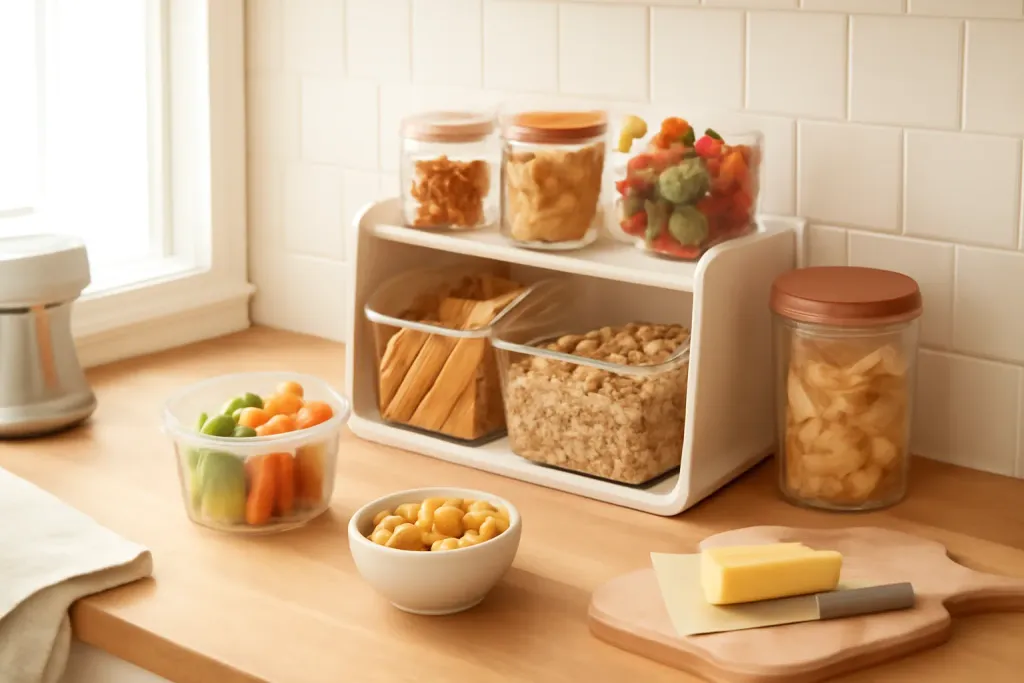
The right storage helps the station stay neat and easy to use. Clear containers can make it simple to see what is inside, while baskets and bins can group similar items together. Choose storage that fits your cabinet depth, shelf height, and how often you want to restock.
For a kids snack station kitchen, many families prefer a mix of open and closed storage. Open bins can hold grab-and-go items like crackers, fruit pouches, or napkins. Closed containers may work better for items that need extra protection from spills or from getting crushed in a drawer.
Labels are helpful even for children who cannot read yet. A picture label on a bin or a simple color-coding system can show where snacks belong and where they should be returned. This can reduce confusion and make cleanup easier after a busy afternoon.
Consider using a lazy Susan, a divided tray, or a small shelf riser if your station is in a deep cabinet. These tools can help prevent food from getting lost in the back. The best storage solution is not necessarily the fanciest one; it is the one your family will actually keep using.
Build a Kid-Friendly Snack Mix
A good snack station starts with a balanced mix of options you are happy to keep in rotation. Aim for a combination of shelf-stable foods, refrigerated items, and simple add-ons so the station feels useful at different times of day. This gives children choice without making the space feel crowded.
Examples of shelf-stable items might include whole-grain crackers, pretzels, popcorn, dried fruit, applesauce cups, or shelf-stable milk boxes if your household uses them. Refrigerated snacks might include yogurt, string cheese, cut fruit, vegetables with dip, or hummus. Keep in mind that whatever you choose should fit the storage space and your family’s normal routine.
You can also include a few pairings that make snack decisions easier. For example, fruit plus crackers, yogurt plus granola, or vegetables plus dip can feel more complete than single-item snacks. This can help the station feel intentional rather than random.
Try not to overload the station with too many choices at once. A smaller, curated selection is often easier to manage and less likely to become messy. Rotating snacks every few days can keep things fresh without requiring a major reset.
Browse our recommended picks
Our featured picks refresh periodically. While we update them, our editorial guides can help you find the right one.
See our guidesUse Tools That Support Independence
Simple kitchen tools can make snack time more independent and less frustrating. Small cups, child-sized bowls, reusable snack containers, and easy-open lids can help children serve themselves with less assistance. If a child can open the container safely and handle the portion, the snack station becomes more practical.
Consider placing a few basic items near the station as well. Napkins, small spoons, reusable spoons, a water bottle basket, or a tray for transporting snacks can make the setup more complete. If drinks are part of the routine, a low shelf in the refrigerator or a nearby water dispenser can complement the station nicely.
Serving tools should be simple enough for children to use without a lot of instruction. Clear containers with scoop lids, small baskets for individual items, or divided boxes for variety can all help structure the experience. The more straightforward the system, the easier it is for kids to remember it.
For parents shopping kitchen gear, it can help to think about function first. A useful snack station does not require specialized equipment. It requires containers and organizers that fit your family’s age range, space, and cleanup habits.
Set Rules That Keep It Manageable
A snack station works best when children understand the house rules around it. Keep the guidelines short and practical. For example, kids may need to ask before taking certain items, choose only one snack at a time, or put unused items back in the bin. Clear expectations help the station stay organized.
It can also help to decide which items are always available and which ones are reserved for specific times. Some families keep a lower bin of approved snacks that children may choose freely and a separate bin for parent-prepared items. Others use a simple time-based routine, such as having one snack after school and another before sports practice.
If more than one child uses the station, try to prevent it from becoming a source of arguments. Individual containers or pre-portioned items can make it easier to share fairly. Another option is to give each child a labeled basket or shelf section so everyone knows what belongs to whom.
Consistency matters more than complexity. When the rules are predictable, the station becomes part of the routine instead of a source of constant reminders. That makes it easier for children to use the space responsibly.
Keep Restocking Simple
The easiest snack station to maintain is one with a straightforward restocking routine. Set a time to check the station once a day or every few days, depending on how quickly your family uses snacks. A quick reset can prevent empty bins, stale items, and unnecessary clutter.
It helps to keep a small backup stash in another part of the kitchen or pantry. That way, you can refill the station without rethinking the entire system each time. If your family likes variety, you can keep a short list of approved options and rotate through them as needed.
When restocking, check for containers that need washing, items that have been opened, and anything that should be moved to the fridge. A snack station should feel organized enough that restocking takes minutes rather than becoming a large project.
Some families also find it useful to involve children in simple upkeep. Kids can help wipe the shelf, return empty containers, or place sealed snacks into a bin. This is less about perfection and more about making the station a shared part of the home routine.
Make It Fit Your Family
The best snack station is one that reflects your family’s habits, not someone else’s. If your children are young, the station may need to stay very simple with just a few safe, easy-to-reach items. If your children are older, they may be ready for more choice and a little more responsibility. You can adjust the setup over time as routines change.
Seasonal schedules matter too. During the school year, the station may need to support quick weekday snacks. In summer, it may need to work for more frequent grazing, playdates, or outings. A flexible setup lets you switch between those patterns without rebuilding the entire kitchen.
You do not need a large pantry or a dedicated room to make this idea work. Even a single drawer or basket can function as a kids snack station kitchen if it is planned well. The key is to keep the system visible, reachable, and easy to maintain.
Start small, observe what gets used, and make changes only when needed. Over time, the station can become one of the most practical parts of the kitchen, especially for families looking for a calmer, more organized snack routine.