Start With a Clear Pantry Reset
When you are figuring out how to organize a small kitchen pantry, the first step is not buying bins or labels. It is seeing exactly what you have. Take everything out of the pantry and place it on a counter, table, or clean floor space so you can sort it all at once. This gives you a real picture of what needs to stay, what should be used soon, and what can be moved somewhere else in the kitchen.
As you sort, group items into broad categories such as baking supplies, breakfast foods, snacks, canned goods, pasta and grains, cooking oils, and kid-friendly foods. If your pantry also holds paper goods or serving items, set those aside as a separate group. The goal is not perfection on the first pass. The goal is to make the contents easier to understand before putting them back.
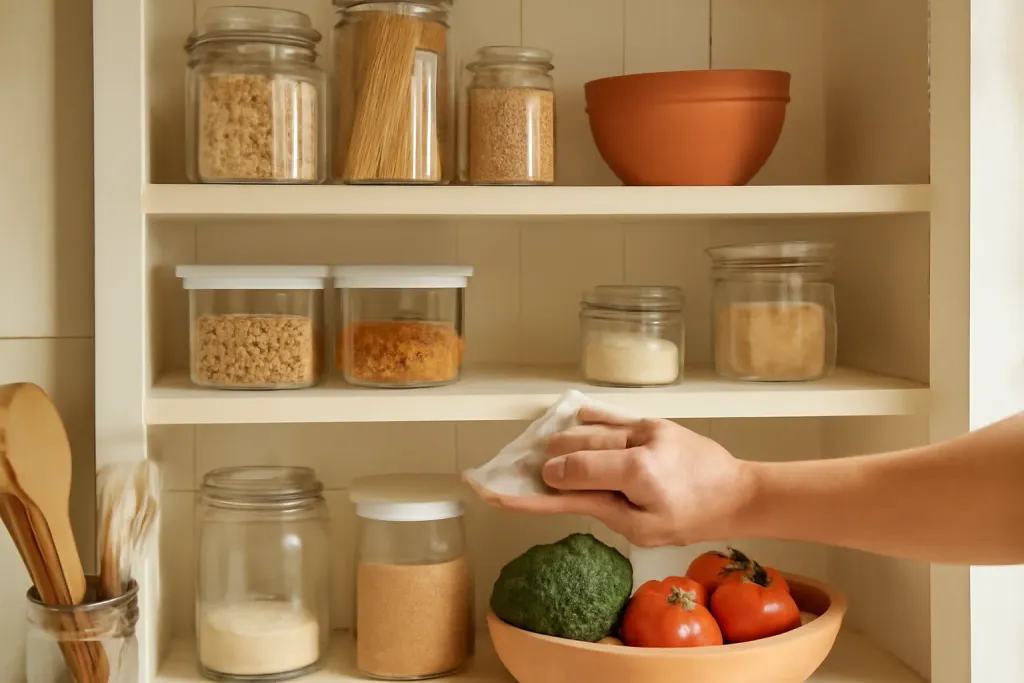
Once the pantry is empty, wipe shelves and check for awkward spots, low shelves, deep corners, or narrow gaps. In a small pantry, every inch matters, so this reset helps you plan around the actual shape of the space instead of forcing a system that will not fit.
Build Simple Zones That Match Your Routine
A small pantry works best when it follows the way your family cooks and eats. Instead of trying to create a complicated system, set up a few simple zones based on daily use. One zone might hold breakfast items like cereal, oats, pancake mix, and syrup. Another can hold lunch staples or school snacks. A third can hold dinner basics such as pasta, rice, canned tomatoes, broth, and beans.
Place the items you reach for most often at eye level and near the front. Less-used ingredients can go higher up or deeper in the pantry. If you store baking supplies, put them together so you do not have to search for flour, sugar, and measuring tools in different places. If you keep bulk items, tuck them into a dedicated area so they do not crowd the everyday shelf space.
Zoning also helps a small pantry feel calmer during busy weeks. When each shelf has a purpose, it is easier to unload groceries, plan meals, and see what you already own. That can make routine cooking feel less scattered, especially in a family kitchen where many hands may reach into the pantry.
Use Containers That Work Harder Than They Look
Containers can make a small pantry easier to use, but the best choices are the ones that fit your shelves and your shopping habits. Clear bins, canisters, and narrow baskets can help corral similar items and keep loose packages from spilling across shelves. In a small pantry, the value of a container is not just appearance; it is whether it helps you use vertical space, reduce clutter, and keep categories together.
Choose containers that are stackable when possible, but do not stack so high that items become hard to reach. Square or rectangular shapes often waste less shelf space than round ones. Shallow bins can work well for snack packets, seasoning mixes, tea, or baking add-ins. Deeper containers are useful for boxed items, pouches, or backup pantry goods.
It is also smart to keep some items in their original packaging if the box is sturdy and easy to read. Not everything needs to be decanted. A small pantry usually benefits more from consistency and accessibility than from trying to transfer every item into matching jars. Use containers to solve a storage problem, not to create one.
Make Labels Clear and Practical
Labels are one of the simplest tools for maintaining a small pantry, especially if more than one person helps put groceries away. Clear labels reduce guesswork and help family members return items to the right place. They are also useful when containers look similar but hold different foods, such as flour and powdered sugar or rice and couscous.
Keep labels straightforward. A pantry label should tell you what belongs in the container or zone, not decorate it with extra detail. Use short names that are easy to read quickly, and place labels where they can be seen without moving the container. If you use baskets or bins, label the front. If you use jars or canisters, label the lid or upper side if that is easier to view on the shelf.
For a family kitchen, labels can also support consistency around snacks and lunch items. When kids or other household members know where things go, the system is more likely to stay organized. You do not need a perfect label set; you need a readable one that helps the pantry function day after day.
Browse our recommended picks
Our featured picks refresh periodically. While we update them, our editorial guides can help you find the right one.
See our guidesUse Height, Depth, and Door Space Wisely
Small pantries often fail when everything is lined up only in a single row on each shelf. To get more from the space, think in layers. Taller items can go toward the back or on higher shelves, while shorter items stay in front where they are visible. This lets you use shelf height without hiding the foods you need most often.
If your pantry shelves are deep, consider using pull-out bins, lazy Susans, or narrow organizers that make it easier to reach the back. Deep shelves can become a lost space where forgotten ingredients collect. A simple pull-forward system keeps similar items together and makes it less likely that duplicate purchases get buried behind older ones.
Door space can also help. A door-mounted rack or slim organizer may hold spices, small packets, wraps, foil, or cleaning supplies if your pantry layout allows it. The key is to keep door storage light and accessible so it does not block closing or make the pantry feel crowded. In a very small space, the best storage strategy is often the one that uses overlooked surfaces without making the room hard to navigate.
Control Overflow and Keep Shopping Habits in Check
One of the fastest ways for a small pantry to become disorganized is to let overflow take over. Extra boxes, duplicate snacks, and bulk purchases can be useful, but they need a clear home. Create one section of the pantry for backup items and keep it distinct from everyday cooking supplies. That way, you know what is ready to use now and what is waiting in reserve.
It also helps to shop with the pantry layout in mind. Before grocery shopping, glance at the categories you use most often and note what needs to be replaced. This reduces the chance of buying more than the shelves can handle. A small pantry usually works best when shopping habits match storage capacity. If you regularly buy in bulk, make sure the pantry can realistically support that pattern without becoming overloaded.
Another helpful habit is to store newer groceries behind older ones when possible. This keeps older items visible and easier to use before they sit too long. The idea is not to create a rigid system, but to keep the pantry from filling up with forgotten extras that crowd the items your family uses every week.
Create a Maintenance Routine That Sticks
Even the best pantry setup will drift over time if there is no upkeep. The good news is that a small pantry does not need a complicated maintenance plan. A quick weekly reset can keep it manageable. Put items back in their zones, remove empty packaging, and move any nearly used-up ingredients to the front so they get used first.
It is also useful to do a short shelf check before a regular grocery trip. This takes only a few minutes and helps you avoid duplicate purchases and clutter. If one category keeps getting messy, that is a sign the storage method may need to change. For example, loose snack bags may do better in a bin, or boxed baking items may need a separate shelf.
Family kitchens work best when the system is simple enough for everyone to follow. If the pantry is easy to understand, it is easier to keep organized. That is why maintenance matters as much as containers or labels. A small pantry should support everyday life, not require a complete reset every time someone cooks.
Focus on Function Over Perfection
When people search for how to organize a small kitchen pantry, they often expect a picture-perfect result. In real homes, though, the best pantry is the one that makes cooking easier. It should help you find ingredients quickly, store groceries without cramming, and keep family favorites within reach. A pantry can look neat and still fail if it is awkward to use.
That is why function should guide every choice. Before adding a basket or canister, ask whether it solves a real problem. Before creating a new category, ask whether it will make the pantry easier for the rest of the household to use. A simple, practical setup often works better than a decorative one.
If your pantry is very small, consider what does not need to live there at all. Some items may work better in a cabinet, drawer, or fridge, depending on the kitchen layout. Organizing a small pantry is partly about editing. The more honestly you match storage to your habits, the more useful the space becomes.