What to Look for in Freezer-Safe Meal-Prep Containers
Choosing freezer safe meal prep containers starts with understanding how you plan to store and reheat food. The best container for soups is not always the best choice for casseroles, grain bowls, or chopped ingredients. Families often need a mix of shapes, sizes, and lid styles so leftovers and batch-cooked meals stay organized without taking over the freezer.
Look first at whether the container is clearly designed for freezing. A freezer-friendly container should hold up well at low temperatures, resist cracking, and keep food protected from air exposure as much as possible. In day-to-day use, that usually means a secure lid, a body that can handle repeated temperature changes, and a shape that stacks neatly.
Size matters as much as the material. Smaller containers work well for sauces, single portions, and side dishes, while larger ones are better for chili, stews, baked pasta, or family-size leftovers. If you meal prep for several days at once, a set with a few different capacities is more useful than a single uniform size.
It also helps to think about freezer organization. Straight-sided containers stack more cleanly than bowls with rounded shoulders. Square and rectangular containers often use freezer space more efficiently than round ones. For many households, that difference matters because the freezer is usually shared with bulk groceries, ice packs, and other weekly essentials.
Best Materials for Family Meal Prep
When shopping for freezer safe meal prep containers, material choice is a major factor. Plastic, glass, and silicone each have strengths, and the right one depends on how your family cooks and stores food.
Plastic: Lightweight and easy to stack, plastic containers are common for meal prep because they are practical for everyday storage. For freezer use, choose rigid containers made for low temperatures and avoid thin, brittle plastics that may not hold up as well over time.
Glass: Glass containers are often chosen by cooks who want a sturdy, reusable option for refrigerator-to-oven-to-freezer workflows. They are heavier than plastic, so they may not be the best choice for every lunch bag or packed freezer, but they can be appealing for home storage.
Silicone: Silicone containers and freezer trays can be useful for portioned meals, sauces, and broth cubes. Flexible walls make them easy to release food from, though they may not provide the same rigid stacking structure as hard-sided containers.
No material is perfect for every kitchen. Many families end up using a combination: rigid containers for main dishes, smaller portions for sauces or sides, and a few glass pieces for oven-ready meals. That flexibility can make meal prep easier without forcing every recipe into one format.
Also consider the lid. A strong container body matters, but a lid that fits loosely can let freezer odors in and make stacking less stable. For long-term storage, the lid is just as important as the base.
Sizes, Shapes, and Portion Planning
Portion planning is one of the most helpful ways to narrow down freezer safe meal prep containers. Instead of buying a random assortment, think about the meals you make most often. A family that freezes soups and casseroles has different needs than one that prepares rice bowls, breakfast burritos, or pre-cut vegetables.
For family cooking, a useful set often includes:
Small containers for pesto, tomato sauce, chopped herbs, broth concentrate, or single servings of side dishes.
Medium containers for lunches, leftovers, and individual meal portions.
Larger containers for family dinners, batch-cooked soups, lasagna, or cooked grains.
Shape affects both storage and serving. Rectangular containers usually fit efficiently in drawers and freezer bins, while round containers can work well for soups and stews. Shallow containers are easier to chill and freeze in flatter layers, while deeper containers are useful for bulky recipes. Some households prefer a matching set because it creates cleaner stacking, while others like mixed sizes for more flexibility.
There is also the question of portion control. Meal prep containers with clear volume markings can help, but even without them, it is smart to choose a few consistent sizes that match your household routine. If you often freeze one dinner per container, a standardized medium size can simplify both packing and reheating.
Lids, Stackability, and Freezer Organization
Lids are a major part of the buying decision, especially for freezer safe meal prep containers that will be used every week. A well-fitting lid helps protect the contents, supports stacking, and reduces the chance of spills when you move containers from counter to freezer.
Snap-on lids, locking lids, and fitted silicone lids each have different strengths. Snap-on styles are common and usually simple to use. Locking lids may offer a firmer seal, though they can take longer to open and close. Silicone lids can be convenient for some storage systems, especially when paired with reusable trays or bowls. The main point is consistency: if the lid is hard to remove, easy to misalign, or likely to warp in cold storage, it may be frustrating in daily use.
Stackability is equally important. Freezer space is limited in many homes, so containers that nest when empty and stack securely when full can make a real difference. Flat lids and straight walls usually help keep piles stable. If a set includes different sizes, check whether the larger containers are designed to support smaller ones without sliding.
Organization also improves usability. Labeling the lid or top surface with the meal name and date can help family members quickly find what they need. Some shoppers also group containers by meal type, such as breakfast items, school lunches, or weeknight dinners. A simple system like that can reduce wasted time and keep the freezer from becoming a catchall.
Browse our recommended picks
Our featured picks refresh periodically. While we update them, our editorial guides can help you find the right one.
See our guidesReheating and Thawing Considerations
Freezer storage is only part of the equation. The best freezer safe meal prep containers should also fit your reheating habits. Some meals go straight from freezer to microwave after thawing, while others are best thawed in the refrigerator before reheating on the stovetop or in the oven.
Before buying, think about where the container will be used after it leaves the freezer. If you want one container that can move between storage and reheating, check that the material and lid style match that plan. For example, some rigid containers are convenient for cold storage but are not meant for oven use. Others may be suitable for microwaving but still require the lid to be vented or removed first.
Thawing is easier when the container shape supports it. Shallower containers can thaw more evenly than very deep ones, especially for dense foods like casseroles or saucy pasta dishes. If you prepare meals in advance for the week, choosing a container that suits your reheating routine can save time and reduce transfers between dishes.
It is also worth considering convenience for family members. A simple container with clear labeling, an easy-open lid, and a familiar size can make meal prep more accessible for everyone in the household. When the storage system is easy to use, it is more likely to stay organized.
How to Build a Mixed Set for Real-Life Use
Many households do best with a mixed set rather than one large stack of identical containers. A practical freezer system usually includes a few sizes that match common recipes and routines. That approach gives you more flexibility without overcrowding the cabinet or freezer.
A balanced starter set might include:
Several small containers for sauces, chopped vegetables, pesto, or leftovers in modest portions.
A handful of medium containers for lunches, soups, curries, and one- or two-serving dinners.
One or two larger containers for family-size meals, bulk prep, or holiday leftovers.
This mix can be especially helpful for family cooking because not every food freezes in the same way. A casserole may need a shallow dish, while a broth-based recipe may work better in a deeper container. Rather than forcing every meal into the same format, a varied set gives you room to store food in a way that makes sense.
When building a set, pay attention to whether the lids fit only one size or several. Interchangeable lids can make storage simpler, though they are not essential. If you prefer a more streamlined cabinet, choose a brand or line with consistent lid sizing. If convenience matters more than uniformity, a mix of individual containers may be perfectly adequate.
Care, Cleaning, and Long-Term Durability
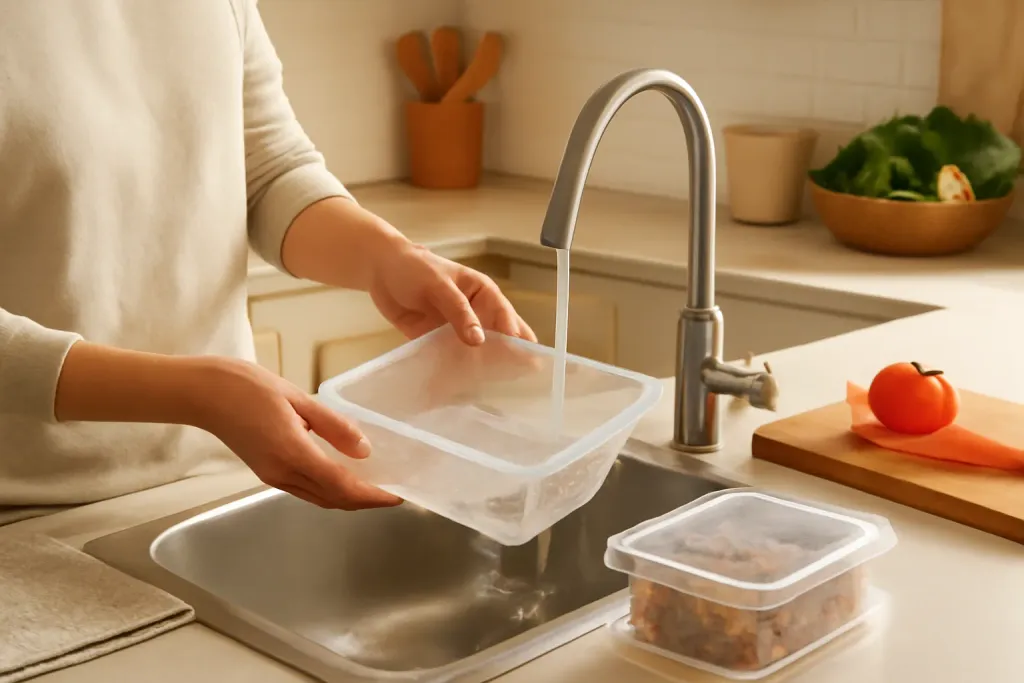
Good freezer safe meal prep containers should be easy to care for if you want them to remain useful over time. Cleaning habits matter because residue, stains, and lingering odors can build up when containers are used week after week. A smooth interior and straightforward lid design can make washing much easier.
Before buying, it helps to consider how much handwashing you are willing to do. Some families want a set that can go through the dishwasher, while others are comfortable washing certain pieces by hand if the shape is especially practical. The simpler the container design, the easier it usually is to keep clean.
Durability also matters for everyday household use. Containers that feel flimsy may work at first but become less reliable with repeated freezing, thawing, and stacking. Hinged parts, thin seals, and delicate lids can be weak points. A sturdier container may cost more upfront in effort or convenience, but it can be more satisfying for regular meal prep because it is less likely to feel disposable.
It is a good habit to inspect containers periodically for cracks, warped lids, or worn seals. If a container no longer closes securely or no longer stacks well, it may be time to retire it. Keeping your set in good condition helps preserve the overall organization of your freezer.
Smart Buying Tips for Family Kitchens
For an independent Amazon affiliate publisher, the most useful advice is not to chase the largest set or the most elaborate feature list. The better choice is the one that matches your family’s routines. If you mostly freeze single portions, prioritize smaller containers with secure lids. If your household cooks large batches, choose shapes that stack well and accommodate family-size servings.
Read the product details carefully and focus on practical information such as material, intended use, lid style, stackability, and size. Be cautious of vague marketing language that does not explain how the container is meant to be used. Clear information is more helpful than flashy design claims when you are trying to build a reliable freezer system.
It can also help to think about replacement strategy. If you buy a set, check whether the line is likely to be easy to expand later with matching sizes. If you prefer flexibility, you may want individual containers that can be mixed with pieces you already own. Either way, the goal is a storage setup that works for family cooking, leftovers, and batch prep without creating unnecessary clutter.
In the end, freezer safe meal prep containers are most valuable when they simplify weeknight life. The best choice is usually the one that fits your freezer, your recipes, and the way your family actually eats.