Why a Batch Cooking Equipment Checklist Helps Beginners
If you are new to cooking ahead for the week, a clear batch cooking equipment checklist can make the process feel much more manageable. The goal is not to buy every possible kitchen gadget. It is to focus on the tools that help you cook larger amounts efficiently, portion food neatly, and store meals in a way that fits your routine.
Beginners often assume batch cooking requires a special setup, but most home kitchens already have some of what they need. The real challenge is deciding which items are worth having close at hand and which ones can wait. A thoughtful checklist helps you avoid duplicate purchases, reduces clutter, and keeps your workflow simple.
For family cooking, the best equipment usually supports three stages: preparing ingredients, cooking in larger quantities, and storing meals safely in the fridge or freezer. If you keep those stages in mind, it becomes easier to build a starter kit that is practical rather than overwhelming.
This guide focuses on versatile, everyday kitchen equipment that suits beginners. It is meant to help you shop with confidence, especially if you want to cook once and serve multiple meals without making the process complicated.
Core Prep Tools for Efficient Prep
Prep is where batch cooking starts, so your checklist should begin with tools that make chopping, measuring, and organizing easier. A sturdy cutting board is one of the most useful items to have. Many beginners find it helpful to use at least one large board so vegetables, herbs, and proteins have enough room while you work.
A sharp chef’s knife is another cornerstone item. You do not need a drawer full of knives to batch cook well; one reliable all-purpose knife can handle much of the work. A smaller paring knife can also be useful for peeling and trimming, though it is not essential for every household.
Measuring cups and measuring spoons are helpful even for savory batch recipes, especially when you want consistent seasoning across larger portions. Mixing bowls in a few sizes also earn their place quickly. They can hold chopped ingredients, combined sauces, or ingredients that need to be separated before cooking.
Other useful prep items include a vegetable peeler, a box grater, and a colander or strainer. These are not fancy purchases, but they often save time when you are scaling recipes. For beginners, the best approach is to choose multipurpose tools first and avoid specialty items until you know your cooking habits better.
Cookware That Handles Larger Batches
Once prep is under control, the next part of the batch cooking equipment checklist is cookware. Larger cooking tasks call for pans and pots that can hold enough food without forcing you to work in tiny portions. A medium or large stockpot is especially useful for soups, stews, pasta, grains, and bean-based dishes.
A roomy skillet or sauté pan is another practical choice for beginners. It can be used for browning ingredients, cooking sauces, and finishing mixed dishes. If you plan to make one-pan meals, consider a pan with enough surface area to cook ingredients evenly without overcrowding.
A sheet pan is also a strong addition for batch cooking. It works well for roasting vegetables, baking proteins, or cooking components that can later be combined into meals. Many families rely on sheet-pan cooking because it keeps the process simple and supports several servings at once.
Some cooks also like a Dutch oven or heavy lidded pot for its versatility. While not required, it can be helpful if you often make soups, braises, or baked dishes that benefit from steady heat. For beginners, the main goal is to choose cookware that can move between a few different recipe types instead of buying single-use pieces.
Tools That Make Portioning and Serving Easier
Batch cooking is not only about making enough food; it is also about dividing it into usable portions. That is why serving and portioning tools deserve a place on the checklist. A ladle is helpful for soups, chili, and sauces, while a slotted spoon can be useful when you need to separate solids from liquids.
A set of sturdy tongs can speed up serving and handling hot foods. They are especially handy for roasted vegetables, proteins, and pasta. A spatula or turner is also worth having for moving food in and out of pans without breaking it apart.
For portioning meals into containers, a scoop or measuring cup can help you create more consistent servings. That consistency makes it easier to pack lunches, count meals, or keep family portions more predictable. It does not need to be exact; the point is simply to make the process easier and less messy.
If you cook large amounts of rice, grains, or chopped mixtures, a wide spoon or serving spoon can also be useful. These are everyday tools, but they make a noticeable difference when you are moving food from the stove to storage containers.
Browse our recommended picks
Our featured picks refresh periodically. While we update them, our editorial guides can help you find the right one.
See our guidesStorage Containers That Fit Real Life
Storage is one of the most important parts of any batch cooking equipment checklist. Good containers help food stay organized, and they make it easier to see what is available during a busy week. For beginners, the best choice is usually a mix of container sizes rather than one uniform set.
Look for containers that can hold single portions as well as family-sized amounts. Smaller containers are useful for lunch boxes, sauces, chopped toppings, and side dishes. Larger containers work well for soups, grains, pasta, and mixed leftovers. If your household eats in different ways, having both sizes gives you more flexibility.
Lids matter just as much as the containers themselves. Clear lids or clear sides can help you identify what is inside, which is especially useful when the fridge is full. Many families also find it helpful to label containers with the meal name and date using a marker or tape. This is a simple habit that supports better organization without requiring extra equipment.
If freezer storage is part of your plan, choose containers that are appropriate for freezing and that fit neatly in your freezer space. Flat, stackable shapes often make better use of room than awkwardly shaped containers. The exact material you choose depends on your preferences and kitchen setup, but the main idea is to select containers that you will actually use regularly.
Small Appliances That Can Be Worth the Space
Small appliances are not required for batch cooking, but a few can make the process easier if you have enough counter or cabinet space. A slow cooker is often useful for set-it-and-forget-it meals, especially when you want to make soup, shredded meats, or hearty stews in larger quantities. For many beginners, it is a simple way to cook ahead without needing constant attention.
An electric pressure cooker or multi-cooker can also be helpful for families that want to prepare grains, beans, or one-pot meals quickly. It may be especially appealing if you like to cook the same core ingredients in different ways across the week. That said, it is not an essential first purchase for everyone.
A blender or immersion blender may also earn a place on your list if you make sauces, purees, or blended soups. An immersion blender can be easier to store, while a countertop blender may be better if you already use one for other tasks. As with all equipment choices, the best option is the one that fits your actual cooking habits.
If you are just getting started, resist the urge to buy a long list of appliances all at once. Begin with the basics, then add a small appliance only if you can clearly see how it will support the meals you cook most often.
Cleanup and Organization Tools
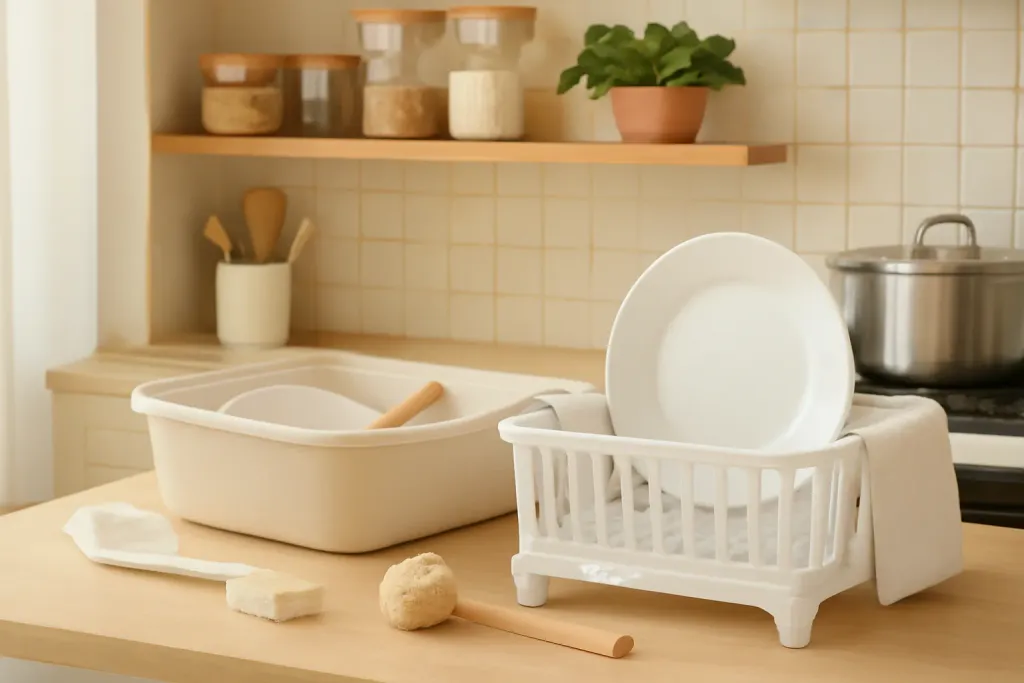
Cleanup tools are often overlooked, but they are part of a realistic batch cooking setup. When you cook in larger amounts, you also create more dishes, so it helps to have the right cleanup tools nearby. A dishwasher-safe sponge or scrub brush, dish soap, and drying rack can make the work feel less tiring after cooking.
Kitchen towels and dishcloths are also useful for handling spills, drying washed produce, and keeping the work area under control. A trash bowl or compost container, if you use one, can help keep prep scraps from spreading across the counter. These are small items, but they contribute to a smoother workflow.
Organization tools can be equally valuable. A marker, masking tape, or label stickers can help identify containers in the fridge or freezer. A pantry bin or shelf basket may also be useful for grouping dry ingredients you use often, such as rice, beans, grains, or baking supplies. The purpose is not to create a perfect pantry, but to make ingredients easier to find when you are cooking in larger batches.
If you have limited space, focus on items that solve more than one problem. A simple, organized setup often works better than a complicated one, especially for beginners learning how batch cooking fits into everyday life.
Building Your First Checklist Without Overbuying
The easiest way to build a beginner-friendly batch cooking equipment checklist is to sort items into three groups: must-have, helpful, and optional. Must-have items are the basics you will use almost every time, such as a cutting board, knife, mixing bowls, cookware, and storage containers. Helpful items make the process easier, such as tongs, a ladle, labels, and a colander. Optional items include appliances or extras that depend on your cooking style and available space.
Before buying anything new, take inventory of what you already own. Many home cooks already have a decent starting point and only need to add one or two pieces to improve the workflow. This approach is especially useful if you are setting up a kitchen on a budget or trying to reduce clutter.
It also helps to think about the meals your family actually eats. If you make a lot of soups and grain bowls, prioritize pots, storage, and serving tools. If you prefer roasted vegetables and simple tray bakes, a good sheet pan and sturdy containers may matter more than an appliance. Matching equipment to your routine keeps your checklist practical.
For most beginners, the best strategy is to start small, cook a few batch meals, and then adjust the checklist based on what feels missing. That way, each purchase has a clear purpose and supports the way you already like to cook.