Why canister size matters in the pantry
An airtight canister sizing guide starts with a simple point: the right container is about daily use, not just appearance. A canister that is too large can leave extra air around a small amount of food, while one that is too small can create clutter by forcing you to split staples into several containers or refill too often.
For family kitchens, size affects three practical things: how well a staple fits, how easy it is to scoop or pour, and how often you need to restock it. High-use ingredients such as flour, rice, oats, and pasta often justify larger canisters. Households that buy smaller amounts or keep a wider range of ingredients may prefer medium and small containers that organize the pantry without wasting shelf space.
It helps to think in terms of cooking habits rather than package labels. A bag of pasta or a sack of flour may look straightforward in the store, but once opened, the storage shape can be awkward. The goal is a pantry setup that keeps staples visible, accessible, and sized for how your kitchen actually works.
Common pantry staples and the canister sizes they usually need
The best size depends on what you are storing. Dry ingredients differ in density, shape, and how they settle, so a canister that works well for rice may be a poor fit for cereal or crackers. That is why a useful airtight canister sizing guide starts by grouping staples into practical ranges instead of assuming one container can do everything.
Flour and sugar: These often do best in medium to large canisters because families tend to use them regularly and need easy scooping.
Rice and grains: Rice is dense, so a medium canister may hold more than expected. Grains like quinoa or barley often fit similar sizes.
Pasta: Long pasta usually needs taller canisters, while short pasta can work in wider shapes. The shape matters as much as the capacity.
Cereal: Cereal is light and bulky, so a larger, wider canister is usually easier to use.
Snacks and baking add-ins: Items like crackers, pretzels, nuts, chocolate chips, or dried fruit often fit well in smaller or medium containers, depending on how quickly your family uses them.
When comparing sizes, consider whether the food is bought in bulk, whether it is used daily, and whether you want the full package stored in one place. The more often a staple is reached for, the more important it is that the opening allows a scoop or measuring cup to fit comfortably.
How to think about capacity without guessing
Capacity labels can be confusing because canisters are measured by volume, while pantry foods are usually bought by weight. A 4-quart canister may sound small or large depending on what you plan to store, so the key is matching the volume to the ingredient instead of relying only on package size.
A simple approach is to ask three questions. First, how much of this item do we usually keep open at one time? Second, do we pour, scoop, or measure it often? Third, do we want the canister to hold a full package, a partial package, or a refill from a bulk bag? For many households, the best choice is a container that fits one typical package with a little room left for easy access.
It also helps to leave some space at the top. A canister filled right to the lid may look tidy, but it can be harder to scoop from. A little headroom improves everyday convenience. For taller dry goods such as spaghetti or breadsticks, internal height matters more than the way the container looks on a shelf. For wider items such as cereal or crackers, the opening matters because a narrow mouth can make serving messy.
If you are building a matched set, consider using a few standard sizes instead of many different ones. That makes it easier to predict where items will go and how much pantry space they will use. A simple system often works better than sizing each container from scratch.
A practical size-by-food breakdown
One of the easiest ways to use an airtight canister sizing guide is to assign common staples to a few dependable size groups. Exact needs vary by household, but a general framework makes shopping simpler and helps keep the pantry consistent.
Small canisters: Good for tea, coffee, seeds, spices, baking add-ins, and small snacks. These are helpful when you want quick access without taking up much shelf space.
Medium canisters: Often a strong fit for rice, oats, sugar, brown sugar, beans, lentils, and smaller pasta shapes. Medium sizes are versatile and work well for many everyday staples.
Large canisters: Useful for flour, cereal, large pasta, bulk grains, pet treats, and family-sized snack storage. Large canisters can reduce clutter from multiple bags and boxes.
Extra-large canisters: Best reserved for households that keep a high volume of one staple on hand. These can be useful for flour, rice, or large cereals, but they can be cumbersome if they are bigger than your regular use requires.
Shape matters alongside size. Square or rectangular canisters often make better use of shelf space, while round canisters can be easier to grip and pour from. Tall, narrow canisters work well for pasta and utensils, while wide canisters are often more practical for ingredients you scoop frequently. Choosing the right form is part of the sizing decision, not separate from it.
In many kitchens, it is better to size slightly up for ingredients that must be reached by hand or measuring cup. For items that are used less often, a smaller fit can still be efficient. The most useful pantry is not always the one with the biggest containers; it is the one that fits the food and the routine.
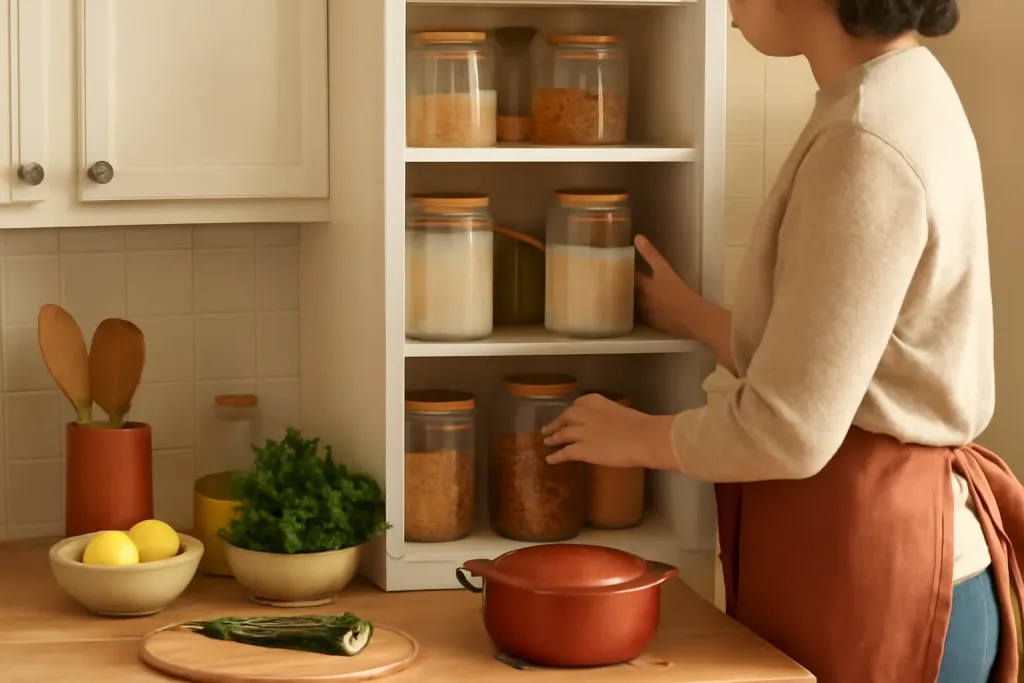
Browse our recommended picks
Our featured picks refresh periodically. While we update them, our editorial guides can help you find the right one.
See our guidesHow shelf space and cabinet height affect your choice
Before buying canisters, measure the space where they will live. A container that looks ideal online may be impractical if it is too tall for a shelf or too wide to line up neatly in a cabinet. Pantry organization works best when the container size reflects both the food and the storage space.
Cabinet height is especially important for taller staples. Long pasta can need more vertical clearance than many shoppers expect. If a shelf is shallow or adjustable, shorter containers may stack or nest more efficiently. If your pantry shelves are deep, wider canisters may be easier to reach and less likely to disappear behind other items.
Also think about how the canister will be used. If you will lift it out often, a very large container may be more trouble than it is worth. If it will stay in one dedicated spot, larger sizes become more practical. Lid shape, opening width, and how comfortably the container is handled all affect everyday convenience, even when the listed capacity seems right.
For families with mixed storage needs, a combination approach often works best: a few large canisters for high-volume staples and several small or medium containers for frequently used ingredients. That gives you flexibility without committing the whole pantry to one size.
What to look for in an airtight canister set
Size is only part of the decision. The airtight feature should be easy to use and suited to the food you store. A useful pantry container needs to open and close securely while still being simple enough for everyday handling. One family may prefer a snap-lid, while another may like a latch, twist-top, or gasket-style closure.
Start with the opening. A wide opening makes scooping flour, sugar, or cereal much easier. A narrower opening may be fine for snacks or coffee, but it can feel awkward for bulky ingredients. If you cook often, these usability details matter as much as the capacity label.
Clear containers are often helpful because you can see at a glance when something is running low. Opacity can also be useful if you want a calmer visual look on open shelves. The right choice depends on whether visibility or a more uniform appearance matters more in your kitchen.
Labeling is another part of the sizing conversation. If a canister is large enough to hold multiple ingredients over time, clear labels can prevent confusion. Some families prefer a dedicated canister for each staple so the size stays obvious. Others rotate containers based on what is on hand. Either approach can work if the size is chosen with intention.
How to build a pantry set that stays useful over time
The smartest way to shop for pantry containers is often to start with a core set instead of buying a random assortment. A balanced pantry usually includes one or two larger canisters for the most-used staples, a few medium canisters for versatile ingredients, and small containers for specialty items or snacks.
This approach helps avoid clutter and keeps the pantry from becoming a collection of mismatched jars. It also makes it easier to replace or expand pieces later because you already know which size works best for each food category.
Try organizing by frequency of use. Daily items belong in the easiest-to-reach containers. Less common ingredients can go onto higher shelves or into smaller containers. That way, the pantry supports how your household cooks instead of simply looking orderly on day one.
It can also help to think about refill habits. If you shop weekly, medium canisters may be enough for many items. If you buy in bulk or cook large batches, larger containers may reduce the number of refills. If your pantry storage changes with the seasons, choosing a few adaptable sizes is usually better than locking into one oversized system.
A simple way to choose the right size
The easiest way to use an airtight canister sizing guide is to start with the food, then the shelf, then the routine. Match the container to what you store most often, make sure it fits the available space, and leave room for how you actually scoop, pour, and refill. That sequence usually leads to better choices than focusing on appearance alone.
For most kitchens, small canisters handle specialty items and snacks, medium canisters cover many everyday staples, and large canisters work best for high-volume foods like flour, cereal, and family-size grains. Extra-large containers can be useful, but only when the ingredient and pantry space both justify them.
If you are buying your first pantry set, choose a few dependable sizes instead of trying to cover every possible use. A simple, flexible system is easier to live with, easier to refill, and easier to keep organized. In the end, the right canister size is the one that makes family cooking more practical every day.